


















Week in Review: Walmart’s big week
Walmart had a big week with its financial report and dunnhumby research, but it's during a time of increasing consumer financial insecurity.
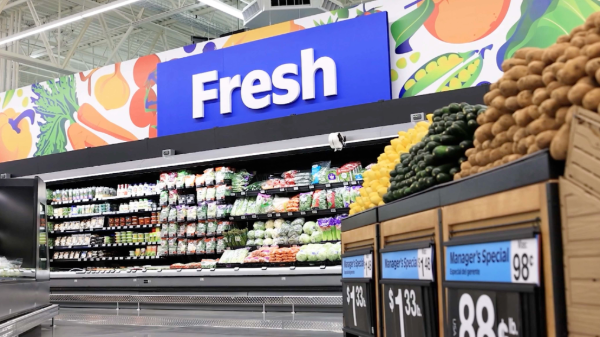

Walmart had a big week with its financial report and dunnhumby research.
For its fourth quarter, the retailer posted strong growth in revenue and operating income. It also said that globally, e-commerce grew 24 percent with strength across segments, showing its big investments in technology continue to pay off. Walmart posts revenue, income growth in Q4 FY26 report – Blue Book
What it didn’t talk about is how it compares to Amazon, because it lost a long-held title. For the year, Walmart reported $713 billion in sales, which came up just shy of Amazon’s most recent full year of $717 in net sales.
That makes Amazon the country’s largest company by revenue. Not that that’s what Walmart’s goal is.
Walmart is adjusting well to the shifting consumer, especially the widening gap between haves and have-nots.
In a call with analysts, Walmart leaders say they see cautious spending from consumers, especially low-income ones, and they notice the spending gap widening.
The leaders said the retailer’s grocery prices grew only 1 percent in the last quarter, while general merchandise grew over 3 percent.
Overall grocery performance outperformed general merchandise, partly because of these factors.
Regardless of consumer income levels, Walmart is reaching them more than ever before.
The latest dunnhumby Consumer Trends Tracker shows Walmart’s consumer penetration rose to 72 percent, as it serves 190 million Americans monthly, more than three times the next retailer, Dollar General, at 28.6 percent. Walmart grocery penetration reaches record levels, dunnhumby reports – Blue Book
The tracker shows 70 percent of working-age Americans (18-54) say they’re financially insecure, defined as having difficulty covering an unexpected $400 expense.
That’s not good news, but Walmart seems to be addressing this ongoing consumer pain-point as well as any retailer.
The tracker has some questionable conclusions though.
“U.S. consumers perceive food inflation to be 19.6 percent, more than eight times the actual rate of 2.4 percent in December 2025,” dunnhumby reports. “Households with incomes under $50,000 perceive inflation at 23.6 percent, nearly 10 times the actual rate.”
“The actual rate” is incredibly misleading. Consumers do not perceive inflation on a monthly or even yearly basis. We perceive it as before and now. It’s a cumulative experience.
We all know before the pandemic, food prices were around 30-40 percent lower, and there was a time in 2021 and 2022 when we could feel it monthly, as inflation was near 10 percent those years.
Politicians from both parties have tried to message that inflation is easing, and it’s not that bad. That message offends most Americans, as evidenced by 70 percent saying they feel financially insecure.
Retailers should continue to act on consumers’ perceived inflation because it continues to drive their shopping behavior.
News you need.
Join Blue Book today!
Get access to all the news and analysis you need to make the right decision --- delivered to your inbox.






Subscribe to our newsletter
© 2026 Blue Book Services. All Rights Reserved

