


















The real cost of ignoring America’s specialty crop growers
The debate surrounding USMCA should not be framed as a choice between affordable produce and American agriculture. That is a false choice.
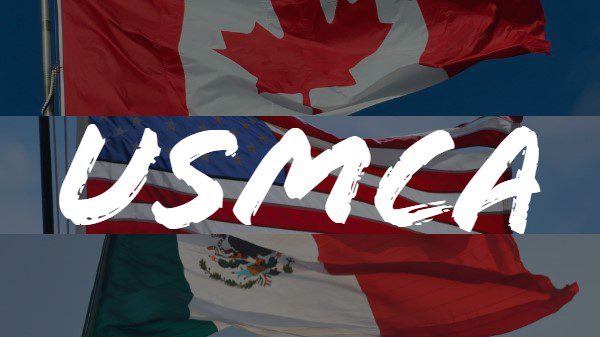
A newly formed coalition of produce companies is warning that any changes to the U.S.-Mexico-Canada Agreement (USMCA) could increase grocery prices and limit consumer access to fresh fruits and vegetables.
Their message is clear: preserve the status quo. For thousands of fruit and vegetable growers across America, however, the status quo is exactly the problem.
The debate surrounding USMCA should not be framed as a choice between affordable produce and American agriculture. That is a false choice. The real question is whether the United States is willing to maintain a strong domestic fruit and vegetable industry or continue down a path that increasingly shifts production beyond our borders.
For decades, American specialty crop growers have watched seasonal imports from Mexico expand dramatically during the same market windows in which domestic growers harvest and sell their crops.
The result has been mounting economic pressure on family farms, declining profitability, reduced acreage, and growing concern about the long-term viability of domestic production.
The Georgia Fruit and Vegetable Growers Association BB #:162609 has consistently raised these concerns with federal policymakers. In comments submitted to the Office of the U.S. Trade Representative, GFVGA warned that current trade policies have failed to adequately address the market disruptions caused by rapidly increasing imports of seasonal and perishable commodities.
Growers have repeatedly documented how import surges can depress prices, reduce market opportunities, and threaten the economic sustainability of American farms.
This concern is not limited to Georgia growers. In May, Congressman Austin Scott (R-GA) led a bipartisan letter signed by 79 members of the U.S. House of Representatives urging U.S. Trade Representative Jamieson Greer to address the growing crisis facing American specialty crop producers during the upcoming USMCA review.
The letter warned that Mexican imports continue to place U.S. growers at a significant competitive disadvantage and called for trade measures that protect the long-term viability of America’s fruit, vegetable, and tree nut industries.
The members of Congress made the stakes clear: without measures to restore competitive balance, specialty crop production will increasingly move overseas. That outcome would not only harm farmers and rural communities but also weaken America’s ability to produce its own food and maintain a resilient domestic food supply.
Yet the coalition opposing changes to USMCA argues that preserving the current system is necessary to keep produce prices low for consumers. Consumers should be skeptical of claims that any effort to address unfair trade practices will inevitably lead to higher grocery prices.
American growers are not seeking to eliminate imports. They are not seeking to restrict consumer choice. They are seeking reforms that ensure domestic producers can survive alongside imports that often benefit from significantly different labor costs, regulatory requirements, environmental standards, and government policies.
The coalition’s argument assumes that the only measure of a successful food system is the lowest possible price. But a food system that steadily drives American farms out of business carries costs that do not appear on a grocery receipt.
The loss of domestic production capacity, increased dependence on foreign suppliers, supply chain vulnerabilities, and the decline of rural communities all carry long-term consequences for consumers and for our nation’s food security.
It is also important to recognize that not all stakeholders in the produce industry have the same interests. Many members of the coalition opposing USMCA reforms are importers, marketers, distributors, and vertically integrated companies whose business models depend on sourcing produce across international supply chains.
Those interests are legitimate and play an important role in delivering fresh produce to consumers. However, they are fundamentally different from the interests of independent family farmers whose livelihoods depend on fair competition, viable markets, and the ability to remain in business for future generations.
America should not have to choose between access to fresh produce and the survival of domestic agriculture. A modernized USMCA can preserve consumer choice while also providing meaningful safeguards for growers who face significant market disruptions from import surges.
The upcoming review of USMCA presents an opportunity to strengthen, not weaken, the agreement. Policymakers should use that opportunity to ensure that American specialty crop growers are not competing with one hand tied behind their backs.
Trade agreements should work for everyone in the food supply chain, including the farmers who plant, harvest, and market the crops that feed our nation. When trade rules fail to account for the realities facing domestic producers, policymakers have a responsibility to make adjustments that restore balance and fairness.
If we fail to act, the real price consumers will pay is not measured at the checkout counter. It will be measured in lost farms, diminished rural economies, reduced domestic production, and a growing dependence on foreign suppliers for foods that American farmers are fully capable of producing.
That is not a sustainable agricultural policy. It is not a resilient food system. And it is not a future that should be accepted as the inevitable cost of trade.
For decades, regulatory and trade issues have tilted the scales against America’s specialty crop growers. The task before policymakers today is not to pick winners and losers, but to restore balance—to level the playing field so that American farmers can compete, prosper, and continue feeding this nation for generations to come.
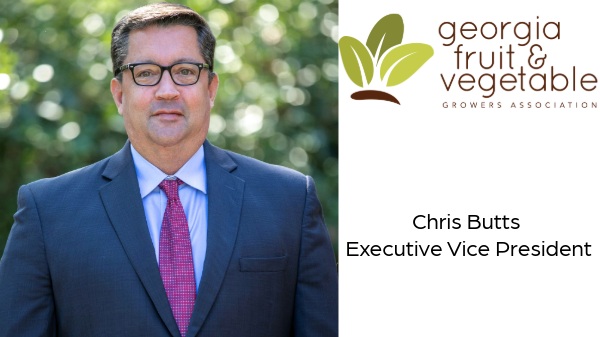
Chris Butts is Executive Vice President of the Georgia Fruit and Vegetable Growers Association. He can be reached at cbutts@asginfo.net and 706-540-2813.
Butts joins Blue Book CEO Kirk Soule for a webinar June 24, “From Price Taker to Market Maker.” Sign up for it here.
News you need.
Join Blue Book today!
Get access to all the news and analysis you need to make the right decision --- delivered to your inbox.






Subscribe to our newsletter
© 2026 Blue Book Services. All Rights Reserved

