

















Non-browning avocados? Sign me up.
I don’t want to get too deep in the weeds on the science, but an avocado advancement is on the horizon. I’ve been covering the fresh produce industry...
I don’t want to get too deep in the weeds on the science, but an avocado advancement is on the horizon.
I’ve been covering the fresh produce industry as a trade journalist for the better part of two decades and can recall watching the non-browning Arctic apple through its go-to-market, from the first few zip-top baggies brought out at trade shows for a quick sample to flavor adventures at the Culinary Institute of America.

Back in the early days of the marketing launch of Arctic apples, I heard an idea kicked around that a similar process – “shutting off” the gene that causes browning – could be applied to avocados.
What a game-changer. Think of all of the bowls of guacamole that could be saved, not to mention perfectly-edible, perfectly ripe fruit bruised by mishandling.
It seems there is no ceiling for avocado demand. Despite the absurdly swinging market conditions we’ve seen over the past few years, consumers, retailers, and even foodservice have yet to pump the brakes on consumption. While prices are low this summer, we all know that could change in the blink of an eye or an abrupt suspension of imports, like we saw in February 2022.
What if we had an avocado that was less susceptible to damage? That lasted longer after being cut?
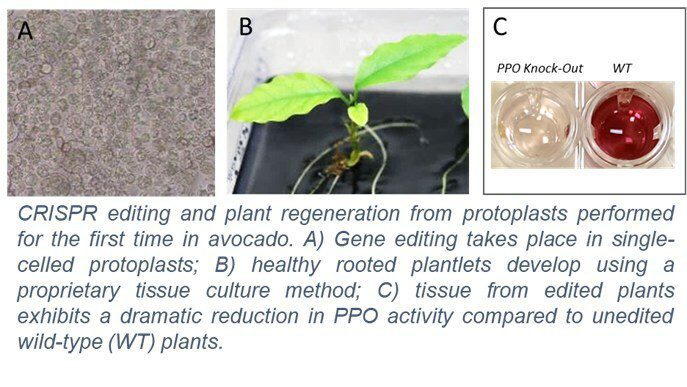
“Solving the challenge of editing avocado and regenerating plants from single cells required some unique solutions, and we’re delighted we now have a method that works across key commercial varieties,” says Walter Viss, vice president of cell biology and strategy at GreenVenus, in a news release.
While GreenVenus didn’t discuss commercialization of the technology, I wouldn’t get too excited about that long-lasting guacamole just yet. As we saw with Artic apples, roll-out has taken more than a decade and would likely take just as long with avocados once you consider regulatory approvals, tree propagation, and market launch.
Until then, we’ll just have to keep up with our various ways to keep guacamole fresh on our own.
My favorite is to just eat it all before it’s a problem.
Image sources are either licensed or customer-provided.

News you need.
Join Blue Book today!
Get access to all the news and analysis you need to make the right decision --- delivered to your inbox.







Subscribe to our newsletter
© 2026 Blue Book Services. All Rights Reserved

