

















ProduceIQ: El Niño watch heats up as produce markets shift
Record-high Eastern Pacific Ocean temperatures are signaling that a Super El Niño climate pattern may form this summer.

Images courtesy ProduceIQ
Record-high Eastern Pacific Ocean temperatures are signaling that a Super El Niño climate pattern may form this summer. While it remains too early to forecast with confidence, current conditions are increasingly pointing in that direction.
While some outlets are seizing the opportunity to sensationalize the news, we’d rather be a voice of reason amid the noise. Yes, a Super El Niño event could have devastating effects on global produce production. But weather patterns are shaped by a wide range of variables every year, and El Niño is just one piece of the puzzle.
That said, strong El Niño conditions can have widespread effects on food production across North, Central, and South America. During the summer months, El Niño tends to influence hurricane activity.
In line with typical El Niño years, forecasters are calling for a higher-than-average hurricane season in the Pacific and a quieter-than-average season in the Atlantic. During the winter, a strong El Niño can fuel drought across parts of Central and Northern South America while bringing above-average rainfall to Eastern South America and Southern North America.
While it remains too soon to make definitive projections, it is never too early to take steps to mitigate potential impacts on produce supply.
ProduceIQ Index: $1.17/pound, down -7.14 percent over prior week
Week #20, ending May 15th
Blue Book has teamed with ProduceIQ BB #:368175 to bring the ProduceIQ Index to its readers. The index provides a produce industry price benchmark using 40 top commodities to provide data for decision making.
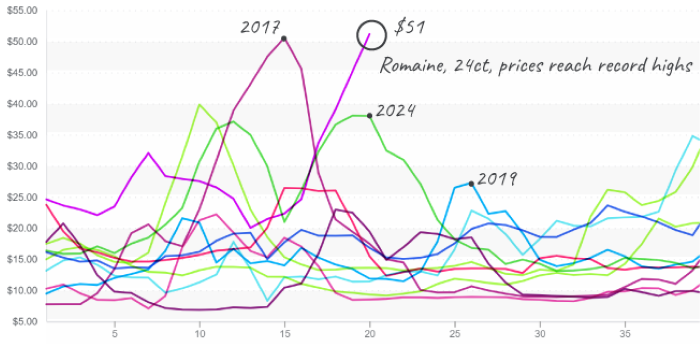
Romaine prices are defying typical seasonal trends for mid-May, climbing +14 percent over the previous week. Western yields continue to decline due to heat-driven disease pressure. Growers have been battling INSV and thrips for weeks, and week #20 volume is reportedly down -25 percent from the previous year. Supply should improve over the next two weeks, though prices may be slow to ease amid strong summertime demand.
Romaine
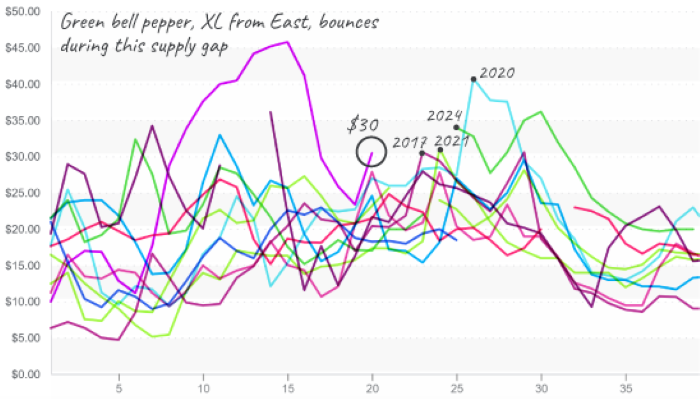
A supply gap is emerging in the bell pepper market. At $23, average pepper prices have surged to a ten-year high by a significant margin. In the East, Florida growers are winding down while Georgia growers have yet to begin production. Out West, Coachella growers have also been slow to ramp up, further tightening supply.
Green Bell Pepper
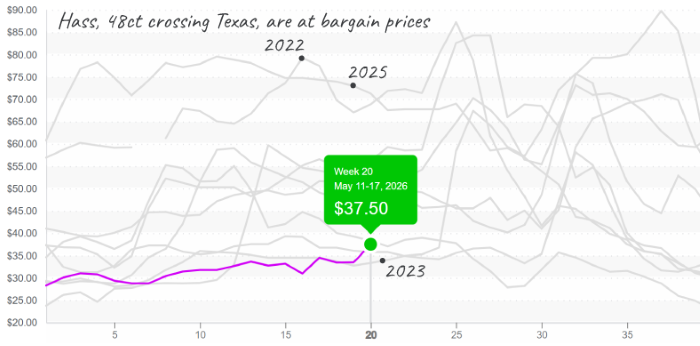
Historically low avocado prices rose slightly over the previous week. Seasonally declining production may push prices higher in the coming weeks, though it remains unclear whether demand will be strong enough to bring prices closer to historical averages.
Hass Avocado
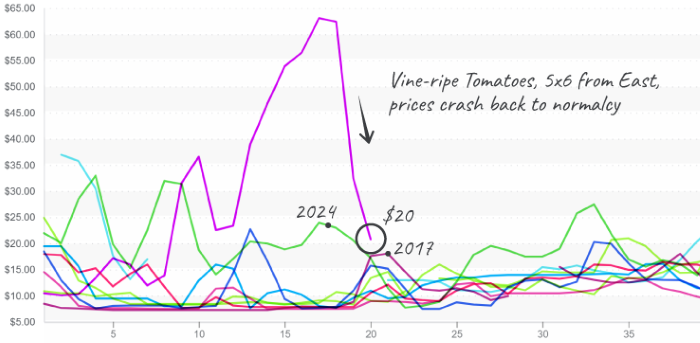
For the second consecutive week, prices for round and Roma-type tomatoes declined. Strong Florida production is finally easing record-breaking pricing pressure. Week #20 prices remain well above seasonal averages but are at least finally reentering Earth’s atmosphere.
Vine Ripe Tomatoes
ProduceIQ saves you time and provides valuable information to increase your profits.
The ProduceIQ Index is the fresh produce industry’s only shipping point price index. It represents the industry-wide price per pound at the location of packing for domestic produce and at the port of U.S. entry for imported produce.
ProduceIQ uses 40 top commodities to represent the industry. The Index weights each commodity dynamically, by season, as a function of the weekly 5-year rolling average Sales. Sales are calculated using USDA Agricultural Marketing Service data on movement and prices. The Index serves as a fair benchmark for industry price performance.

News you need.
Join Blue Book today!
Get access to all the news and analysis you need to make the right decision --- delivered to your inbox.







Subscribe to our newsletter
© 2026 Blue Book Services. All Rights Reserved

