


















ProduceIQ: Floods and rain add to produce market pressures
Mother Nature forgot to turn off the tap again, wreaking havoc with crops in parts of Florida, as well as an already wet California.

ProduceIQ
Mother Nature forgot to turn off the tap again. Parts of Okeechobee County received 10–12 inches of rain over the weekend, leaving fields flooded and growers assessing potential losses to bell peppers, beans, corn, cucumbers, and iceberg lettuce.
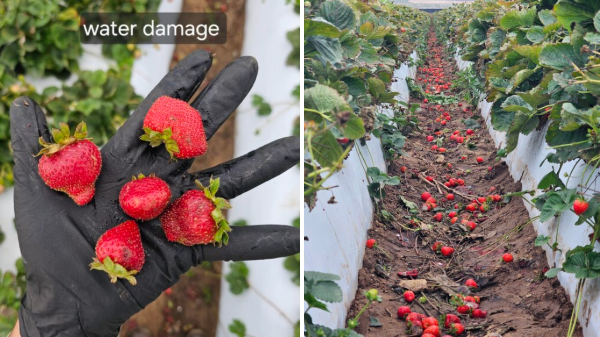
Farther west, Oxnard received more than an inch of rain over the previous weekend, while Santa Maria picked up more than a third of an inch. The wet weather has slowed strawberry harvests and added to quality issues in California’s already limited supply.
ProduceIQ Index:$1.53/pound, up +4 percent over prior week
Week #45, ending Nov. 6th
Blue Book has teamed with ProduceIQ BB #:368175 to bring the ProduceIQ Index to its readers. The index provides a produce industry price benchmark using 40 top commodities to provide data for decision making.
Seasonal production declines and weather challenges in Mexico are keeping tomato supplies depleted, with round, Roma and grape-type prices reaching ten-year highs. Cauliflower and asparagus markets aren’t offering much relief, either, as insect pressure and difficult growing conditions keep supplies tight.
At this rate, Florida Man might not be the only one making headlines this week. Buyers are heading into November with little breathing room, and for several commodities, meaningful relief is still weeks away.
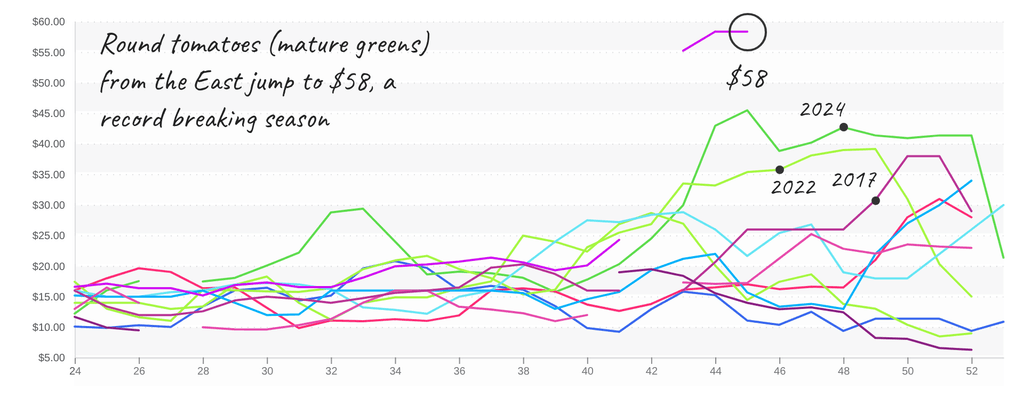
The anemic tomato supply situation persists across varieties. A brutal combination of a seasonal production decline, inclement weather in Mexican growing regions, and heavy rain in the Southern United States has depleted supply and pushed prices to a ten-year high for rounds, romas, and grape-type varieties.
Growers in Georgia are working to fill the gap in Eastern markets, but it likely won’t be enough to stabilize prices. Unfortunately for buyers, lasting relief won’t likely arrive for another 2-3 weeks, when growers in Florida can finally provide a reprieve for supply-starved tomato markets.
Tomato Markets Are Running on Empty
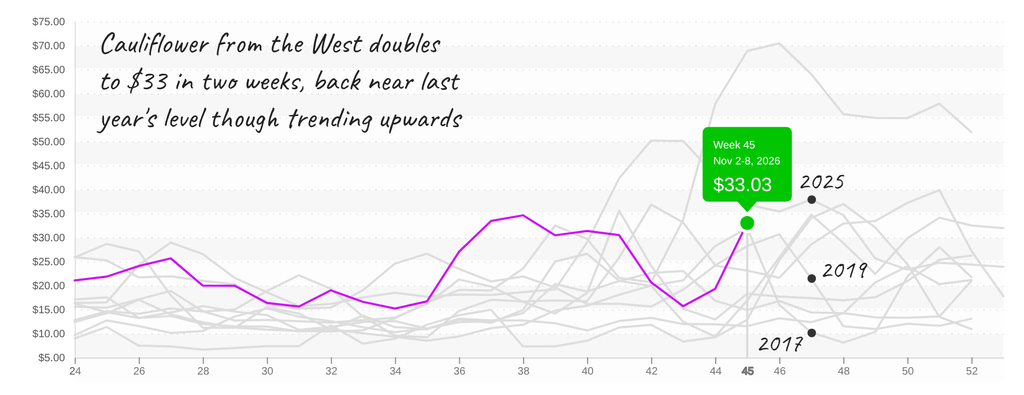
Cauliflower prices do a 180. In the blink of an eye, average cauliflower prices have swung from record lows to record highs. Insect pressure and a seasonal decline in production have pushed prices well above average in week #45. Production in Yuma, AZ should provide some relief by mid-November; however, low supply and price volatility are forecasted to persist into December.
Volatility strikes cauliflower markets
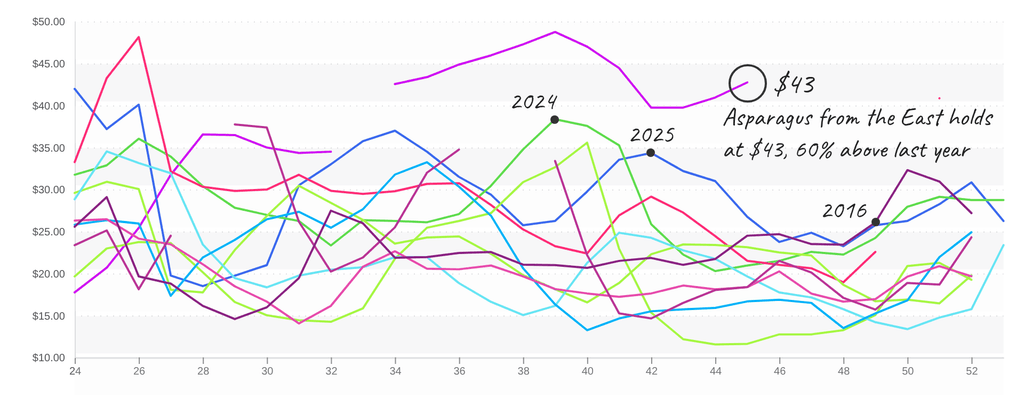
Asparagus markets have maintained a ten-year high for 18 straight weeks. The Peruvian market is in transition, and Mexican growers are being plagued by a ruthless combination of heat, rain, and seasonal transition pressures. Week #45 volume out of Mexico is about half of what it was last year. Like strawberries, asparagus prices are forecasted to remain elevated through December.
Asparagus Prices Refuse to Budge
ProduceIQ Index – The ProduceIQ Index is the fresh produce industry’s only shipping point price index. It represents the industry-wide price per pound at the location of packing for domestic produce and at the port of U.S. entry for imported produce. ProduceIQ uses 40 top commodities to represent the industry. The Index weights each commodity dynamically, by season, as a function of the weekly 5-year rolling average Sales. Sales are calculated using USDA Agricultural Marketing Service data on movement and prices. The Index serves as a fair benchmark for industry price performance.

News you need.
Join Blue Book today!
Get access to all the news and analysis you need to make the right decision --- delivered to your inbox.





Subscribe to our newsletter
© 2026 Blue Book Services. All Rights Reserved

