


















Federal fraud indictment shows why verification matters
A recently filed federal indictment underscores the growing importance of careful verification practices in produce trading.
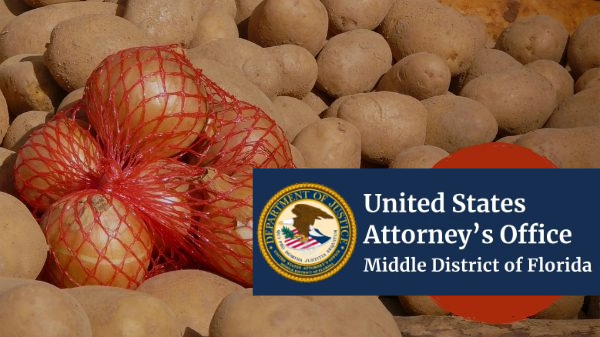
A recently filed federal indictment in the United States District Court for the Middle District of Florida underscores the growing importance of careful verification practices in produce trading. Florida man arrested for multiple produce fraud schemes – Blue Book
According to the indictment, a Florida resident, Jason Canals, owner of the now-defunct produce operations Stay Fresh Distributors and Season Best Produce Corp, allegedly orchestrated a scheme to obtain produce shipments from multiple suppliers through false and fraudulent pretenses.
Authorities allege he used deceptive communications to persuade companies to ship product that ultimately went unpaid.
The case describes a pattern familiar to many in the industry. The accused allegedly used fraudulent email communications that included the unauthorized use of a PACA license number and a Blue Book Services identification number to create the appearance of legitimacy when dealing with suppliers.
Investigators say several produce companies were targeted. The indictment shows shipments of onions and potatoes were transported from growing regions such as Idaho, Michigan, Texas, Georgia, Washington, and California to Florida. In total, the indictment outlines multiple shipments occurring between August 2024 and August 2025.
In some instances, the scheme allegedly involved paying for an initial shipment in order to build credibility with suppliers before requesting additional loads. Once the product was in transit, shipments were diverted and payment was never made.
While law enforcement continues to investigate and prosecute these cases, the situation illustrates a broader reality facing the produce industry: impersonation fraud remains a real threat to produce commerce.
A Familiar Pattern
Many fraud schemes follow a similar pattern. A prospective buyer initiates contact—often by email—demonstrates familiarity with the industry and communicates in a manner that appears legitimate. Early interactions, and sometimes even initial transactions, may seem routine, helping to build credibility and trust with the seller.
Once that trust is established, larger orders are placed—at times, with urgent shipping timelines—before payment issues surface.
Because produce transactions move quickly and involve high-value shipments, these schemes can result in significant losses before problems are detected.
Strengthening Fraud Prevention Through Verification
Fighting fraud isn’t a feature Blue Book offers—it’s a core reason we exist. For 125 years, verification has been the backbone of what Blue Book does: confirming that the companies operating in this industry are who they say they are, and that they can be trusted to pay.
In the produce industry, Blue Book membership isn’t just a credential. It’s a condition of doing business. Buyers and sellers routinely decline to transact with companies that aren’t listed and verified in Blue Book—not as a formality, but as a front-line defense against exactly the kind of scheme described in this indictment.
When an unknown company approaches you for product, the question shouldn’t start with whether to ship. It should start with: are they in Blue Book? This case is a reminder of why that standard matters.
This year, Blue Book is strengthening those defenses further. Blue Book Verify, our newest risk prevention tool, allows companies to confirm that the business identity, contact information, and credentials presented by a prospective trading partner are exactly what they claim to be—before the first shipment leaves the dock.
In addition, Blue Book encourages members to incorporate fraud prevention procedures into their onboarding and vetting practices, including verifying company domains, phone numbers, personnel and other important contact information through Blue Book Online Services or other independent sources before extending credit.
If a company approaches you for product or services and they’re not in Blue Book—that’s not just a yellow flag. Ask why.
Prevention Starts Before the First Shipment
Fraud rarely begins with an obvious red flag. More often, it starts with a routine inquiry that appears legitimate on the surface.
By integrating verification tools and consistent onboarding procedures into everyday credit practices, companies can significantly reduce the risk of impersonation and cargo diversion schemes.
For over a century, Blue Book Services has supported the produce industry by providing trusted credit intelligence and risk insights. As fraud tactics continue to evolve, proactive verification and shared industry awareness remain some of the most effective tools available to protect trading partners across the supply chain.
Learn more about how Blue Book helps members fight fraud: https://www.bluebookservices.com/produce-fraud-protection/
News you need.
Join Blue Book today!
Get access to all the news and analysis you need to make the right decision --- delivered to your inbox.




Subscribe to our newsletter
© 2026 Blue Book Services. All Rights Reserved

