

















Perishable Fraud Protection
Built for Produce.
Fraud in the produce industry is accelerating. Shell companies, imposter buyers, double-brokered loads, and non-payment schemes cost the industry millions every year. Blue Book gives you the intelligence to see it coming.
Why Produce Is a Prime Target for Fraud
Produce moves fast. Deals close in hours, product spoils in days, and sellers often extend credit to move perishable inventory before it loses value. That speed creates openings for bad actors.
Unlike manufactured goods, produce can’t sit in a warehouse while you verify a buyer. Fraudsters exploit this urgency — placing orders under stolen identities, diverting loads to unknown locations, and disappearing before anyone realizes what happened.
Global food fraud cases rose 10% in 2024, and early data shows the same trajectory into 2025. In September 2025, the USDA issued a rare public alert about a significant increase in imposter fraud targeting produce sellers.
Imposter Fraud Targeting Produce Sellers on the Rise
The USDA PACA Division reported a significant increase in fraudulent activity involving individuals falsely claiming to be licensed PACA members and legitimate produce buyers.
Fraudsters place orders, arrange transport, divert loads to unknown locations, and disappear. By the time the real company confirms they never placed the order, the product is gone.
How Perishable Fraud Happens
Imposter Buyers
Fraudsters impersonate legitimate, well-known produce companies — using real employee names, spoofed email addresses, and copied paperwork to place large orders. The real company never placed the order. The load vanishes.
Shell Companies
Bad actors register new companies, obtain a PACA license, place several legitimate small orders to build trust, then make a large purchase and disappear without paying. The entity dissolves before collections begin.
Double-Brokered Loads
A fraudulent carrier accepts a load from a legitimate broker, then re-brokers it to another carrier without anyone’s knowledge. The load may be delivered but payment never arrives — or the load is diverted entirely.
Non-Payment & Slow Pay
Buyers receive product, then delay or refuse payment — knowing that produce sellers are under pressure to keep moving inventory. Without claims support, recovery takes months and burns relationships.
Forged Documentation
Fraudsters create fake bills of lading, altered proof-of-delivery documents, and counterfeit PACA license documentation to make illegitimate transactions appear authentic.
Identity Theft & Spoofing
Criminals use domain spoofing, email manipulation, and social engineering to pose as trusted trading partners. A single-letter change in an email domain can redirect an entire shipment to a fraudulent party.
What Fraud Costs the Produce Industry
Fraud doesn’t just steal product. It steals margin, time, trust, and business relationships.
Rise in Food Fraud Cases
Global food fraud cases increased 10% in 2024, with early 2025 data showing the same upward trajectory.
Surge in Double-Brokering
Double-brokering complaints in the freight industry have surged 400% since 2022, directly impacting produce shipments.
Annual Cargo Theft (FBI est.)
The FBI estimates total annual cargo theft in the U.S. ranges from $15 billion to over $30 billion across all industries.
Average Recovery Time
Without specialized claims support, recovering from a single fraud incident can take months of collections and legal effort.
How Blue Book Protects You
Blue Book’s perishable fraud protection is built from the inside out — using produce industry data that generic credit bureaus don’t have.
Verify Before You Trade
Search any company and instantly see their Blue Book Credit Score, PACA license status, payment trends, ownership history, and six proprietary trade ratings — all in one profile.
Know who you’re dealing with before you extend credit, ship product, or broker a deal.
Proprietary Fraud Signals
Blue Book’s intelligence goes beyond credit scores. Our proprietary fraud signals flag shell companies, identity fraud, load theft patterns, and companies with rapidly deteriorating payment behavior.
These are produce-specific signals that generic bureaus like D&B and Experian simply don’t track.
Real-Time Risk Alerts
Set monitoring alerts on any trading partner. Get notified the moment their credit score drops, a PACA dispute is filed, or their license lapses — so you can adjust terms before you’re exposed.
Blue Book tracks over $50 billion in industry A/R, so changes surface fast.
Claims & Recovery
When fraud happens, Blue Book’s claims team steps in. We process 400+ claims per year with an average 45-day resolution. In 2025, we recovered over $10 million for members.
You trade. We help you get paid.
New: Blue Book Verify™
Confirm every counterparty before you trade. Blue Book Verify uses one-time verification codes tied to confirmed Blue Book memberships to stop impersonation fraud at the point of contact.
If they can’t produce a code, you have reason to pause.
Learn More About Blue Book Verify →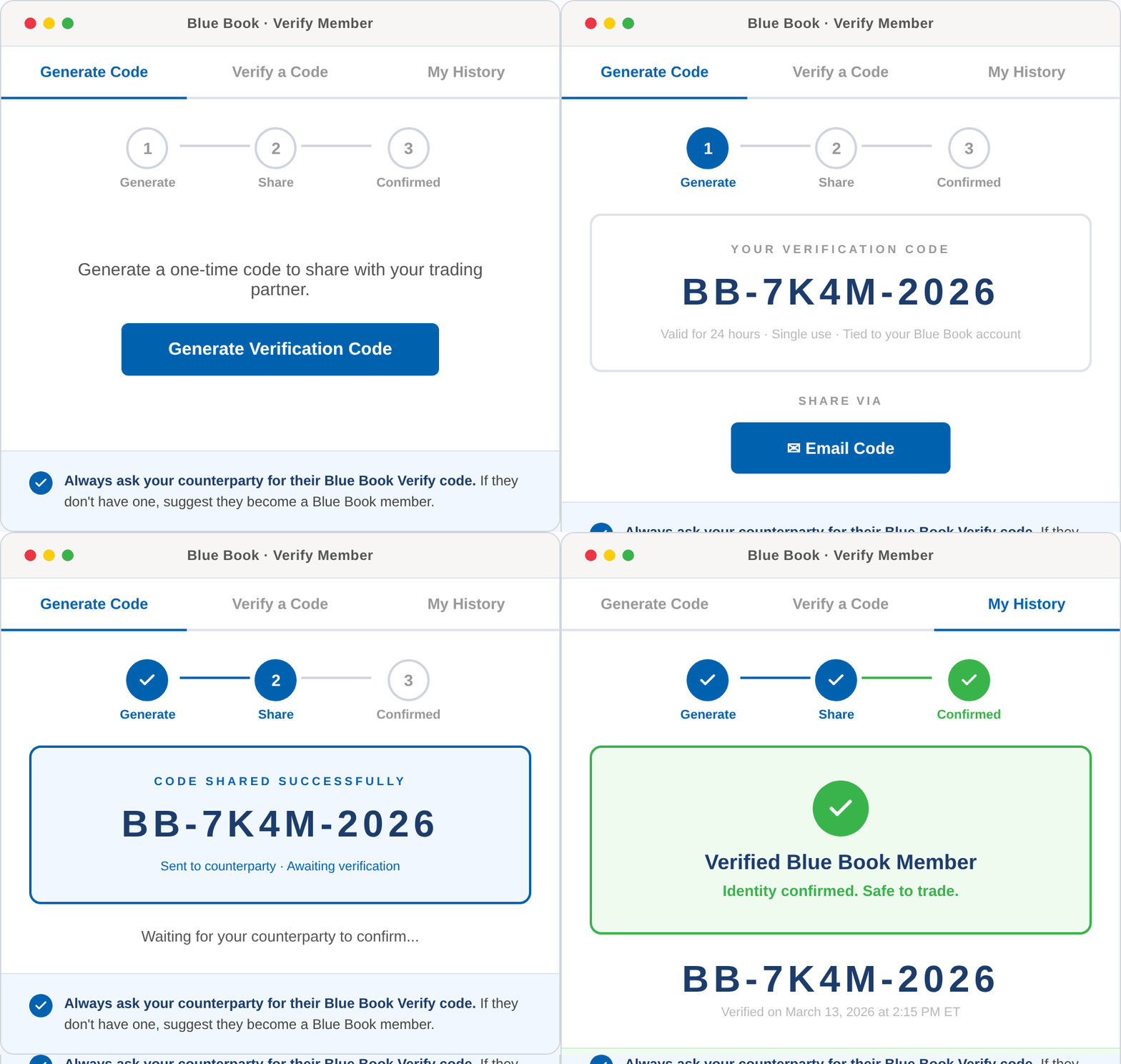
Know the Moment Something Changes
Fraud often starts with a signal — a credit score drop, a missed payment, a lapsed license. The problem is catching it before your next shipment goes out.
Blue Book’s alert system monitors your trading partners continuously and notifies you the moment risk indicators change, so you can act before you’re exposed.
See Alerts in Action →Credit Score Drop
Notified when a partner’s Blue Book Credit Score falls below your threshold.
PACA Dispute Filed
Alerted when a dispute or complaint is filed against a company you’re monitoring.
License Lapse or Suspension
Notified if a partner’s PACA license expires, lapses, or is suspended by the USDA.
Payment Behavior Change
Flagged when payment trends shift — slower payments, missed invoices, or deteriorating reliability.
Fraud Protection: Blue Book vs. Generic Bureaus
Frequently Asked Questions
Perishable fraud encompasses schemes that exploit the speed and trust required in fresh produce transactions — including imposter buyers, shell companies, double-brokered loads, and non-payment after receipt. Produce is especially vulnerable because deals close fast, product spoils quickly, and sellers often extend credit to move inventory before it loses value.
Blue Book tracks over $50 billion in industry accounts receivable and aggregates payment data, PACA dispute records, credit scores, and six proprietary trade ratings across 20,000+ produce companies. Proprietary fraud signals flag shell companies, identity fraud, load theft patterns, and companies with rapidly deteriorating payment behavior — threats that generic credit bureaus miss entirely.
Blue Book members can set monitoring alerts on any company in the directory. You’ll be notified immediately when a trading partner’s credit score drops, a PACA dispute is filed against them, their PACA license lapses, or their payment behavior changes — so you can adjust terms or pause trading before you’re exposed.
Blue Book’s claims team processes over 400 claims per year with an average 45-day resolution time. In 2025, Blue Book recovered more than $10 million for members. If a deal goes bad, you’re not chasing payments alone — Blue Book steps in to help you recover.
Generic credit bureaus like Dun & Bradstreet or Experian don’t track produce-specific payment behavior, PACA disputes, or perishable goods fraud patterns. Blue Book is the only intelligence platform built from actual produce industry trading data, with fraud signals designed specifically for the fresh food supply chain.
Yes. Before extending credit or shipping product, Blue Book members can look up any company to see their Credit Score, PACA license status, payment history, trade ratings, and ownership details. This verification process takes seconds and can prevent losses of thousands of dollars per fraudulent transaction.
2026 Produce Fraud Forecast
The 5 fraud threats escalating this year, role-specific risk profiles, and a step-by-step preparedness playbook. Built on Blue Book’s 125 years of trade intelligence.
Fraud Is Accelerating. Your Intelligence Should Be Faster.
Proprietary fraud signals, real-time risk alerts, PACA verification, credit intelligence, and claims support — all backed by 125 years of produce industry trust.
Blue Book members last 10 years longer than non-members

