

















ProduceIQ: The heat is on, demand is not
Americans are eating out less, and the slowdown in foodservice demand is making its way back to produce markets.

Images courtesy ProduceIQ
It seems consumers aren’t the only ones trying to cut costs this summer. Americans are eating out less, and the slowdown in foodservice demand is making its way back to produce markets.
Potatoes, carrots, and onions are among the foodservice staples feeling the effects as consumers tighten their wallets.
Meanwhile, Mother Nature is finding other ways to keep us on our toes. Wildfire smoke is adding another complication for growers in the Northwest. Blueberry and raspberry growers are navigating smoke-shortened workdays on top of extreme heat.
The heat is accelerating ripening, while apple and pear growers are keeping a close eye on smoke settling over major tree-fruit regions. For now, the bigger concern is harvest disruption rather than widespread crop loss, but between soft demand and stubborn weather, produce markets have plenty to keep an eye on this week.
ProduceIQ Index: $1.07/pound, down -3.0 percent over prior week
Week #32, ending Aug 8th
Blue Book has teamed with ProduceIQ BB #:368175 to bring the ProduceIQ Index to its readers. The index provides a produce industry price benchmark using 40 top commodities to provide data for decision making.
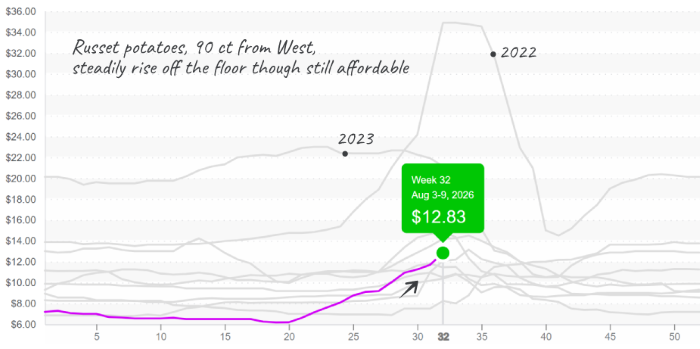
Declining storage crop volume is helping push potato prices higher, even as soft foodservice demand continues to weigh on the market. Despite the notable increase in this typically stable market, potato prices are up +12 percent over the previous week but remain well below the upper outliers in prior years. In the big picture, poor foodservice demand is one of the contributing factors keeping potato prices suppressed.
Soft demand, firmer prices
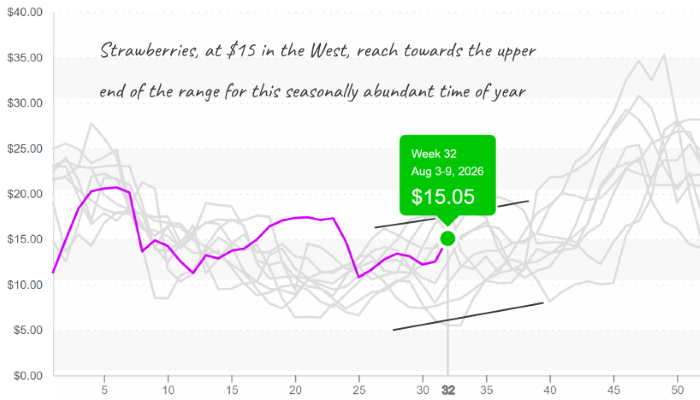
Up +34 percent over the prior week, strawberry prices are making a steep climb at a time of year that usually brings bountiful supply and steadier prices. Earlier this summer, elevated temperatures accelerated production.
Now, the heat is doing the opposite. Reduced yields, quality, and shelf life are forcing growers to divert more product to processors. Strawberry prices aren’t in historically unprecedented territory, but they are on the higher end of the spectrum for week #32. Production in the Salinas/Watsonville areas will also decline over the next few weeks, but Santa Maria production should provide enough supply to cover the gap.
Heat takes a bite out of supply
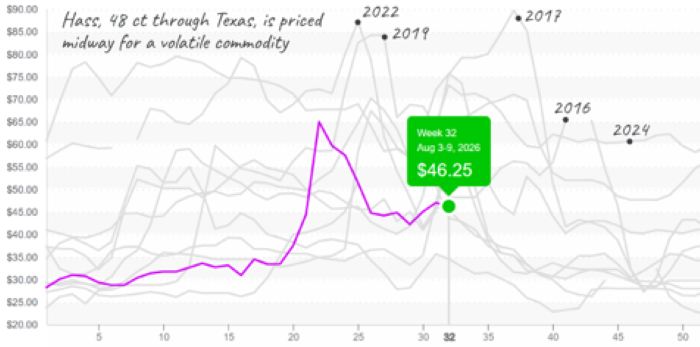
Mexican avocado imports to the U.S. were halted last week in response to an unspecified security threat to USDA inspectors in Michoacán. Fortunately for buyers, ample supply was already in the pipeline, preventing a major market reaction.
Average Hass prices are practically flat week over week and remain firmly below average. Looking forward, production in California and Peru will likely begin to taper as we approach September. However, increasing Mexican supply should offset the seasonal decline in domestic and Peruvian production.
Avocados shrug off a supply scare
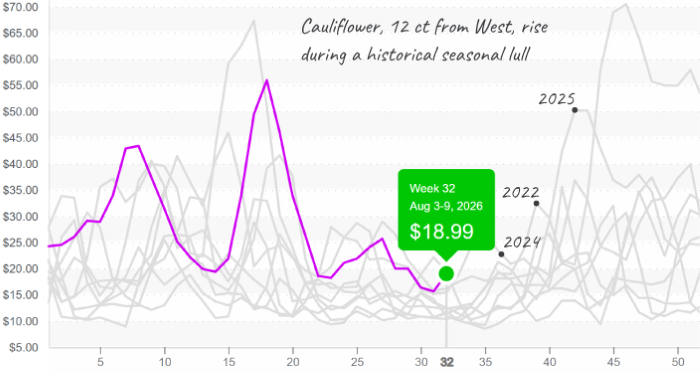
Average cauliflower prices rose sharply to $19. Increasing insect pressure, combined with other heat-related quality issues, is making this wet-veg commodity one to watch. Apparently, even the bugs are feeling the heat.
Heat and bugs hit cauliflower
ProduceIQ saves you time and provides valuable information to increase your profits.
The ProduceIQ Index is the fresh produce industry’s only shipping point price index. It represents the industry-wide price per pound at the location of packing for domestic produce and at the port of U.S. entry for imported produce.
ProduceIQ uses 40 top commodities to represent the industry. The Index weights each commodity dynamically, by season, as a function of the weekly 5-year rolling average Sales. Sales are calculated using USDA Agricultural Marketing Service data on movement and prices. The Index serves as a fair benchmark for industry price performance.

News you need.
Join Blue Book today!
Get access to all the news and analysis you need to make the right decision --- delivered to your inbox.




Subscribe to our newsletter
© 2026 Blue Book Services. All Rights Reserved

