

















ProduceIQ: Storms, protests, and prices
With dueling tropical systems in the Atlantic, hurricane season has returned to the forefront of our minds.

Images courtesy ProduceIQ
We are very sorry for jinxing September’s historically quiet hurricane season in last week’s newsletter. Clearly, our readership extends beyond fresh produce and must have triggered the ire of the weather gods.
Now, with dueling tropical systems in the Atlantic, hurricane season has returned to the forefront of our minds, serving as a reminder of how quickly external forces can alter the outlook for growers, shippers, and buyers alike.
Tropical Storm Imelda is expected to strengthen into a Category 1 hurricane early this week as it tracks near the Bahamas and eventually bring 1”-3” rain to growers in the Carolinas. Meanwhile, Hurricane Humberto has already reached Category 4 strength but remains far offshore; its swells could still disrupt East Coast ports and shipping schedules.
Unfortunately, the storms aren’t limited to the tropics. On the ground in Ecuador, protests over the removal of the diesel fuel subsidy are creating logistical headaches for producers. While the unrest has been most concentrated in the Andes, the situation remains volatile, with the potential to ripple into coastal shipping routes. Even if roads stay open, the higher diesel costs will increase production and transportation costs.
ProduceIQ Index: $0.93/pound, +2.2 percent over prior week
Week #39, ending Sep 26th
Blue Book has teamed with ProduceIQ BB #:368175 to bring the ProduceIQ Index to its readers. The index provides a produce industry price benchmark using 40 top commodities to provide data for decision making.
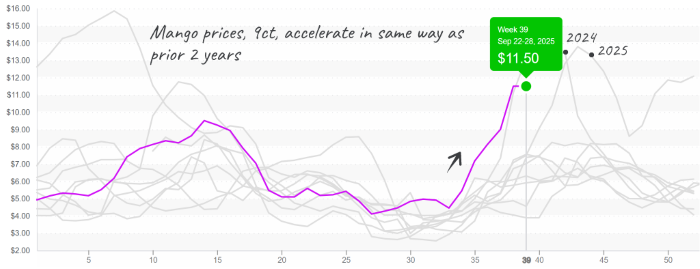
Mexican mango supply has all but disappeared, and the market is now reliant on supply from Brazil until Ecuadorian producers resume production. Hopefully for buyers, Ecuadorian mango supply will remain unaffected by the protests in the country and ramp up sooner rather than later. Week #38 prices are near a ten-year high, keeping mango lovers on edge.
Mangoes, 9ct, rise during transition in the same way as 2023 & 2024
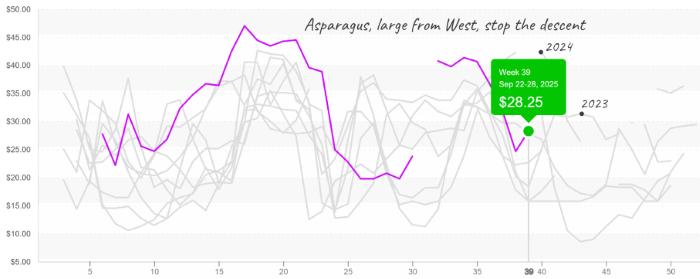
Tropical Storm Maria threw a wrench into a promising asparagus crop from growers in Baja California Sur and Ciudad Constitución. Growers estimate a yield loss of at least 30 percent. Despite the bleak outlook, average prices are only up +8 percent over the previous week, as Peruvian growers work to fill the production gap.
Asparagus prices, large from the West, bounce from the declining pattern
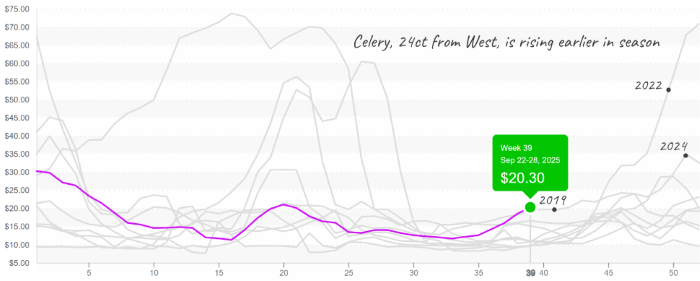
Meanwhile, celery is keeping buyers on their toes. Prices surged another +7 percent this week, pushing the commodity to record highs. Strong demand, along with fall transition and inclement weather, is driving prices to record heights.
Celery accelerates above all prior years
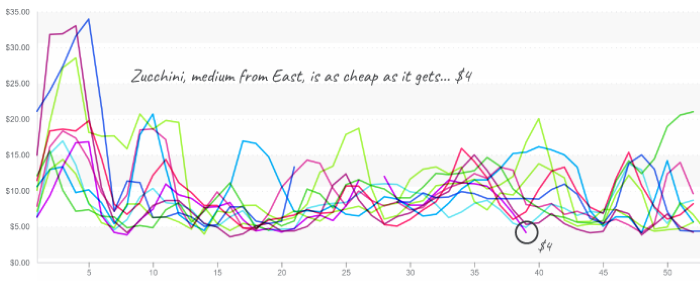
Fall transition has left the squash market overflowing, sending average prices tumbling to a ten-year low. Mexican growers are flooding the market with fresh product, while strong Eastern volume from North Carolina and Georgia gives buyers plenty to be thankful for this season.
Zucchini, mediums in East, at $4, are at the floor… desperate for love from buyers
ProduceIQ saves you time and provides valuable information to increase your profits.
The ProduceIQ Index is the fresh produce industry’s only shipping point price index. It represents the industry-wide price per pound at the location of packing for domestic produce and at the port of U.S. entry for imported produce.
ProduceIQ uses 40 top commodities to represent the industry. The Index weights each commodity dynamically, by season, as a function of the weekly 5-year rolling average Sales. Sales are calculated using the USDA’s Agricultural Marketing Service for movement and price data. The Index serves as a fair benchmark for industry price performance.

News you need.
Join Blue Book today!
Get access to all the news and analysis you need to make the right decision --- delivered to your inbox.






Subscribe to our newsletter
© 2026 Blue Book Services. All Rights Reserved

