

















ProduceIQ: Hormuz closure, Mexico unrest add price pressure
Disruptions to the flow of oil and other goods threaten to drive up production and transportation costs across the produce supply chain.
Images courtesy ProduceIQ
Rising geopolitical tensions are rippling through global supply chains.
Escalating conflict between the U.S. and Iran has reignited fears of oil shortages. Over the weekend, the Strait of Hormuz closed, and shipping companies diverted traffic away from the Suez Canal. Disruptions to the flow of oil and other goods threaten to drive up production and transportation costs across the produce supply chain.
Analysts warn that a prolonged conflict with Iran could push crude oil prices above $100 per barrel, levels not seen since Russia’s invasion of Ukraine. While strategic reserves may cushion immediate shortfalls, moderate price increases are expected in the near term.
ProduceIQ Index: $1.12/pound, up -0.9 percent over prior week
Week #9, ending Feb 27th
Blue Book has teamed with ProduceIQ BB #:368175 to bring the ProduceIQ Index to its readers. The index provides a produce industry price benchmark using 40 top commodities to provide data for decision making.
Meanwhile, instability closer to home is adding to market volatility.
Violence flared across parts of Mexico following the reported death of cartel leader El Mencho. Retaliatory killings, roadblocks, and arson prompted the USDA to temporarily suspend inspection and certification services in some of the hardest-hit states, including Jalisco and Michoacán.
Inspection services have since resumed, but supply disruptions persist as growers and shippers weigh operational continuity against employee safety.
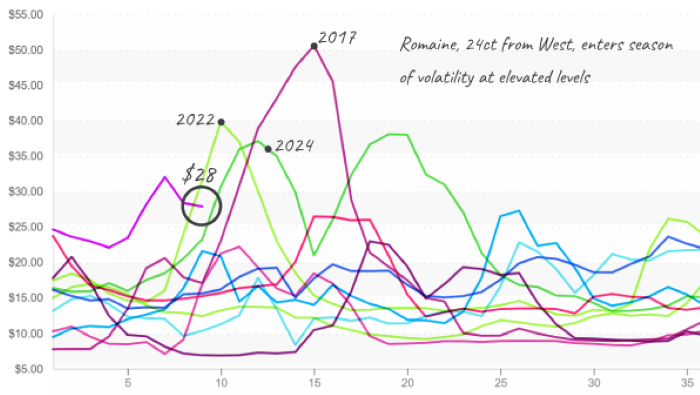
Weak demand has lulled lettuce and wet vegetable markets into a temporary sense of stability. Average iceberg prices are down -38 percent week over week, while romaine prices are down only slightly. However, warm weather in Yuma is accelerating the end of the growing season, potentially creating a production gap as California growers ramp up for spring.
Iceberg -38% week over week as Yuma season winds down; gap risk ahead
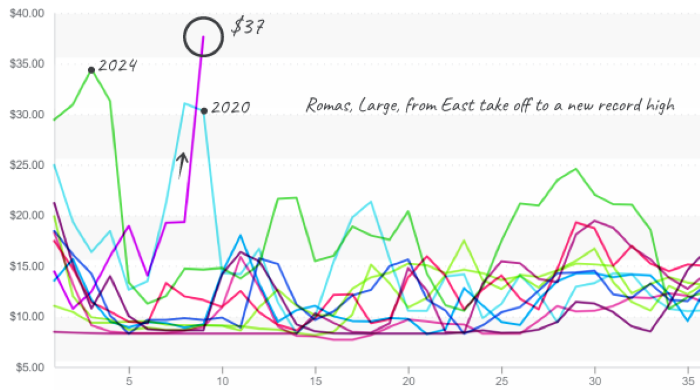
Tomato markets, by contrast, are surging. Both round and plum varieties jumped more than +80 percent over the previous week. In Florida, a record-breaking freeze has forced many growers to declare Act of God. In Mexico, a combination of violent unrest, reduced acreage, and heightened disease pressure is compounding tight supply. Volatility and elevated pricing are likely to persist through March.
Prices +80 percent due to Florida freeze and Mexico disruptions
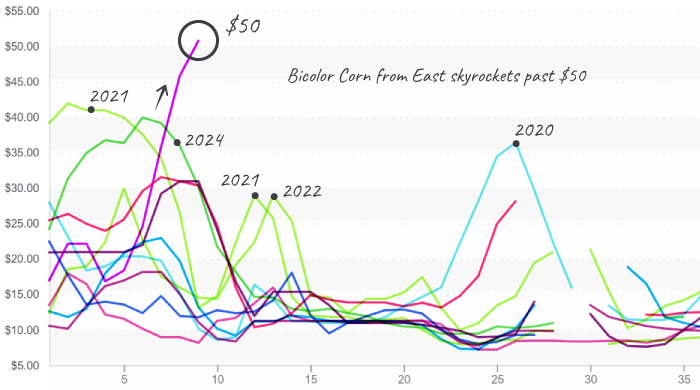
Sweet corn continues its historic climb, up another +13 percent week over week. Like tomatoes, prices are in unprecedented territory, largely due to freeze damage in Florida. Reported volume out of the state is down more than -80 percent year over year, tightening supply nationwide and lifting Western markets as well. Elevated pricing is forecast to continue through March.
Florida volume -80 percent year over year; prices up +13 percent week over week
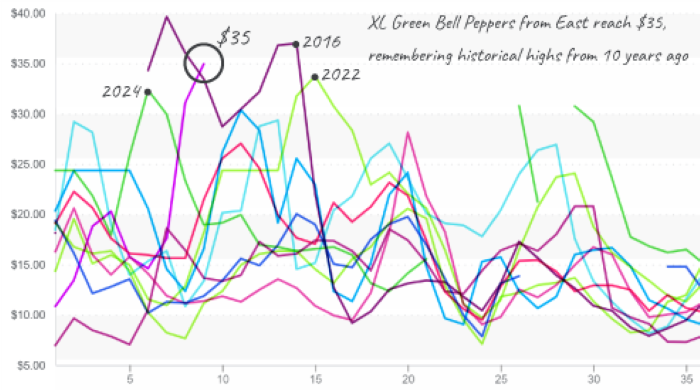
Green bell pepper markets are also in rarefied air. Freeze damage in Florida and ongoing disease pressure in Mexico have driven supply to historically low levels for week #9. High prices and limited availability are expected to persist through April.
Freeze damage, disease tighten supply, elevated prices through April
ProduceIQ saves you time and provides valuable information to increase your profits.
The ProduceIQ Index is the fresh produce industry’s only shipping point price index. It represents the industry-wide price per pound at the location of packing for domestic produce and at the port of U.S. entry for imported produce.
ProduceIQ uses 40 top commodities to represent the industry. The Index weights each commodity dynamically, by season, as a function of the weekly 5-year rolling average Sales. Sales are calculated using USDA Agricultural Marketing Service data on movement and prices. The Index serves as a fair benchmark for industry price performance.

News you need.
Join Blue Book today!
Get access to all the news and analysis you need to make the right decision --- delivered to your inbox.







Subscribe to our newsletter
© 2026 Blue Book Services. All Rights Reserved

