

















ProduceIQ: Global conflict, local weather shake up produce markets
The Middle East conflict disrupts supply chains and adds volatility to commodity pricing, and the impacts are not limited to energy prices.

Images courtesy ProduceIQ
Middle East conflict disrupts international produce supply chains and adds volatility to commodity pricing. The Strait of Hormuz remains closed to commercial traffic. In response, oil prices have surged by more than +25 percent since the onset of the war one week ago.
However, the impacts are not limited to energy prices. Growers planning to ship produce by sea face longer transit times and rising costs.
Meanwhile, back in the U.S., highs in the 80s are expected for growers throughout Florida and Southern Georgia this week. Abnormally warm temperatures for Week #10 are stoking fears of a potential false Spring. If Mother Nature decides to send another icy blast below the Mason-Dixon line, it could significantly reduce Spring harvests.
So, while producers in the South are practically wading through humidity and heat, winter’s chill still maintains an icy grip on produce prices across several commodities.
ProduceIQ Index: $1.12/pound, flat over prior week
Week #10, ending March 6th
Blue Book has teamed with ProduceIQ BB #:368175 to bring the ProduceIQ Index to its readers. The index provides a produce industry price benchmark using 40 top commodities to provide data for decision making.
In Mexico, cartel-related conflict is curbing growers’ output. Blueberry prices are up +25 percent over the previous week and may rise further as violence, roadblocks, and labor shortages conspire to constrain supply. Relief may be a while off for buyers. Blueberry growers in Florida predict this year’s crop will trend below average in terms of supply due to the damage left by the back-to-back freezes in February.
Blueberries, Large from East, rocket to new levels before the typical transition gap

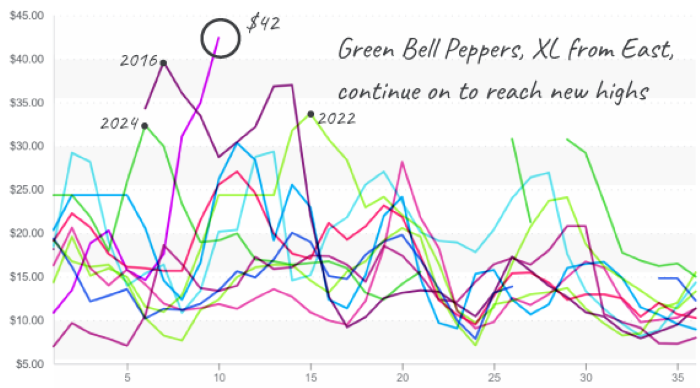
Bell peppers continue their historic run. Average prices are up +16 percent over the previous week, as anemic volume from Florida growers continues to plague buyers. High bell pepper prices are largely due to low green supply, although red bell peppers are also tight. Poor green bell supply is forecast to persist through March, while red bell supply may begin to slowly increase as soon as this week.
Green Bell Peppers, XL from East, continue on to reach new highs
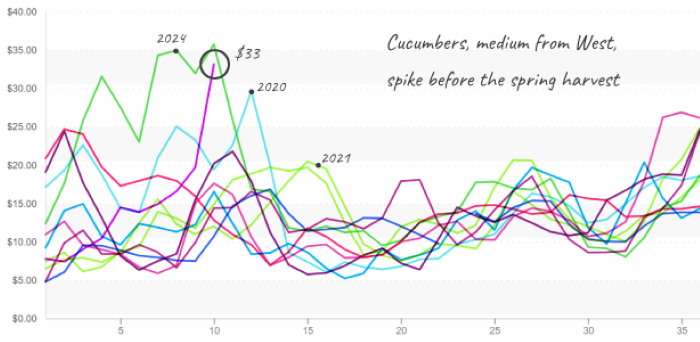
Cucumber prices jump +64 percent over the previous week. A seasonal transition in Mexico, freeze damage in Florida, and lean supply out of Honduras are pushing average prices to a ten-year high for Week #10. Spring production in Florida and Mexico will likely ramp up over the next two weeks, hopefully bringing some relief for buyers.
Cucumbers, medium from West, spike before the spring harvest
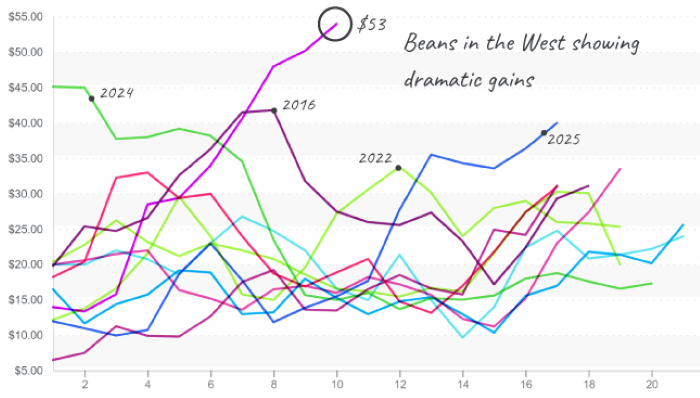
Finally, East and West Coast green bean markets remain divided. In the East, impacts from last month’s freeze in Florida continue to define the supply situation. However, some deals can be found on imports from Guatemala. In the West, prices are rising as cold weather suppresses yields from Mexican growers in Sinaloa. The supply situation on both coasts will likely remain volatile through mid-April.
Beans in the West showing dramatic gains
ProduceIQ saves you time and provides valuable information to increase your profits.
The ProduceIQ Index is the fresh produce industry’s only shipping point price index. It represents the industry-wide price per pound at the location of packing for domestic produce and at the port of U.S. entry for imported produce.
ProduceIQ uses 40 top commodities to represent the industry. The Index weights each commodity dynamically, by season, as a function of the weekly 5-year rolling average Sales. Sales are calculated using USDA Agricultural Marketing Service data on movement and prices. The Index serves as a fair benchmark for industry price performance.

News you need.
Join Blue Book today!
Get access to all the news and analysis you need to make the right decision --- delivered to your inbox.







Subscribe to our newsletter
© 2026 Blue Book Services. All Rights Reserved

