


















ProduceIQ: Fern’s freeze leaves markets on thin ice
As for Winter Storm Fern’s direct impacts on crops in the ground, we won’t know the breadth of the damage for a few more days.

Images courtesy ProduceIQ
Magical, menacing, and a monumental pain for all legs of the produce supply chain. Winter storm Fern brought freezing rain, sleet, and snow to 220 million Americans over the weekend.
Widespread feels a bit modest when describing the storm’s effects; Fern’s impacts can literally be felt from eastern Arizona to the East Coast.
And the weather-blender of a storm isn’t finished yet. The worst of it has already run its course in the Southeast, but as the storm plows northward today, record lows are following in its wake. Snow, downed trees, and icy roads will critically impede the flow of produce throughout the week, but record cold temperatures will likely plague produce prices long after the ice has melted.
As for the storm’s direct impacts on crops in the ground, we won’t know the breadth of the damage for a few more days. However, the bullseye is wide. The cold forecast to sweep into growing regions on the tail end of the storm could impact the supply of everything from lettuce in Arizona to oranges in Texas and strawberries and tomatoes in Florida.
ProduceIQ Index: $1.11/pound, down +5.7 percent over prior week
Week #4, ending Jan 23rd
Blue Book has teamed with ProduceIQ BB #:368175 to bring the ProduceIQ Index to its readers. The index provides a produce industry price benchmark using 40 top commodities to provide data for decision making.
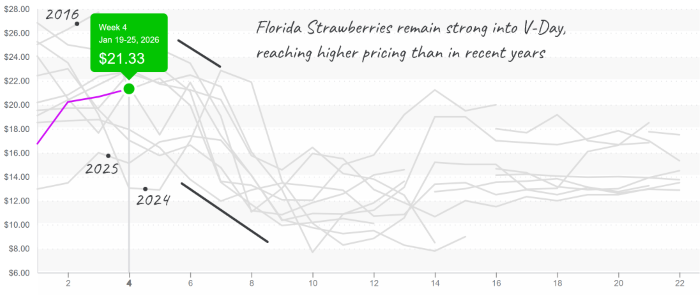
While Valentine’s Day demand for strawberries heats up, Florida growers are struggling to thaw out. Reported volume from the Sunshine State is down by approximately -50 percent over 2025’s week #4. Two major winter storms within two weeks slowed plant growth and reduced harvests. Prices are just above average this week, but markets have no shortage of fuel to propel prices higher as supply strains under the weight of peak holiday demand.
Winter weather trims volume just as strawberry demand peaks.
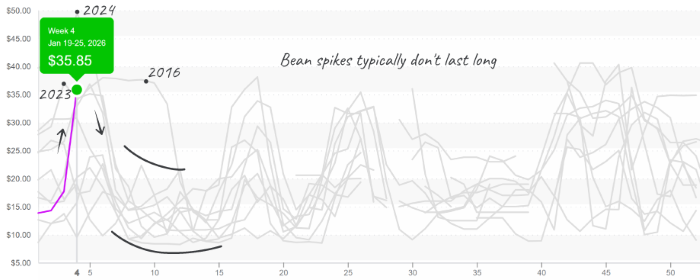
Like strawberries, the cold plunge plaguing the snow-sensitive state is also taking bean markets for a wild ride. Average prices are up by +91 percent over the previous week. The momentum is expected to fizzle out quickly over the next couple of weeks as warmer weather eases supplies and creates the characteristic volatility in bean prices.
Freeze-driven disruptions spark short-term bean price surge
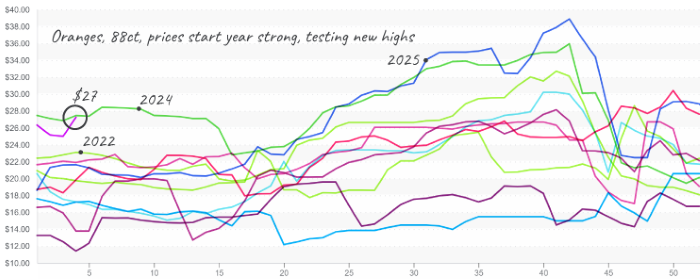
Citrus, too, is feeling the weight of winter. Up +16 percent over the previous week, orange prices lose their downward momentum. Inclement weather is disrupting harvests and reducing supply. Supply is particularly tight for larger sizes of Navels, and Mineola supply is slow to ramp up out of California. In Texas, cold temperatures following winter storm Fern could further complicate the orange supply situation, but we won’t know the extent of the losses until growers assess and report them later this week.
Harvest delays and tight sizing lift orange markets
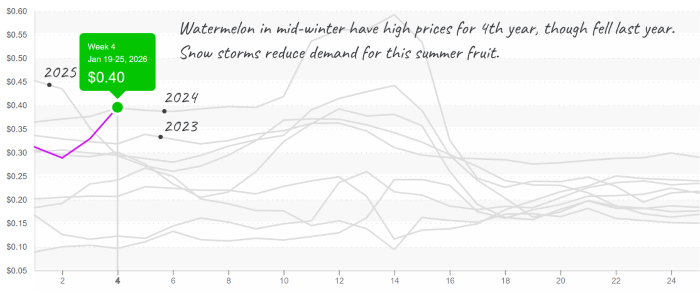
Not typically a commodity featured in one of our winter market highlights, watermelon caught our attention as prices barely beat out 2024’s week #4 prices to grasp a ten-year high. While snowstorms don’t typically make the average consumer hungry for summer’s most iconic fruit, weather-related challenges are stifling yields from growers in Guatemala and are leaving markets hungry for supply.
Unexpected winter standout: watermelon climbs to a 10-year high
ProduceIQ saves you time and provides valuable information to increase your profits.
The ProduceIQ Index is the fresh produce industry’s only shipping point price index. It represents the industry-wide price per pound at the location of packing for domestic produce and at the port of U.S. entry for imported produce.
ProduceIQ uses 40 top commodities to represent the industry. The Index weights each commodity dynamically, by season, as a function of the weekly 5-year rolling average Sales. Sales are calculated using USDA Agricultural Marketing Service data on movement and prices. The Index serves as a fair benchmark for industry price performance.

News you need.
Join Blue Book today!
Get access to all the news and analysis you need to make the right decision --- delivered to your inbox.







Subscribe to our newsletter
© 2026 Blue Book Services. All Rights Reserved

