



















Economic value of fresh produce imports from Mexico to the U.S. to exceed $53 billion by 2030
Fresh produce imports from Mexico are expected to reach over $53 billion in economic value by 2030, according to a recent report from the Center for North American...

Fresh produce imports from Mexico are expected to reach over $53 billion in economic value by 2030, according to a recent report from the Center for North American Studies (CNAS) at Texas A&M University.

“Produce imports from Mexico will continue to increase over the next several years, and much of this growth will be seen through land ports in Texas,” said Luis Ribera, Ph. D., CNAS Director, Bryan-College Station.
Ribera said based on conservative assumptions, U.S. fresh produce imports from Mexico will increase by 29.2 percent over 2022 levels.
Using economic multipliers for each sector of the U.S. economy, these fresh produce imports from Mexico will increase business activity and provide a total economic impact of over $53 billion by 2030.
“Produce imports have a competitive as well as a synergistic relationship with domestic production as Texas and U.S. cannot supply year-round fresh produce for consumption due to seasonality,” he said. “We produce, consume and export fresh produce in our production window and import the rest. That way, Texas and U.S. consumers can enjoy a year-round supply of their favorite fruits and vegetables.”
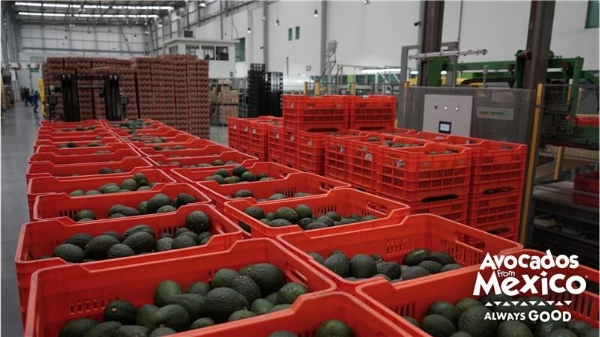
More than 98 percent of produce imports from Mexico enter the U.S. by way of land ports between Texas, New Mexico, Arizona, and California.
Imports of produce from Mexico to the U.S. during 2022 totaled an estimated $18.7 billion, which included the importation of fresh, frozen and processed fruits, vegetables and nuts.
“When looking at only fresh fruits and vegetables, which is nearly 89 percent of the total, those imports alone totaled $16.6 billion,” Ribera said.
According to the report, U.S. fresh produce imports from Mexico by truck will increase to 763,416 truckloads by 2030, or 29.2 percent above 2022 levels. A majority of this growth will occur through Texas ports, with imports expected to grow by 32.4 percent to 430,772 truckloads.
By 2030, the direct economic output from these imports is expected to grow to $19.17 billion. Retail and wholesale outlets will be the main beneficiaries, followed by truck transportation and other services.
“This direct output will require an additional $34.18 billion in economic activity from supporting industries for a total economic impact of $53.3 billion,” Ribera said.
Image sources are either licensed or customer-provided.
News you need.
Join Blue Book today!
Get access to all the news and analysis you need to make the right decision --- delivered to your inbox.






Subscribe to our newsletter
© 2026 Blue Book Services. All Rights Reserved

