
















Spotlight on Avocados: No end in sight for market growth
Strong sales and rising demand are a boon but can producers and suppliers maintain the flow amidst trade volatility?

Lasmsilver/Shutterstock
In this article

When it comes to avocados, there are years when there aren’t enough for the demand and years when there is room for even more. The consensus is that the market is still expanding, while new regions are coming on board and expanding production.
This is exactly why there are new entrants to the market, including a well-known U.S. berry grower.
“Naturipe’s expansion into avocados was a natural and strategic step, designed to tap into growing consumer demand for fresh, year-round avocados and the premium appeal of the category,” explains Andy Bruno, president of Naturipe Avocado Farms, LLC BB #:338569 based in Estero, FL.
For a look at all things avocado, read on.
Varied Varieties
There are over 500 varieties of avocados grown throughout the world. They are divided into three categories: West Indian, Guatemalan, and Mexican.
West Indian varieties do best in subtropical and tropical climates with no frost. They’re larger than their Guatemalan and Mexican cousins and feature green, glossy skins. Examples include Pollock, Simmonds, and Semil 34.
Guatemalan avocados are known for their thick skin, tolerance for cooler temperatures, and creamy texture. Fruit can stay on trees for up to 12 months. The Reed is Guatemalan hybrid known for its exceptional taste.
Mexican/Guatemalan hybrids feature many popular varieties, including the Fuerte, Bacon, and Hass. Hass avocados were developed in California and are the most consumed avocado. They comprise the majority of California’s production and account for 90 percent of the commercially cultivated avocados in Mexico.
“Green-skinned Fuerte used to be the most cultivated avocado in the United States, until the emergence of the Hass.”
“Green-skinned Fuerte used to be the most cultivated avocado in the United States, until the emergence of the Hass,” notes Emiliano Escobedo, executive director of the Hass Avocado Board in Mission Viejo, CA.
A more recent addition is the GEM variety. “The GEM variety is grown only in California,” adds Escobedo. “It looks and tastes like a Hass but has different seasonality and tree structure.” Fun fact: the GEM is named for Gray E. Martin, who cultivated the fruit from a Gwen seedling back in the 1980s in Seville, CA.
Mendez avocados, which are marketed as Hass, are well adapted to warm temperatures and the lower rainfall found in Mexico’s second most productive region, Jalisco. Michoacán, which produces 71 percent of Mexico’s avocados, also cultivates some of the Mendez variety to extend the season.
Domestic Production
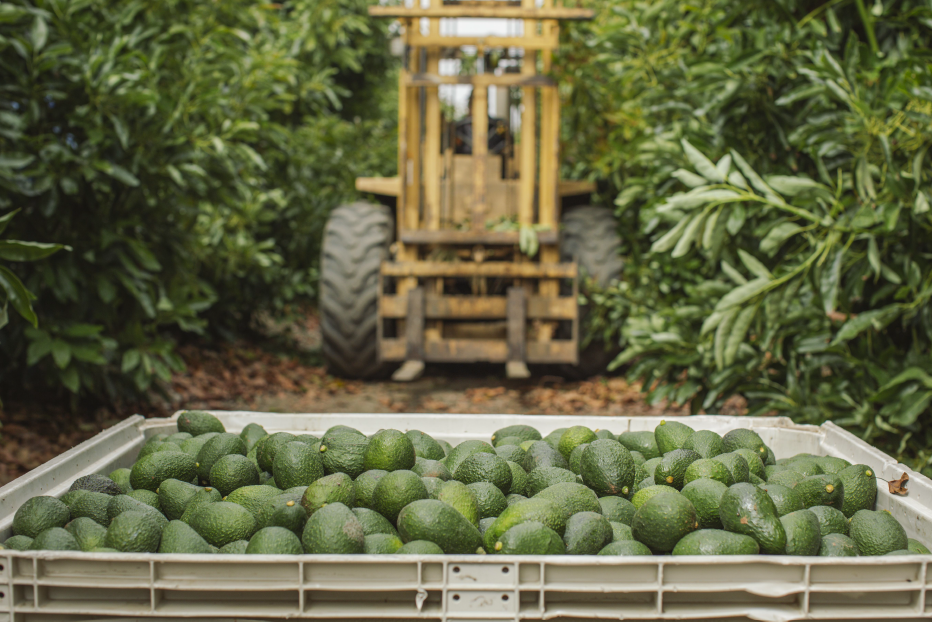
As most folks in the industry know, domestic supply is dominated by California, which produces about 90 percent of the nation’s avocados, with nearly all (95 percent) being the Hass variety. Better yet, last year’s production numbers were good.
“Volume was about 8 percent higher than the average year,” confirms Terry Splane, vice president of marketing for the Irvine, CA-based California Avocado Commission BB #:145028. “We had beneficial rain and sunshine across key regions that supported great fruit sizing and taste.
“The California avocado season typically peaks spring through summer, sometimes starting late winter and extending into early fall,” continues Splane.
“California’s sustainably farmed fruit has peak seasonal timing that aligns with key U.S. holidays such as Cinco de Mayo, the Fourth of July, and Labor Day.”
“California’s sustainably farmed fruit has peak seasonal timing that aligns with key U.S. holidays such as Cinco de Mayo, the Fourth of July, and Labor Day, which aligns with timely retail promotions throughout the season.
“Imports from Mexico and other countries help maintain supply during the off-season months to ensure consistent supply for U.S. consumers,” he says.
Florida produces significantly less than California, but the Sunshine State’s avocados have their owns charms: they’re mostly the tropical or West Indian varieties, which are larger, greener, smooth-skinned, and have a lower fat content than Hass avocados, including the popular SlimCado variety.
Hawaii’s output is a fraction of other producers and mostly for local consumption, though there are some exports including the Sharwil variety, a cross between Guatemalan and Mexican avocados. Other varieties include Malama, Kahalu’u, and Green Gold, which was developed by the University of Hawaii.

Imports and Exports
The Western Hemisphere sets the standard for quality and production volume for avocados. The biggest players are Mexico, Colombia, Peru, Chile, and the Dominican Republic.
Mexico is by far the largest producer and exporter of avocados, with an expected output of 2.75 million metric tons in 2025, up 3 percent over 2024, according to U.S. Department of Agriculture figures. Further, the country strongly benefits from rising demand in the United States where it has an 80 percent market share.
“Mexican avocados are in all U.S. markets and virtually every retailer in the United States,” notes Stephanie Bazan, senior vice president of commercial strategy and execution for Avocados From Mexico BB #:371130 in Dallas, TX.
“Nearly 69.9 percent of households buy avocados,” adds Bazan. “The challenge is getting consumers to buy more.”
Mexico has growing competition from countries in South America, including Peru, Colombia, and to a lesser extent, Chile.
Aaron Acosta, chief strategy officer at importer and shipper Villita Avocados, Inc. BB #:324654 in Pharr, TX, observes, “After years of suboptimal growing conditions, we’re in a more favorable cycle in Mexico, Peru, and California.
“We’re currently prepared to supply top quality avocados, which spurs demand. The yields of our Peruvian crop were so good we were able—to send a portion to the United States for the first time in two years, as well as to Europe.”
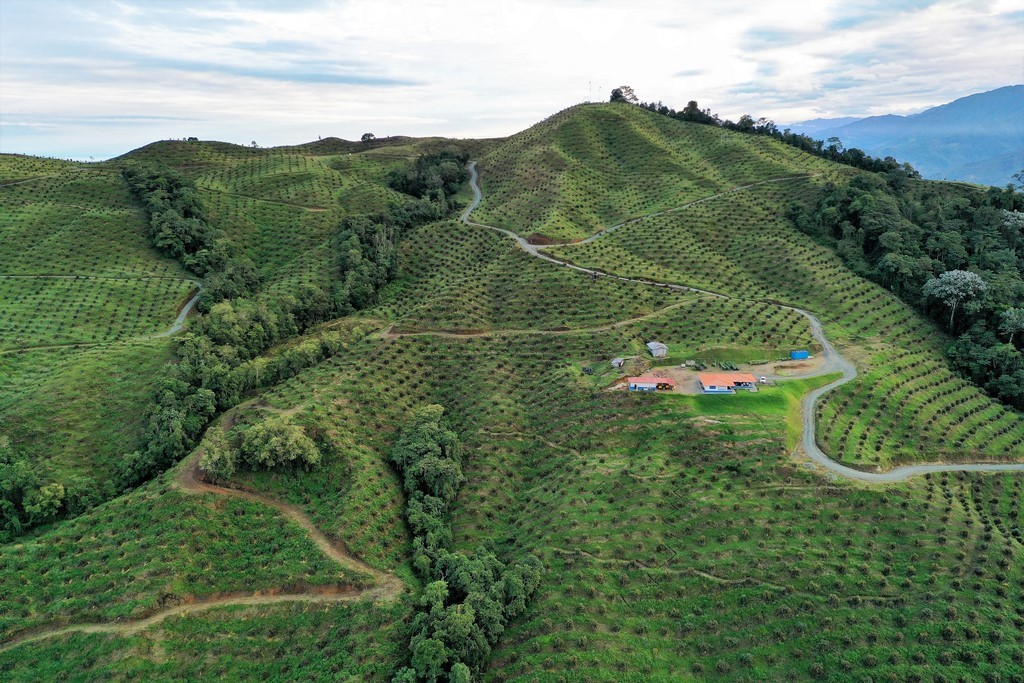
Colombia saw a significant increase in exports, with Escobedo providing an overview: “2025 saw Colombia increase shipments to the United States by about 90 million pounds, compared to January through October of 2024.”
“The Colombian avocado season this year was one of the best yet.”
This is confirmed by Bruno. “We source from Mexico, Peru, and Chile, and we’ve recently put a lot into Colombia,” he shares, which has included planting orchards at different altitudes to stretch out the harvest. These trees are now maturing and yielding abundant fruit.
“The Colombian avocado season this year was one of the best yet,” he says. “Having that Colombian supply really helped when the industry hit shortages, keeping avocados flowing.”
Chile did its part as well, though on a much smaller scale. “Chile is up 11 million pounds,” Escobedo says. “It used to be a bigger exporter to the United States, but now most of the fruit is destined for its domestic market and Europe.”
The Dominican Republic is also major producer, mainly of tropical varieties. Fruit is shipped to Puerto Rico and the Southeastern portion of the United States.
Packaging Adds to Volume
There is no disputing consumers love avocados, whether they’re dining out or bringing them home from the grocery store. Inspired packaging has also helped increase sales and volume.
“We offer a variety of packaging options designed to fit the way our customers operate, making it easier for retailers to merchandize, manage inventory, and meet shoppers’ expectations,” mentions Naturipe’s Bruno.
Escobedo agrees. “Simple and efficient packaging allows displays in various parts of the store for cross merchandising.” But a particular favorite is the mesh bag.

“The adoption of bags by retailers has been beneficial for increasing volume,” confirms Escobedo. “For eco-conscious consumers, there are compostable bags. Seven-count bags (one per day) are becoming popular.”
Bazan lauds the introduction of bags as well. “We’ve had tremendous growth with bags—they’re 35 percent of the mix with an average of five avocados per bag. We feature branded, thematic bags to support college football, February’s Big Game, and Cinco de Mayo.”
The California Avocado Commission applauds the bag effort as well. “Our retail partners have leaned into branded bags and custom signage to identify origin and seasonality,” notes Splane.
A Few Challenges
Strong demand and the need for more production are certainly good problems to have, but the avocado trade isn’t without its difficulties.
“Overall, the avocado industry has been dealing with all sorts of pressures, such as drought and low rainfall,” Bruno says. Having multiple sources, however, is key. “If one region has a rough season or shipping issues, another can fill in.”
Paul Weisman, president of Healthy Avocado, Inc. BB #:150423, a Berkeley, CA-based importer and distributor of Mexican avocados, puts it another way. “Keeping 120 packinghouses in a steady supply of fruit, and prices stable, is challenging.
“If someone offers a higher price, they’ll cancel at one packinghouse. Many of the growers are small, so prices ranging between MX$18 and MX$80 makes a significant difference for them.”
Colombian and Peruvian avocados are subject to a 10-percent tariff, but there are no tariffs on Mexican avocados currently. But as Acosta says, “That could change in an instant—it’s hard to plan when tariffs are so fluid.”
“Violence isn’t inherent to avocado production, but denying its presence would be futile.”
There are ongoing reports of violence from drug cartels operating in Michoacán, threatening the safety of growers and packers.
“Violence isn’t inherent to avocado production, but denying its presence would be futile,” states Acosta. “We try to mitigate the risk, and we don’t live in fear. We monitor when and where we ship and avoid certain areas.”
Weisman adds, “We don’t experience difficulties because we don’t take title till the fruit arrives at our packinghouses in Texas.”
Another challenge is related to preventing deforestation in Mexican growing regions, particularly in Michoacán.
According to an October 2025 New York Times article, “Mandating new industry rules limiting deforestation would spark intense resistance and a host of legal challenges. The success of Guardián Forestal, the nonprofit that developed a new system of monitoring deforestation, is due in part to the fact that it was driven by buyers.”
Unmet Demand
Strong and climbing demand remains the best news to those who grow, buy, or sell avocados, domestically and abroad.
“Demand for avocados continues to increase as is production,” observes Splane. “Avocado supplies from California are expected to increase. Growers have planted nearly 3 million new trees over the last 10 years. Additionally, imports from other countries continue to be on the rise.
“There’s significant room for continued avocado consumption in the United States, especially in the markets farthest from California where the category is less developed,” Splane adds.
“And even in the West, per capita consumption lags behind some other countries. There’s room for more frequent purchases, for increasing the number of avocados purchased on each shopping trip, and for enjoying avocados in new applications.”
Acosta notes, “Over the last ten years we’ve had double-digit growth in volume and dollars. To continue this trajectory, the industry has to focus on internal efficiencies to ensure stable supplies and capture more shelf space. Fields need to produce more but not at the cost of cutting down more forests.”
Escobedo sums it up this way: “Per capita consumption annually is 9 pounds per person, about $25 to $30 spent per household in the United States—the market is not yet saturated.
“The Northeast has room for growth; the key to California staying viable is to maximize yields,” he adds. “In United States, there’s a history of expanding the pie and California growers have benefitted from market expansion.”



News you need.
Join Blue Book today!
Get access to all the news and analysis you need to make the right decision --- delivered to your inbox.







Subscribe to our newsletter
© 2026 Blue Book Services. All Rights Reserved

