


















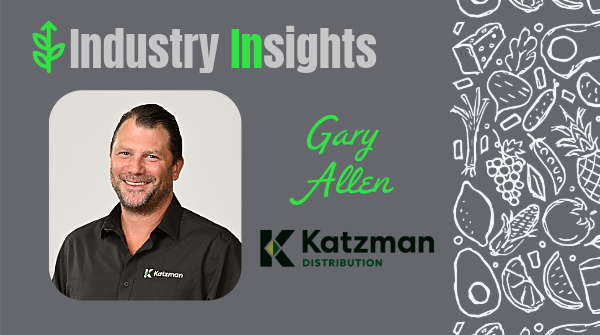
Industry Insights: How AI is disrupting the fresh produce industry
In a world where products are perishable, margins are tight, and timing is everything, AI can provide a competitive advantage.

eliyashevskiy/Adobe Stock
In this article
Artificial intelligence (AI) is dominating news cycles and changing the way we work every day. These tools have already become go-tos to alleviate administrative tasks and accelerate workflows for a number of industries, and fresh produce is no different.
We operate in a world where products are perishable, margins are tight, and timing is everything—which is why AI is quickly becoming necessary for staying competitive. For the supply chain, in particular, AI can be deployed to streamline transportation, future-proof inventory, automate orders, and minimize surprises.
Let’s dig a little deeper into how AI might change the fresh produce supply chain in the coming years.
Identifying Suppliers
Starting where it all begins, sourcing our produce, AI could become an instrumental tool for how to better find the quality and quantity of commodities needed at any given time.
With historic data, AI algorithms could help better identify what to buy from farms and suppliers based on their previous production runs—while also assessing risks such as weather disruptions. This will help create a more reliable and price-conscious supply chain, further reducing last-minute sourcing issues.
As AI becomes more sophisticated, it can help wholesalers and retailers better align supply with demand.
Demand Forecasting
As AI becomes more sophisticated, it can help wholesalers and retailers better align supply with demand. For wholesale distributors, AI models can look at ordering history and behavior, and layer in more variables such as weather patterns, seasonality, and local events.
At the customer level, it can specifically look at orders, such as weekly vs. seasonally, or find gaps where business dipped to identify important patterns.
This combination could lead to smarter purchasing decisions: instead of overbuying and watching product spoil or underbuying and missing sales, the amount of produce coming in better aligns with the amount of produce going out.
Inventory & Order Optimization
Fresh produce is time sensitive and the clock is constantly ticking to deliver at its freshest. AI can give companies better insight into the quality of their commodities by evaluating product age and shelf life in real time.
It can also help pinpoint older items to prioritize for sale and markdowns to reduce waste. This approach reduces shrink while protecting margins on items nearing the end of their lifecycle.
AI can also extend to ordering: automating recurring orders, predicting trends, or providing chat-based systems to expedite cumbersome paperwork. When ordering is easy, sales are more consistent and customer retention increases.
Efficient Routing & Delivery
Logistics is an area where we can expect AI to shine. Given the race against the clock to deliver produce at its peak, how quickly it gets to a customer is critical.
With AI, shippers can identify the best routes based on traffic, weather, delivery windows, and load planning, while also optimizing stops per route. As a result, produce gets delivered faster and transportation costs go down.
Increased Quality Control
We’ve already mentioned how AI can help with inventory and tracking commodities to stay on top of their freshness. As AI advances, this could extend to the warehouse to automate grading based on size and color, as well as detecting defects.
Using AI in this way not only frees up labor from manual scanning produce but would create more consistent quality control and throughput.
At the end of the day, AI isn’t replacing the experience and instincts that have always defined this industry—it enhances them.
Predictive Maintenance
On the subject of warehousing, AI could also be deployed to increase on-floor efficiency, overseeing equipment such as refrigerators, trucks, and cooling systems.
It could flag required maintenance before there’s an issue—meaning less downtime and emergency repairs that create unnecessary hiccups in the everyday flow of business.
For wholesale distributors just getting started with AI, the path forward doesn’t require a massive overhaul.
The highest return typically comes from focusing on a few key areas: demand forecasting tied to purchasing decisions, route optimization, and inventory tracking with shelf-life awareness. These are practical entry points that deliver quick wins and build momentum for broader adoption.
At the end of the day, AI isn’t replacing the experience and instincts that have always defined this industry—it enhances them. It gives us better information, faster insights, and more control over the variables that matter most.
In a business where freshness and timing define success, that edge can make all the difference.
News you need.
Join Blue Book today!
Get access to all the news and analysis you need to make the right decision --- delivered to your inbox.






Subscribe to our newsletter
© 2026 Blue Book Services. All Rights Reserved

