


















Grower Innovations: The Rise of Biologicals
How beneficial insects, microbes, and even gene-targeting sprays are moving from niche tools to mainstream crop protection.
Road Red Runner/Adobe Stock
In this article
For years, biological crop protection lived at the margins of the produce industry, a specialty tool for organic growers and greenhouse operators. That’s no longer where the story sits.
Squeezed by pesticide resistance, tightening residue limits, and retailer sustainability demands, growers are turning to biologicals as a core part of their toolbox.
For 2026, biologicals are one of the fastest-moving categories in all of agriculture, and much of the momentum is landing squarely in fresh produce.
Beneficial Bugs Go Commercial
The most established branch of biologicals is also the one scaling fastest.
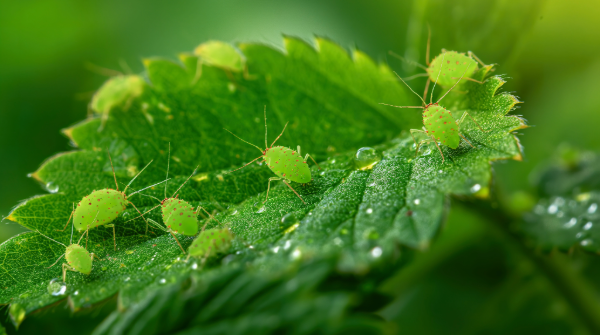
Growers are releasing living helpers—such as predatory mites that hunt spider mites, tiny parasitic wasps that target caterpillar eggs, and beneficial insects that clear aphids and thrips—as standard practice in growing greenhouse tomatoes, peppers, cucumbers, and strawberries.
Two market leaders, Koppert and Biobest, partnered in 2024 to co-develop and distribute a new range of predatory mites for greenhouse vegetable production across Europe and North America.
In April 2025, the European Commission cleared a new Biobest product for thrip control in tomatoes and peppers. What was once a boutique offering is now a supported, distributed product line.
Microbes: Moving Beyond the Old Standby
Beneficial bacteria, fungi, and viruses that suppress pests and diseases make up the biopesticide segment, and it’s broadening quickly.
Bacillus thuringiensis, better known as Bt, remains the workhorse for caterpillar control, and its use has climbed roughly 34 percent since 2021, but the newer generation is more targeted.
Other beneficial bacteria and fungi now protect roots and leaves from disease, and some fungi infect damaging insects directly. Just as important, formulation has improved: newer products hold up better in heat and last longer in the field, solving the fragility that made living organisms hard to work with in the past.
“In simple terms, most biocontrol products directly target pests, while semiochemicals influence how they behave.”
Semiochemicals: Changing Pest Behavior
One of the fastest-growing tools works without killing anything: semiochemicals are the natural scent signals insects use to communicate, and products built on them alter behavior rather than attacking the pest.
“In simple terms, most biocontrol products directly target pests, while semiochemicals influence how they behave,” explains Natalia Gamarra-Cockle, business development manager at Suterra USA, headquartered in Bend, OR.
“By influencing insect behavior, semiochemicals help growers monitor, attract, repel, or disrupt pest populations,” she adds.
“Their strength lies in being highly targeted and environmentally friendly, as well as being compatible with other beneficial insects, microbial biopesticides, and other biological or conventional solutions.”
Gamarra-Cockle says semiochemicals are moving from niche tools to mainstream use for high-value crops including tree fruit, grapes, berries, citrus, tomatoes, and other specialty crops to protect against pests like moths, fruit flies, beetles, and other insects.
“They can attract natural enemies, enhance the effectiveness of microbial biocontrol agents, and support natural plant defense signaling,” Gamarra-Cockle says. In doing so, she notes, they become a valuable link between conventional crop protection, biological control, and precision agriculture.
The significance is less about potatoes and more about the template: it behaves like a conventional spray but acts on a single pest.
Gene-Targeting Sprays: The Precision Frontier
The newest chapter reads more like biotech than biology. We’ve all heard of DNA, and RNA is the molecule cells use to carry out the instructions stored in their genes.
A technique called RNA interference, or RNAi, puts that system to work in reverse: it switches off one specific gene a pest needs to survive, and leaves everything else untouched.
In January 2024, the Environmental Protection Agency approved the first spray of this kind, a product called Calantha, that targets the Colorado potato beetle without harming other insects.
The significance is less about potatoes and more about the template: it behaves like a conventional spray but acts on a single pest, exactly the kind of precision growers and regulators have been pushing toward.
A Market Scaling Up
The commercial signals for biologicals are hard to miss.
According to London, UK-based Business Research Ltd., the global biocontrol market was worth roughly $8 to $9.5 billion heading into 2026. It’s growing at nearly 17 percent a year, several times the pace of conventional crop protection.
In 2025, U.S. biologicals revenue topped $3.5 billion, according to CropLife’s annual survey of ag retailers.
Major agrochemical companies have noticed: Syngenta Biologicals has set a $1 billion revenue target for 2028, and BASF, Bayer, and Certis Biologicals continue to acquire smaller innovators and expand their portfolios.
Biologicals are no longer viewed as a fringe hedge.
“Return on investment is a nonnegotiable factor for growers, but powerful biologicals deliver that return.”
Growers Do the Math
Biologicals can cost more per application than cheaper conventional sprays, but specialists argue such a comparison misses the point.
“Many biologicals are surprisingly affordable, and nearly all are now in line with premium synthetic products,” says Gamarra-Cockle.
Bargain broad-spectrum products also carry hidden costs: they wipe out beneficial insects, accelerate resistance, and have less flexibility, limiting growers’ options.
“Return on investment is a nonnegotiable factor for growers, but powerful biologicals deliver that return,” she says. The growers who succeed evaluate all of the potential benefits,
“Many premium retailers and export buyers increasingly favor suppliers who can demonstrate sustainable growing practices, and in some cases are willing to pay a premium or provide preferred-supplier status to growers who adopt biological solutions.”
Further, she notes, “Access to key markets, stronger customer relationships, improved pack-out, and reduced commercial risk can deliver returns that far outweigh the additional cost of the product itself.”
The direction is clear: today’s growers are treating biologicals not as a philosophical choice but as a practical one.
Looking Ahead
Adoption of these high-tech tools still comes with caveats. Biologicals tend to be preventative rather than curative, more sensitive to timing and weather, and require management and grower education.
Consistency remains the knock against living products. But better formulations, more precision, and steady regulatory momentum are chipping away at these issues.
The direction is clear: today’s growers are treating biologicals not as a philosophical choice but as a practical one—a way to protect crops and yields while handling pest and disease resistance, residue limits, and retailer demands at the same time.
The produce industry has always been shaped by what’s grown and how it’s protected; increasingly, the tools doing the protecting are alive.

News you need.
Join Blue Book today!
Get access to all the news and analysis you need to make the right decision --- delivered to your inbox.







Subscribe to our newsletter
© 2026 Blue Book Services. All Rights Reserved

