
















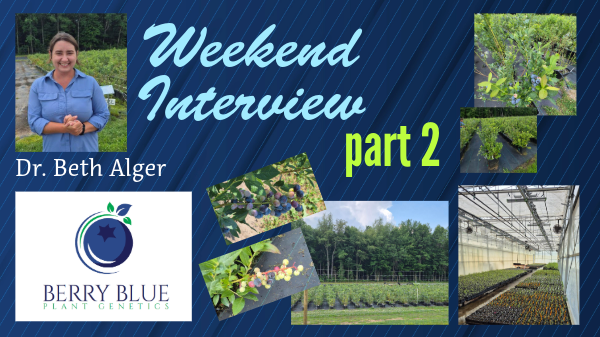
Dr. Beth Alger, Berry Blue, LLC
Welcome back! Meet Dr. Alger, a bona fide berry afficionado whose world revolves around creating better berries.
Muhammad Muhdi/Adobe Stock
In this article
Here’s the second part of our MBG Marketing BB #:104872 coverage, our chat with Dr. Beth Alger, assistant plant breeder at Berry Blue, LLC, the research and development unit of MBG Marketing for the Naturipe Farms BB #:165382 brand.
Q: Tell us about your background and how you came to be at MBG Marketing and Berry Blue.
I originally set out to become a veterinarian, but I had a growing interest in genetics. Living near Salinas—a major agricultural hub in California—sparked a deeper curiosity in plant science, and eventually I fell in love with plant genetics.
I earned my B.S. in biology from California State University, Monterey Bay, and later completed my PhD in plant breeding, genetics, and biotechnology at Michigan State University. I joined Berry Blue about a year and a half ago, drawn to the grower co-op model and the opportunity to work closely with farmers. I love being able to apply what I know to solve real problems happening in the field.
Q: What type of education and training does it take to be a plant breeder?
A strong foundation in biology, genetics, and statistics is key. In addition to my formal education, plant breeders need experience with both lab and fieldwork, as well as data management and coding skills—especially as breeding programs modernize and rely more on predictive modeling and bioinformatics.
Q: Walk us through a typical day, week, or month and the types of tasks, by hand and automated, you do on a regular basis.
A typical day in blueberry breeding varies by season. During the growing season, we spend most of our time outdoors—monitoring field trials, scoring traits like fruit quality and plant vigor, and harvesting samples.
Manual tasks include hand-pollinating flowers, collecting data, and evaluating fruit. We also rely on automation and data tools for irrigation, environmental controls, and early trait screening. Off-season work includes data analysis, cross-planning, seed extraction, and greenhouse management. It’s a year-round cycle that balances science, observation, and logistics.
Q: How many breeding pairs and trials are taking place at any given time? Where else are trials taking place?
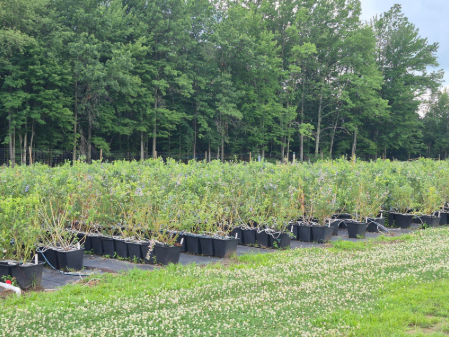
Each year, hundreds of breeding crosses are made, and thousands of individual plants are under observation. Trials extend beyond Grand Junction to multiple U.S. states and Canada, particularly key growing regions such as Oregon, Georgia, Michigan, and California, to capture performance across diverse climates.
Q: How much of your breeding takes place outdoors, without protection from the weather? Is this intentional to ensure plants can survive hot summers and harsh winter temperatures?
A significant portion of our breeding is done outdoors and unprotected. Yes, that’s by design. We want to test plants in real-world conditions—from late spring frosts to summer heatwaves—so only the hardiest varieties move forward. Early stages may include protected greenhouse environments, especially for controlled crosses and seedling production.
Q: Walk us through the various stages of development and trials; which stage is most difficult? Is there an average number of trials before sending a plant to the next stage or moving to another parent plant?
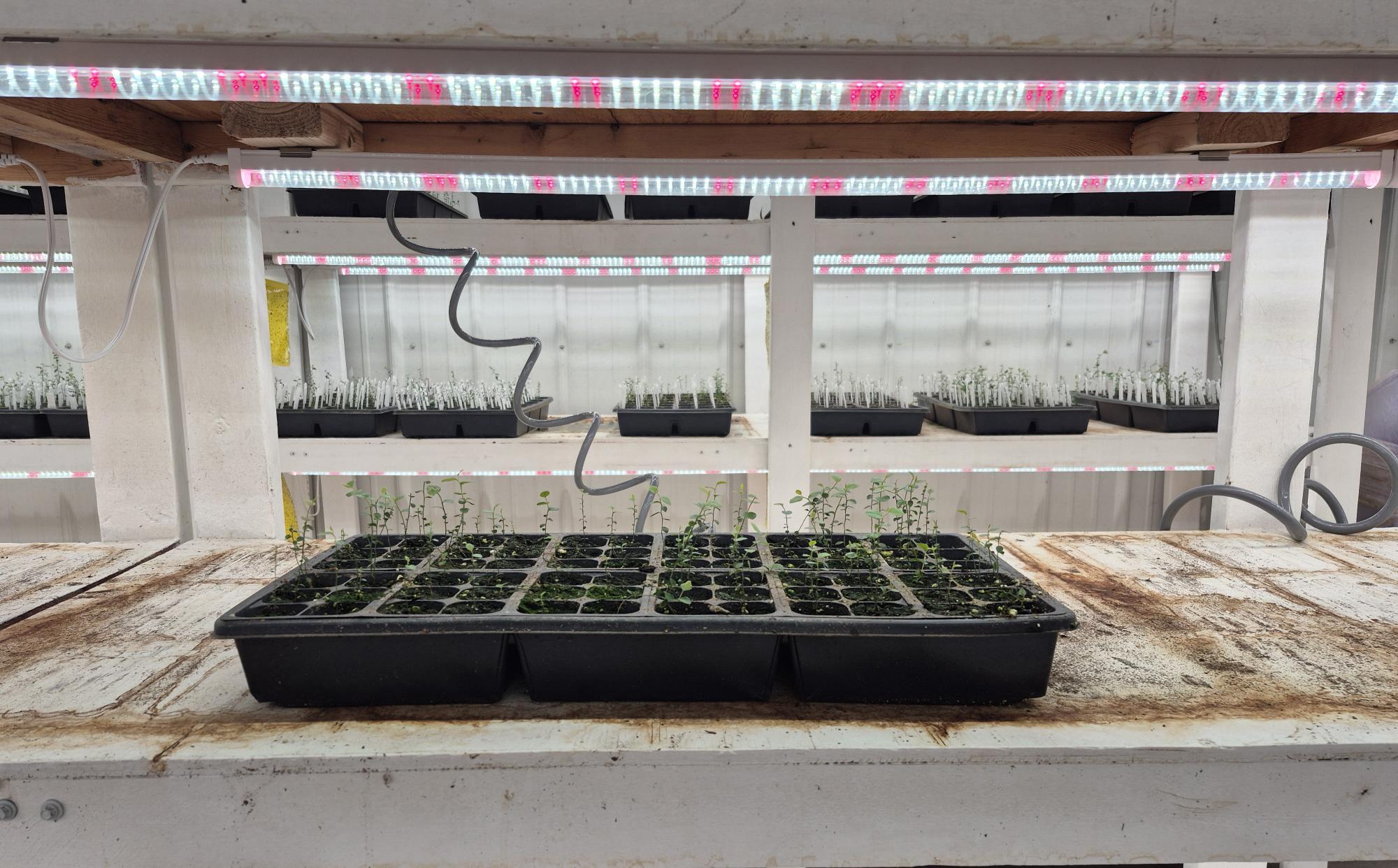
The process begins with making cross-pollinations, collecting seeds, and growing seedlings. Those seedlings go through multiple years of selection: years 1 and 2: seedling evaluation; years 3 to 5: clonal trials for advanced selections; and years 6 to 10: precommercial and grower trials.
The most difficult stage is early selection—choosing which seedlings have real potential. Thousands may be narrowed to just a few hundred. It typically takes 2 to 3 years of evaluation before deciding whether to promote a plant or discard it.
Q: What denotes success or failure? What’s the ratio of success to failure with breeding and trials?
Success is defined by a combination of characteristics: yield, taste, shelf life, disease resistance, and adaptability to climate. The ratio of success to failure is steep, as fewer than 1 in 10,000 seedlings make it to commercial release. It’s a process of high attrition but high reward. We’re working to improve this ratio with the incorporation of genomic selection.
Q: How long does the process take from extracting seeds to a plant ready for commercial growing?
Historically, the timeline from seed to commercial release could take up to 12 years. But thanks to improved breeding strategies, it can be reduced to as few as 7 to 8 years to reach maturity and viability for grower trials.
Q: If new test plants or batches go by numbers, when do they reach the level of receiving an actual variety name?
Plants typically receive a variety name once they’ve passed late-stage trials and are being prepared for commercial release. Until then, they go by coded designations used internally to track lineage and traits.
Q: Who chooses the name for a prospective variety?
Naming is a collaborative process. Breeders suggest names, but marketing, legal, and sales teams weigh in to ensure the name aligns with branding goals, avoids duplication, and is globally viable.
Q: When you have a new cultivar, how is it sent to growers – via seeds or actual plants?
Actual plants. Growers want plants that are clones of the cultivar so they have all the same traits. With seeds, each one will be genetically unique and we can’t guarantee it will have the desired traits.
Q: Are there quarterly or annual quotas for how many plants are viable or have potential as a new variety?
The goal is quality over quantity—focusing on advancing only those plants with strong commercial potential and agronomic resilience.
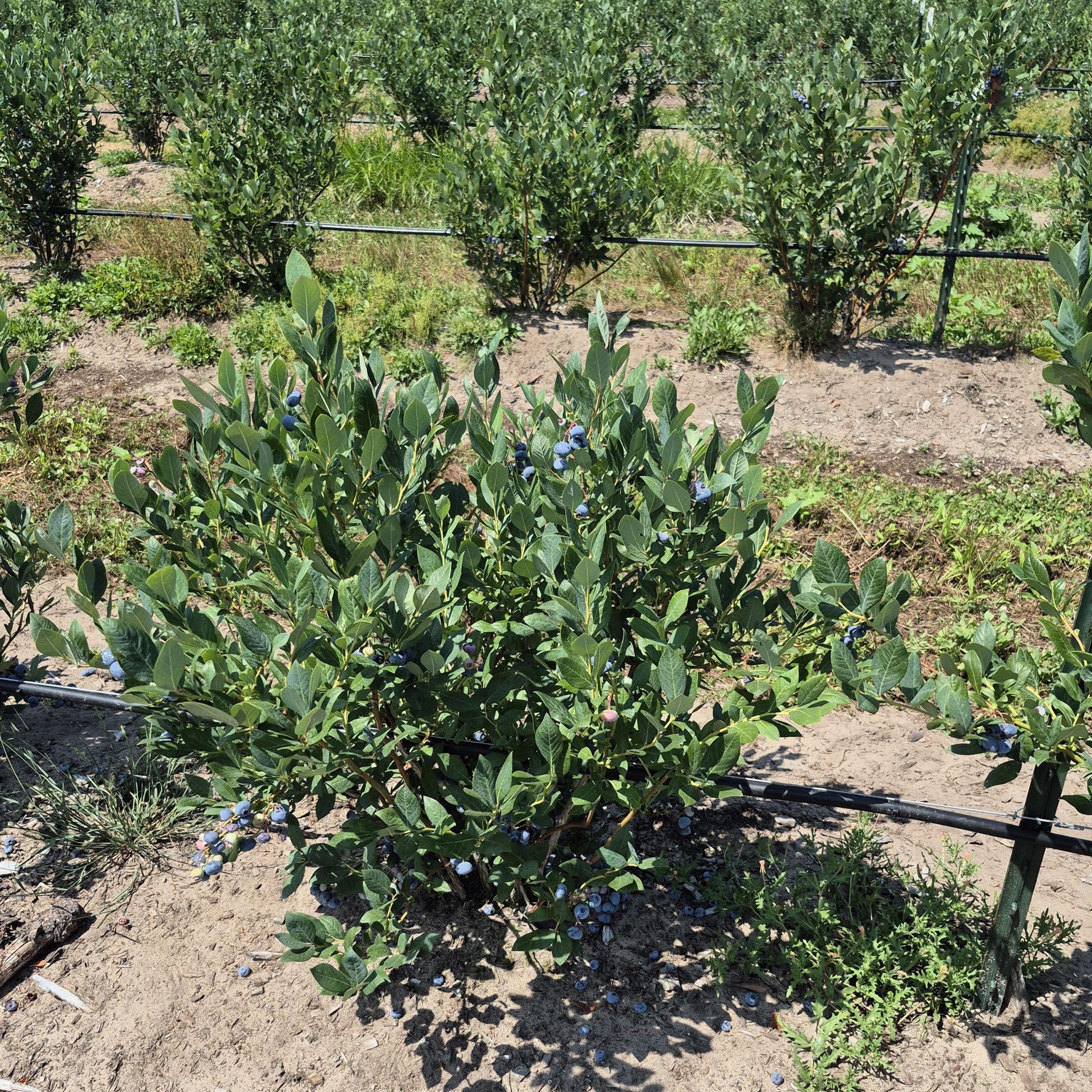
Q: How many years does it take a new blueberry plant to bear fruit, then reach full maturity?
Most blueberry plants will produce their first fruit in year 2 or 3, with full maturity and peak yields around year 5 or 6. Early production helps us evaluate key traits sooner in the breeding process.
Q: How long with a mature blueberry bush continue to produce fruit?
With proper care, a mature blueberry bush can produce fruit for 15 to 20 years or longer, though commercial growers may replant sooner based on yield efficiency, disease resistance, and market trends.
Q: As a plant breeder, what do you consider the most important characteristics or traits of a new variety?
Top traits include: flavor (consumer preference), yield (grower ROI), shelf life and firmness (supply chain performance), climate adaptability (including low chill and heat tolerance), and disease resistance.
Q: As a scientist, how do you measure ROI on a new variety?
As scientists, we measure ROI on a new variety by evaluating its adoption rate among growers, yield performance and production cost savings, consumer demand and repeat purchases, shelf life and waste reduction, and the value of licensing and intellectual property—ultimately assessing how well the variety delivers value across the entire supply chain, from breeder to grower to consumer.
News you need.
Join Blue Book today!
Get access to all the news and analysis you need to make the right decision --- delivered to your inbox.






Subscribe to our newsletter
© 2026 Blue Book Services. All Rights Reserved

