



















Dock to Dock: Cargo insurance claim denial
All cargo insurance policies are not created equal; when it comes to coverage and liability, be sure to know what's covered and what's not.
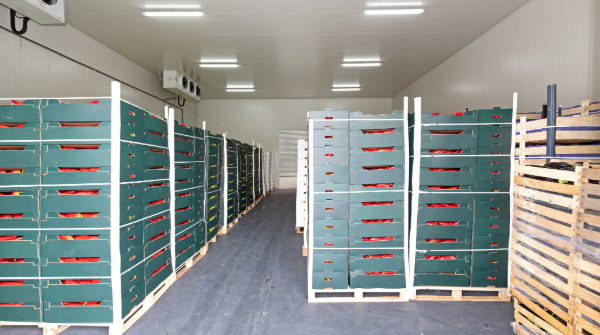
markobe/Adobe Stock
In this article
The Problem
Insurer denying coverage of a cargo claim.
The Key Point
Insurer’s coverage is based on its policy, not the carrier’s liability.
The Solution
Understand limits of your insurance coverage.
Q: We are a freight broker working through a cargo claim with our insurance company. We contracted a carrier to haul a load of perishables from Miami, FL to Milwaukee, WI. Upon arrival at the receiver, the product was rejected due to temperature abuse. We provided supporting documentation with the claim presentation. Ultimately, the carrier’s insurance denied coverage because we could not show mechanical breakdown or malfunction during the trip.
The denial by the carrier’s insurance prompted us to turn the claim into our insurance provider to seek coverage. One of the requirements under our policy is that the temperatures during transit must vary 8 degrees +/- from the requested set point for a minimum of two hours continuously. Coverage under this policy is not dependent on a mechanical malfunction of the reefer unit.
The readings from portable recorder show an 8-degree temperature variance for more than two hours. But now the insurer is telling us they will only accept a claim if the readings from the reefer download show this 8-degree variance. In the past we have been instructed to provide all pertinent information when submitting a claim. Why wouldn’t the insurance company use all the available information when considering the claim?
A: After reviewing the documentation you sent in, it appears you have a valid cargo claim. You can show good condition at origin and damaged condition at destination, and it’s not clear how the carrier could prove “freedom from negligence” given the warm readings from the portable recorder and the reefer download showing the unit was not set to run continuously.
That said, having a good claim against the carrier is not the same thing as having a good claim against the insurer. Does the policy state that the temperature variance must be based on the reefer readings?
If not, arguably at least, a temperature variance of 8 degrees anywhere in the trailer would seem to trigger coverage. After all, the idea is to protect cargo throughout the trailer, not just in the nose where the reefer readings are taken.
If the temperature variance rule applies only to reefer readings, then it should explicitly state this in the policy. Otherwise, you may have grounds for contesting the denial of coverage. Ambiguities in contracts are typically construed against the party that drafted the contract (i.e., the insurer).
A careful review of your insurance policy is necessary to determine the strength of your insurance claim.
News you need.
Join Blue Book today!
Get access to all the news and analysis you need to make the right decision --- delivered to your inbox.





Subscribe to our newsletter
© 2026 Blue Book Services. All Rights Reserved

