


















ELDs Under Scrutiny: What the recall wave means for fresh food transportation
The transition to electronic logging devices was fraught with controversy but settled down, now it's back.
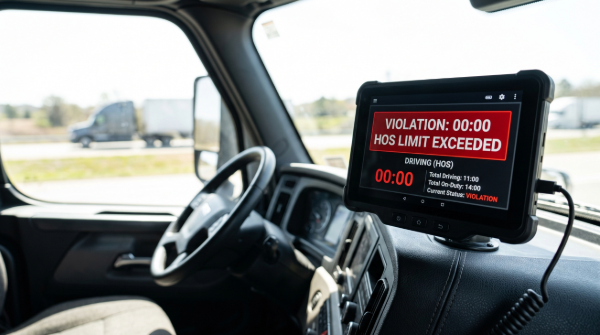
akridiy/Adobe Stock
In this article
When the federal electronic logging device mandate took full effect in December 2017, it promised to close the book on paper logs and the creative math that sometimes went with them. Nearly a decade later, the devices themselves are the story.
Since January 2025, the Federal Motor Carrier Safety Administration (FMCSA) has been pulling electronic logging devices (ELDs) off its approved list at a steady clip, with new revocations announced almost monthly through the summer of 2026.
For fresh food shippers, brokers, and carriers moving perishables on unforgiving schedules, this small device has quietly become a business risk worth understanding.
A Recall Wave with Real Consequences
The numbers tell the story. By May 2026, FMCSA reported it had removed 79 devices since January 2025 for failing to meet federal technical standards, and the pace has not slowed since.
When a device is revoked, carriers have 60 days to replace it with one from the agency’s Registered Devices list. A driver caught using a revoked device after the deadline can be cited for operating without an ELD and placed out of service on the spot.
For a load of strawberries or leaf lettuce, a 10-hour roadside shutdown can be the difference between acceptance and rejection at the dock.
The practical lesson for anyone who hires trucks is simple: the registered list changes constantly, and checking it is now an ongoing responsibility rather than a one-time purchase decision.
The root of the problem is FMCSA never tests these devices.
Why So Many Devices Failed
The root of the problem is FMCSA never tests these devices. Under the current rule, providers self-certify, meaning a manufacturer simply attests that its product meets the technical specifications and it goes on the list.
A recent guest column in Commercial Carrier Journal from the National Motor Freight Traffic Association (NMFTA) describes where that honor system has led: researchers found some devices can be manipulated to make a driver appear compliant when legal driving hours have already been exceeded.
This turns a safety device into a tool for defeating the very rule it exists to enforce.
The NMFTA research points to an even deeper structural weakness: of roughly 1,050 registered ELDs, about three-quarters appear to share underlying hardware and software with other registered devices.
In other words, essentially identical products are rebadged and registered under dozens of different names. Revoking one model name accomplishes little when its siblings remain on the list.
The association is calling for independent third-party testing, software bills of materials that disclose what code is actually inside each device, and the authority to revoke entire ‘families’ of white-labeled products at once.

Better than Paper, but How Accurate?
Almost no one argues for a return to paper. Because ELDs synchronize directly with the engine, they eliminated most arithmetic errors and casual falsification overnight. Yet the record is not spotless.
Nearly a decade into the mandate, hours of service violations remain the top reason drivers are placed out of service—at roughly 32 percent of driver violations last year—and falsified logs still account for close to 10 percent.
The weak points are well-known: misuse of personal conveyance status, unassigned driving time that never gets reconciled, and devices that fail to transfer data to an inspector at roadside.
Regulators have adapted, and inspections now routinely crosscheck ELD records against fuel receipts, movement patterns, and driver interviews.
The fair summary is that the devices record accurately, but the records can still be gamed at the edges by determined operators, and the technology itself is required to self-monitor for malfunctions it cannot always catch.
This is where AI earns a serious look; four applications are within reach today.
Where AI Could Take This
This is where AI earns a serious look; four applications are within reach today.
First, anomaly detection: machine learning models can scan an entire fleet’s logs for surface patterns no human auditor would catch, such as a driver whose personal conveyance mileage always appears exactly when the 14-hour window expires.
Second, prediction: instead of reporting a violation after the fact, AI can warn a dispatcher when a driver is trending toward a violation a day or two out, giving planners time to swap loads or drivers before the clock runs out.
Third, automated corroboration: AI can continuously reconcile logs against dispatch records, fuel purchases, and GPS traces, performing the same triangulation an inspector does by hand, but on every trip.
Fourth, registry monitoring: an intelligent compliance layer can watch FMCSA’s revocation notices and alert a fleet the moment its device, or any rebadged sibling of it, comes off the list.
None of this replaces the ELD—it surrounds the device with a layer of judgment the hardware alone was never designed to provide.
The Bottom Line
The ELD era solved the problem it was built to solve, and the current recall wave is best read as the system maturing rather than failing.
But for fresh food buyers and brokers, two questions now belong in every carrier conversation: is your device on the current registered list, and how would you know if it came off tomorrow? The carriers with a good answer to the second question are the ones already thinking about what comes next.

News you need.
Join Blue Book today!
Get access to all the news and analysis you need to make the right decision --- delivered to your inbox.






Subscribe to our newsletter
© 2026 Blue Book Services. All Rights Reserved

