
















By the Numbers: 540 (or, the agony of packing school lunches)
What one school year of packed lunches can tell us about waste, time, and getting kids to eat what we sell.

lukbar/Adobe Stock
In this article
In July, my 8-year-old asked me to add cherries to the grocery list. Unprompted. My 12-year-old put away more watermelon in the weekend over the Fourth than he ate all last summer.
Even my 15-year-old worked through the plums we bought for the week before anyone else got to one. I remember standing in the kitchen thinking: I’ve done it. Elite produce dad status achieved.
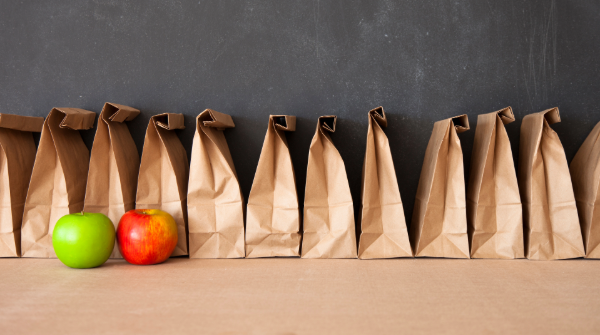
But back-to-school is fast approaching and I know that when September comes, the apple I pack on Monday will most likely come home Monday. And Tuesday. And Wednesday.
The Count
Three kids, 1 piece of produce per lunch, 180 school days. That’s 540 pieces of produce leaving my house in a bag every year. Somewhere between 167 and 270 of them come back, and most end up in the trash.
Nobody measures packed-lunch waste at a national scale, so I used the two closest things. The low end comes from the USDA’s School Nutrition and Meal Cost Study, which found roughly 31 percent of vegetables served at school go uneaten.
The high end comes from a survey released last week by Amara and Macaroni Kid, which found half of the mothers surveyed say fresh fruits and vegetables regularly come home untouched, the most commonly wasted item in the bag.
Call it 200 pieces of fruit a year. In one house. Belonging to a guy who’s spent two decades trying to sell, or help others sell, more produce.
What It Actually Costs
Here’s what surprised me when I looked at the numbers.
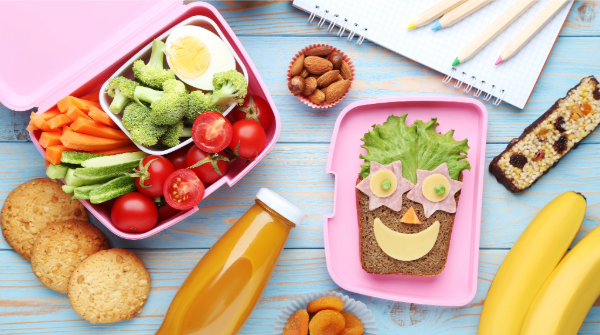
Using USDA’s per-cup-equivalent pricing and Bureau of Labor Statistics average price data from this spring, the 6 things I actually pack—banana, clementine, grapes, baby carrots, apple, strawberries—average about 45 cents a serving.
The processed alternatives I reach for when I’m tired, the fruit snacks, granola bars, and cracker kits, average about 81 cents.
Produce is roughly 1.8 times cheaper, so the 200 pieces I throw away come to somewhere around $90 a year—so 200 times a year I feel like I’m failing as a dad and about $90 goes in the trash—those are the reasons I wanted to write this.
The Cost Isn’t Just Money
Ask a parent what the hardest part of packing lunches is and nobody says the grocery bill. What they describe sounds closer to grief.
You ask your kid what they’d actually eat. They tell you. You go find it at the store. You wash it, cut it, bag it, and put it in with a little extra care, because it’s the one thing in there that’s genuinely good for them.
And it comes home untouched. Or worse, it comes home bruised, having spent hours pinned under a Chromebook. I’m looking at you, banana.
Do that once in September and it’s a minor annoyance. Do it 180 times and by May you dread packing lunches more than the monthlong visit from the Elf on the Shelf.
And here’s what should bother all of us in this business: the processed snack doesn’t win on price. It wins because it gets eaten at school.
The math parents actually run isn’t cost per serving. It’s how many more times am I going to do this before I stop.
And here’s what should bother all of us in this business: the processed snack doesn’t win on price. It wins because it gets eaten at school. That’s the only scoreboard that counts.
For the record, produce holds its cost advantage right up to about a 47 percent rejection rate. Past that, once you’re paying for servings nobody eats, the granola bar wins on money too. The Amara/Macaroni Kid survey numbers put many families right at that line.
It Probably Isn’t Your kid, It’s the Clock
This is the part that surprised me most. My son ate a bag of plums in July because he had all day to raid the fridge.
In September, he gets a lunch period. Not an afternoon. And once you subtract walking to the cafeteria, standing in line, and finding somewhere to sit, what’s left to actually eat is a fraction.
Researchers have measured what that does, and produce is where it shows up.
A study of 1,001 students in grades 3 through 8, across 6 schools with lunch periods ranging from 20 to 30 minutes, found students with under 20 minutes to eat were significantly less likely to even select a fruit: 44 percent vs. 57 percent. Entrée and milk selection showed no significant difference.
A randomized crossover trial published in JAMA Network Open tested the same gap under controlled conditions.
In a setting simulating a school cafeteria, researchers ran 241 lunch observations across 38 children at 10 minutes and 20 minutes of seated time.
The 20 minutes produced significantly more consumption and less waste of fruits and vegetables. Entrées and beverages showed no significant difference.
Only the produce moved.
The School Nutrition Association’s own spokesperson has described the mechanism plainly: students now get larger and fresher produce portions that take longer to eat, and “too often they eat the entrée first and don’t have time to finish” the rest.
Nothing changed about my kid between July and September. The clock changed. There’s a subtler version of this that should interest anyone who specs product for a living.
A 2009 study found that slicing oranges increased children’s consumption while slicing apples did not. The variable wasn’t piece size. It was preparation effort. Oranges need peeling; apples don’t. That’s why a clementine is in every lunchbox in America and a navel orange isn’t.
Try #8
Here’s the part that gave me some hope, and it comes with evidence attached.
The USDA’s Nutrition Evidence Systematic Review concluded that tasting a fruit or vegetable once a day for 8 to 10 days or more is likely to increase acceptance of that food. In middle childhood, studies show acceptance after 2 to 9 exposures, though older kids may need more, because their preferences are already set.
Then I found the number that stopped me. It comes from a German study of mothers introducing vegetables to infants, so it’s a long way from a middle school cafeteria, but the pattern is hard to unsee. Among mothers whose child refused a vegetable, 57 percent gave up after 3 to 5 meals. Only 4 percent kept trying.
Parents quit around 3; the recommendations say it shows up around 8—so the apple that comes back Monday, Tuesday, and Wednesday? I’m not failing, I’m on try 3.
First, we all want the same thing and none of us have it figured out; second, we have more leverage than we let ourselves believe.
What I’d Ask All of Us
I spent breakfast at a foodservice show last month talking with other dads in this business about exactly this, and I came away with two thoughts. First, we all want the same thing and none of us have it figured out; second, we have more leverage than we let ourselves believe.
At the kitchen counter:
- How many steps are between the lid opening and the first bite, and can I remove one?
- Can I make produce the main event in the lunch instead of the side?
- If they have 10 minutes and not an afternoon, am I packing a 10-minute fruit?
- Am I rotating, or have I packed the same 3 things since Labor Day because they’re the ones I know how to buy?
- Will this survive 6 hours in a backpack, or will it be judged on appearance before it’s ever tasted?
- What ‘try’ number am I actually on??—and here’s the uncomfortable one: 83 percent of kids help decide what goes in their lunch, and it still comes home, so what did letting them choose actually buy us?
And in our day jobs:
- We know prep effort predicts consumption, so which items win in a 10-minute lunch period?
- We spec ripeness for shelf life at retail, have we ever done it for 11:40 am on a Tuesday, 6 hours after it left the kitchen?
- Bruising is a handling and packaging problem, and it belongs to us; how much of what comes home untouched never got a fair shot in the lunch bag?
Concluding Thoughts
Fresh produce accounts for 45 percent of all surplus food in this country by weight, according to ReFED’s 2026 report, making it the most wasted food type.
And while overall food waste fell last year for the first time since the pandemic, fresh fruit didn’t see the same reductions as more visible items like milk.
Some of this waste is in the field, some is in the DC, and some is in a lunch bag in Pennsylvania, coming home for the third day in a row.
As the school year starts in a few weeks, I’m going to keep packing produce. Our kids need it. Our industry needs it. And $90 a year feels like a bargain for a chance my kids will keep eating produce like they did this summer.
News you need.
Join Blue Book today!
Get access to all the news and analysis you need to make the right decision --- delivered to your inbox.





Subscribe to our newsletter
© 2026 Blue Book Services. All Rights Reserved

