


















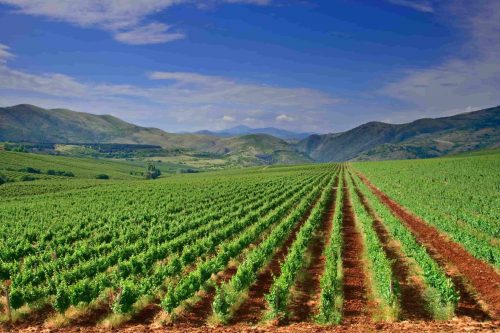
Honing Their Edge: Two smaller grocers hold their own
You may not know Kramer Foods or Busch's Fresh Food Market, but both are favored destinations in their local markets. Find out why.
Iconjam, dmutrojarmolinua, Annemarie Mannion, Salaihatin, supranut/Adobe Stock
In this article
For the second installment of our new Retail Snapshots series, we take a look at how small, family-owned stores compete with sizeable regional or national chains. In case you missed our first outing, we compared fresh produce availability and grocery pricing in Greece to the United States.
Like David vs. Goliath or Rocky vs. Apollo Creed, smaller grocers have had their work cut out for them when competing against much larger chains in the produce aisle. While they may be unable to match a massive chain’s buying power, they strive to provide perks big box stores may struggle to offer: more fresh, locally sourced produce and personalized service.
Kramer Foods, a small store with one location in the western suburbs of Chicago and Busch’s Fresh Food Market, a 16-store chain based in Michigan, are miniscule compared to well recognized Midwest or national chains.
Aldi, for example, has 2,687 stores across the United States, while Albertson’s Companies has 2,271 and multiple regional banners, while Publix has 1,498 stores in the Southeast, according to data company ScrapHero. So how do local or small chains successfully compete? We find out.
Defining Different
Kramer Foods has been in business since 1953 and is a local institution in Hinsdale, IL. Generations of families have come to appreciate the local grocer and what it offers.
“We don’t have the buying power that larger chains have,” says Ron Ludwigson, who owns Kramer Foods with his wife Kim. “So we really have to focus on quality, the freshness of produce, and the cleanliness of the department.”
Kramer’s isn’t resting on its laurels, however. It works to distinguish its produce selection by buying locally whenever possible, particularly during the summer months, from area farmers markets and networks of local vendors.
Ludwigson mentions two particular favorites among the store’s seasonal offerings: Michigan blueberries and Red Haven peaches.
Busch’s Fresh Food Market has a similar focus on local in Southeast Michigan. Founded in 1975 as J&C Family Foods with two stores, Busch’s taps into relationships with nearby farmers and capitalizes on its flexibility to compete with larger chains.
John Krist, a Busch’s store director, says the company’s “Grow Local” motto reflects its emphasis on supporting both local businesses and farmers.
Busch’s highlights these alliances with specialized ‘profile signs’ displayed near local products. The signs provide shoppers with information about the farmers, including their names, locations, and the products they grow.
Krist say customers respond positively to the effort and sales provide another measure of success. When a local product sells well, Busch’s orders more and continues building its relationship with the farmer.
Local greens, including microgreens, are currently popular among customers and sweet corn is also a consistent hit, he says.
Busch’s emphasis on buying local helped customers feel more confident about the greens and lettuce they purchased at the beginning of the summer, when there was an outbreak of Cyclospora traced to imported iceberg lettuce.
When a produce recall occurs and gains nationwide attention, Krist says, “As a family-owned store, we can react quicker.”
Requests and Specialty Items
For Kramer Foods, this flexibility extends to experimentation in keeping the selection of fruits and vegetables fresh. When customers ask for a produce item not normally stocked, the store is often willing to find it and take a chance.
“The thinking is that other shoppers may see the product, try it, and develop an interest as well,” Ludwigson points out.
Of course, such an approach comes with risk. The store could be left with excess inventory if customers don’t embrace a new item. But Ludwigson says Kramer’s is generally willing to “roll the dice,” which sets it apart from other grocery or big box stores in the area.
“It’s one of the main reasons people shop with us—the ability for us to listen, cater to what they like, and try it out,” he notes.
Ludwigson says Kramer Foods also works to connect its departments. Its produce, deli, and kitchen teams communicate and collaborate about ingredients, while their chef incorporates fresh products into prepared foods.
Busch’s also champions the ability to go beyond for its customers. Krist says smaller grocers have the freedom to test products rather than following the standardized selections often imposed by larger chains.
Among its specialty items are white and yellow dragon fruit, Pinkglow pineapples, cactus pears, and Maradol papayas.
Shoppers do indeed notice. They may shop a big box store for household items but they often turn to smaller, local grocers for their fresh produce.
The desire to try new items is more than a fad or a trend, even with price factoring so heavily into shopping decisions.
So, for Krist, displaying a specialty item in a wicker basket in the produce department is well worth taking a chance. “We’ll give it a shot.”
News you need.
Join Blue Book today!
Get access to all the news and analysis you need to make the right decision --- delivered to your inbox.






Subscribe to our newsletter
© 2026 Blue Book Services. All Rights Reserved

