


















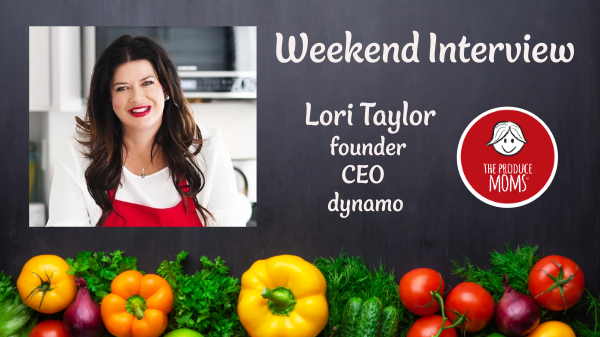
Lori Taylor, founder and CEO, The Produce Moms
The Produce Moms, which began as a marketing initiative, has turned into a nationally recognized B Corp-certified organization devoted to increasing the consumption of fruits and vegetables.
Acronym/Adobe Stock
In this article
The Produce Moms BB #:366223, which began as a marketing initiative, has turned into a nationally recognized B Corp-certified organization devoted to increasing the consumption of fruits and vegetables.
Lori Taylor, who founded the group and serves as its CEO, is on a mission to educate consumers on the many benefits of eating fresh produce, through creative recipes, meal plans, challenges, and The Produce Moms’ award-winning podcast.
We chatted with Lori about how far she’s come, the current successes of the organization, and where she and The Produce Moms are headed in the future.
Q: Tell us about your background and how the original “Produce Mom” was born.
I was working in sales at Indianapolis Fruit Company, LLC (IFC), raising my two sons who were a toddler and a preschooler when the blog first started. My millennial mom peers were constantly asking me about fresh produce and talking about strategies to get children more interested in fruits and vegetables.
At the time, blogging was the newest and hottest thing in digital media. In a 2012 marketing planning meeting at IFC, I pitched the idea of starting a blog to educate moms on how to select, store, and serve fresh produce as well as offer consumer-facing content marketing for the brands of produce that we sold.
The blog launched as “The Produce Mom” in 2012. The first blog I ever wrote was titled “Who is The Produce Mom?” I wrote this blog in about 15 minutes from my cubicle at IFC after I pitched the concept in our marketing meeting.
It was this blog and the low cost of entry that secured the buy-in to the concept from my former boss. The original blog is still on the website today and I like reading it annually to reminisce.
In 2016, we rebranded to our current name and community-centric brand identity as The Produce Moms (TPM).
Q: What were your initial goals? How did they evolve over the first few years?
The first three years the blog grew as a brand property of IFC. I’m forever thankful to the ownership and my coworkers who supported the early days and launch phase of TPM.
Many IFC vendors were very supportive and quick to participate in the brand promotions and content marketing offerings from TPM.
Eventually my sales quota for marketing campaigns became $25,000 per month and I think I surprised everyone when I consistently met the quota, especially with brands that did not sell produce to IFC.
The Indianapolis community embraced the emerging concept too. Within a few weeks of the blog’s launch I was asked to be a regular contributor to a locally produced live morning show. Indianapolis Public Schools also aligned with TPM as a strategic partner for its foodservice division.
The former president of IFC, Mike Mascari, encouraged me to get involved with organizations like United Way, Little Red Door Cancer Agency, the county and state health department, and more.
He pushed me to see TPM as larger than the produce industry and build my network to include community leaders from Lilly, Pacers Sports & Entertainment, Indianapolis Motor Speedway, Indiana University Health, and more.
In 2014 I became involved with a local think tank and initiative JumpIN for Healthy Kids and served on a committee with Kalen Irsay who introduced me to marketers and public relations professionals at the Indianapolis Colts.
The goal on the day we published the first blog is the same goal we have today: we want to get more fruits and vegetables on every table.
Shortly thereafter, the Indianapolis Colts were working with TPM to do a live school show starring the team’s mascot and athletes with support from the child nutrition team at the Indiana Department of Education.
The show promoted key recommendations from the USDA and the Colts did public service announcements on game day to promote athletes’ favorite fruits and vegetables, while offering fun produce trivia with the cheerleaders.
We reached many kids and families through this unique partnership and I learned so much about marketing from the National Football League—it was one of the best stages for the TPM brand.
The goal on the day we published the first blog is the same goal we have today: we want to get more fruits and vegetables on every table.
Q: What was behind changing the name to plural? Have you ever been pressured to add ‘Dads’ to the equation?
In August 2015 I purchased the brand and became the founder, owner, and CEO. Within a year of business ownership, I was encouraged by one of my mentors, Karen Nardozza, to do some strategic planning, and she graciously helped me.
One of my biggest concerns with TPM was its equivalency to me as an individual. By rebranding to The Produce Moms, we not only capitalized on the consumer and societal shift to being more community-centric, but we uncoupled the brand from me as an individual.
Of course I’ve heard it a million times “What about dads?”
I considered it but never took action because it didn’t feel like something I could authentically build. Instead of being everything for everyone, brands need to be comfortable and confident with their authentic offering.
We’re a community launched for moms and by moms, but we certainly provide content and education for everyone—you don’t have to be a mom or a female to share our passion for eating more fruits and vegetables.
Q: Think back to a difficult situation or decision, what’s your process for making the best choice to move forward?
In April 2015 I was told IFC would not be moving forward with The Produce Mom and was shutting down all consumer marketing. My job title was consumer marketing manager. I was provided a legal document that presented two choices or pathways.
The first was to purchase TPM for a price that felt impossible. The price was more expensive than the home I was living in, and I was making a modest $50,000 annual salary.
The second option was shutting down TPM and I could go back to my sales job with a pay cut and no longer be part of management or the marketing team.
I didn’t know how I was going to do it, but I knew that purchasing The Produce Mom was the only way forward.
I didn’t know how I was going to do it, but I knew that purchasing The Produce Mom was the only way forward.
Ultimately, I cashed out my retirement account and borrowed money from family to make it possible. When word got out that TPM was being sold to me, I received good advice from marketing pro Howard Nager.
I’ll never forget the phone call—he told me the industry is really small and if I get emotional about this or burn bridges in the acquisition process TPM would never be successful.
So I embraced the mindset that I was really proud my idea sold for this amount of money. I embraced gratitude for IFC and all the support I received from the ownership family and my coworker peers.
I also read The Four Agreements by Don Miguel Ruiz, and my father encouraged me to use the Golden Rule as my guiding light in business. Mindset is everything in the entrepreneurial journey and I’m really comfortable with how I’ve handled the challenging moments.
I try to treat people the way I want to be treated, and I believe direct and open communication mitigates a lot of stress.
Q: How would you describe your leadership style? Do you set monthly, quarterly, and annual goals?
I’d like to think of myself as a servant leader. Giving and empowering others has served me well in this journey. Goodness in always comes back.
My biggest goal is to create a workplace where my employees don’t want to quit. Their buy-in and effort enables all that we do. I believe in a life where both career and family can thrive, so as a leader you have to have a style conducive to this belief.
I certainly have monthly, quarterly, and annual revenue goals. I have a great financial planner and accounting and bookkeeping team. I trust them and let them lead me.
I try not to get in the weeds with the numbers but definitely have less stress when business cash flow is properly managed. The financial management and tax compliance of a small business is hard; but debt and financial chaos is harder.
The financial management and tax compliance of a small business is hard; but debt and financial chaos is harder.
Q: How do you rally the troops when things get rough?
I don’t come down on my team. Even when one of them makes a mistake, I respectfully identify the mistake and coach them on how we solve the problem and avoid it in the future. But as the business owner, I wear the hardships and mishaps on my shoulders.
Q: You have many achievements, awards, and accolades – what resonates the most?
My biggest blessings are my sons and my husband. I love my family. It has been hard to be a bootstrapping entrepreneur, a mom, and a wife. I’m not successful at all three every day. This summer is a decade of business ownership and my family still loves me. I think that’s the biggest achievement in my life.
Q: Is there a specific goal or elusive achievement you’ve always wanted but have yet to accomplish?
I think I will eventually get involved in public policy. I told a friend a few weeks ago I should be lieutenant governor of Indiana—she told me to go for it.
I might do something in Indiana or get more involved in federal nutrition policy. I also think I’d be a great leader of the International Fresh Produce Association when Cathy Burns is ready for a successor.
Q: What’s your best advice for women who want to be entrepreneurs?
It’s hard. You own the business, but the business also owns you. There’s no roadmap and there’s no balance, only balancing. You will encounter many disingenuous people in business; do not lose your soul in the journey. Treat others the way you want to be treated. Your work can be a force for good.
Realize you only have 100 percent to give. This means some days the business gets 80 percent while family gets 20 percent and some days your family will get 80 percent, and the business gets 20 percent.
You own the business, but the business also owns you. There’s no roadmap and there’s no balance, only balancing.
Q: How much impact do market conditions have on your strategies, like today’s inflation and economic uncertainty?
The good news is that fruits and vegetables are a unifying force—among cultures, socioeconomic status, and more. We keep it real at TPM and don’t belittle our audience with content that celebrates lavish and luxurious lifestyles.
We never have and never will. It’s not who we are. We’re about meeting people where they are and help them get more fruits and vegetables on the table.
Q: What are your goals for TPM for the rest of this year?
We’re doing work to support the MAHA movement and I’m getting ready for a speaking engagement this fall in Bentonville. We have audience development goals that we work towards every month. I have an expectation to grow our engaged audience annually and we’re on track to achieve that again in 2025.
Q: Where do you see yourself and your team by the end of the decade? Could there be satellite offices of TPM across the country, or perhaps in Canada or Mexico?
We already have strong global readership and audience. I’m not looking for excessive overhead and we no longer have an office space in Indiana—we’re a fully remote workforce with team members in Indianapolis, Chicago, Detroit, Cincinnati, Portland, Philadelphia, and London.
Q: What else would you like readers to know?
I’m really thankful for the opportunity to promote the fresh produce industry. I don’t take the responsibility of a large audience lightly. I’m thankful so many people have trusted us through the years to help market their products and tell their story.
News you need.
Join Blue Book today!
Get access to all the news and analysis you need to make the right decision --- delivered to your inbox.





Subscribe to our newsletter
© 2026 Blue Book Services. All Rights Reserved

