


















ProduceIQ: Oil, heat keep produce markets on edge
High oil prices and heat are giving produce markets the creeps before spooky season even begins, as oil prices have climbed back above $100.
High oil prices and heat are giving produce markets the creeps before spooky season even begins. Oil prices have climbed back above $100 a barrel as escalating conflict in the Middle East threatens global energy supplies.
Saudi Arabia temporarily shut down its East-West oil pipeline after a drone attack originating in Iraq, while Iran-backed Houthi forces have intensified attacks in the region, threatening critical shipping routes. Higher oil prices are translating into higher fuel, transportation and shipping costs, adding pressure to already lean margins for suppliers and buyers.
Meanwhile, peak hurricane season has arrived with a virtually blank map. September 10 marks the typical peak of Atlantic hurricane activity, yet things remains remarkably quiet.
That is welcome news for growers struggling with other forms of inclement weather across the U.S., especially Southeast tomato growers. For now, Mother Nature appears to be giving growers a rare break from hurricanes at least.
ProduceIQ Index: $1.26/pound, up +3 percent over prior week
Week #37, ending Sep 11th
Blue Book has teamed with ProduceIQ BB #:368175 to bring the ProduceIQ Index to its readers. The index provides a produce industry price benchmark using 40 top commodities to provide data for decision making.
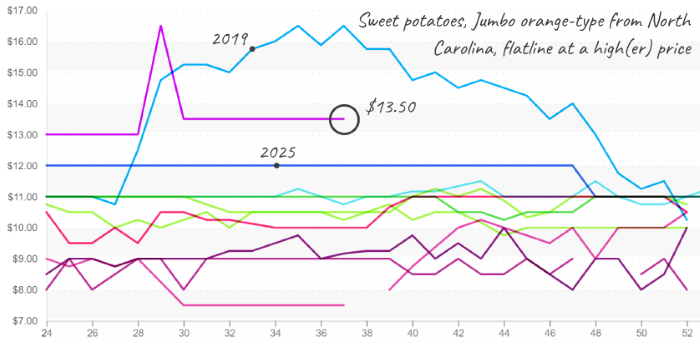
Sweet potato prices soar. Fueled by a sizeable production gap, prices have gone from a ten-year low in Week #36 to a ten-year high in Week #37. Growers have begun harvesting the new crop, but it will take a few weeks before the sweet potatoes are fully cured and ready to ship. Meanwhile, the old crop is nearing the end of its shelf life, so what supply is available will likely come with some quality issues.
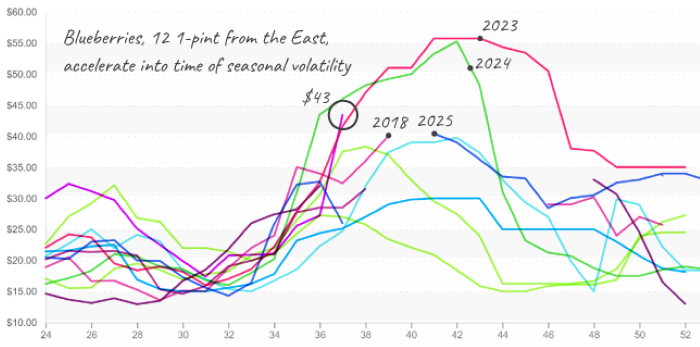
Blueberries head higher as the Northwest season winds down. The end of the season for growers in the Pacific Northwest is thrusting blueberry prices upward. Average prices are up +58 percent week over week, just shy of a ten-year high for Week #37.
Prices typically rise through Week #40 as domestic production fades and Peruvian growers work to ramp up production. Suppliers are forecasting strong quality and volume from Peruvian growers this season. However, prices will likely remain on the higher end of the historical spectrum as increasing shipping costs add to the expense of bringing berries to market.
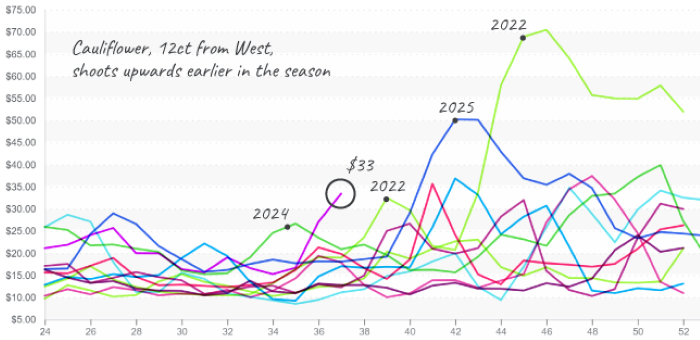
Cauliflower keeps climbing. High heat and insect pressure continue to push cauliflower markets to extremes. Average prices are up +32 percent over the previous week, reaching a ten-year high for Week #37 by a sizeable margin. Unfortunately for buyers, supply is unlikely to improve meaningfully through September.
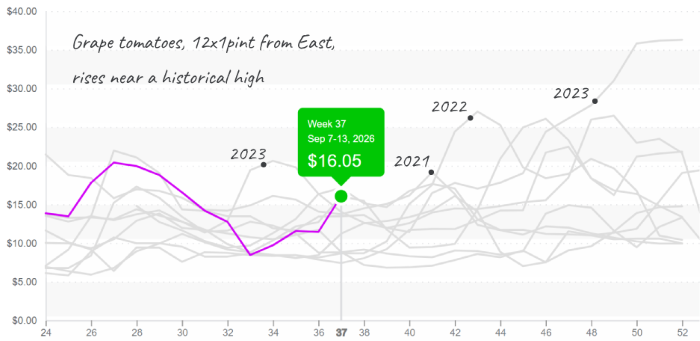
Grape-type tomatoes join the price parade. Following this week’s theme of elevated prices, grape-type tomato prices are on the rise. Average prices are up +35 percent week over week. Heavy rain and high heat in the South, combined with a seasonal decline in production, are pushing prices well above average. Unlike many of the commodities referenced in this week’s market highlights, the supply situation for grape-type tomatoes appears to be short-lived. Supply will likely improve within the next 7-14 days.
ProduceIQ saves you time and provides valuable information to increase your profits.
The ProduceIQ Index is the fresh produce industry’s only shipping point price index. It represents the industry-wide price per pound at the location of packing for domestic produce and at the port of U.S. entry for imported produce.
ProduceIQ uses 40 top commodities to represent the industry. The Index weights each commodity dynamically, by season, as a function of the weekly 5-year rolling average Sales. Sales are calculated using USDA Agricultural Marketing Service data on movement and prices. The Index serves as a fair benchmark for industry price performance.
News you need.
Join Blue Book today!
Get access to all the news and analysis you need to make the right decision --- delivered to your inbox.




Subscribe to our newsletter
© 2026 Blue Book Services. All Rights Reserved

