


















ProduceIQ: Fourth of July week brings rain, rising prices, and cherry deals
As families prepare for fireworks, cookouts, and long weekends, the fresh produce supply chain is navigating its own kind of July fireworks.

Tropical activity is ramping up as we head into the first week of July. Tropical Storm Barry is bringing yet more rain to growers in Mexico, while hurricane experts are closely monitoring an area along the Gulf and Atlantic coasts of the U.S. that is at risk for tropical development throughout the long holiday weekend.
Produce growers in Central Florida and Southern Georgia should prepare for a very wet start to July.
Tropical activity in the Eastern Pacific remains unusually strong for this time of year. Already, the season has produced six named storms and two hurricanes, including Hurricane Erik, which rapidly intensified into a major storm before making landfall in Mexico.
The storm delivered heavy rain to a wide range of crops, primarily affecting grape, lettuce, and broccoli growers.
As families prepare for fireworks, cookouts, and long weekends, the fresh produce supply chain is navigating its own kind of July fireworks, with heat, storms, and tight supplies all shaping the market.
ProduceIQ Index: $1.27/pound, +1.6 percent over prior week
Week #26, ending Jun 27th
Blue Book has teamed with ProduceIQ BB #:368175 to bring the ProduceIQ Index to its readers. The index provides a produce industry price benchmark using 40 top commodities to provide data for decision making.
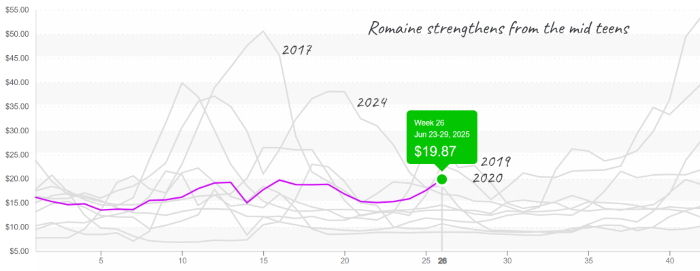
Average iceberg prices soar, up by +83 percent over the previous week. Romaine prices have increased modestly, up +22 percent from a week earlier, but are still well above average for week #26. Rain and hail linked to tropical systems have severely damaged both crops, placing added strain on Salinas Valley growers, who are already struggling to meet demand. Expect pricing for both lettuces to remain elevated into mid-July.
Romaine prices ascend during a time that is typically stable
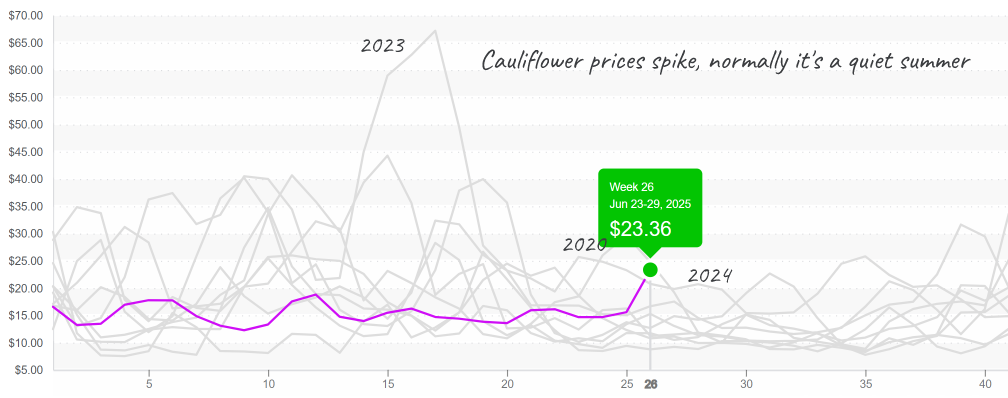
Cauliflower is also joining the surge, with prices up +62%—just shy of a 10-year high for early July. Like lettuces, cauliflower supplies have tightened due to adverse weather in Mexico, shifting pressure onto California growers to fill the void.
Cauliflower spikes past $23, from the mid-teens
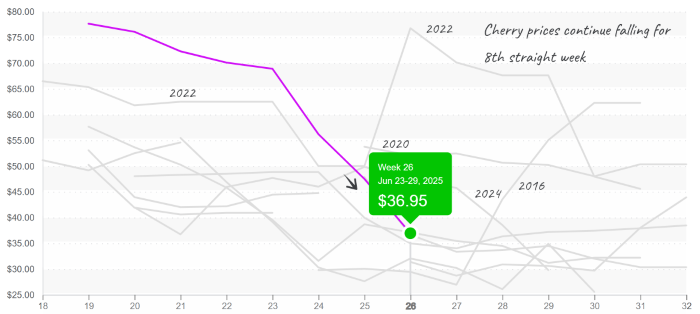
But not all produce news this July is stormy. If consumers are looking for a festive alternative to strawberries for their patriotic-themed desserts, cherries are a steal. Prices are down -20 percent from last week, averaging just $37, well below normal for the season. Pacific Northwest growers are hitting peak production, and softening export demand is creating a ripe opportunity for retail promotion. It’s a sweet spot for cherry lovers this Fourth of July.
Cherry prices continue falling for 8 straight weeks, from $77 to $37
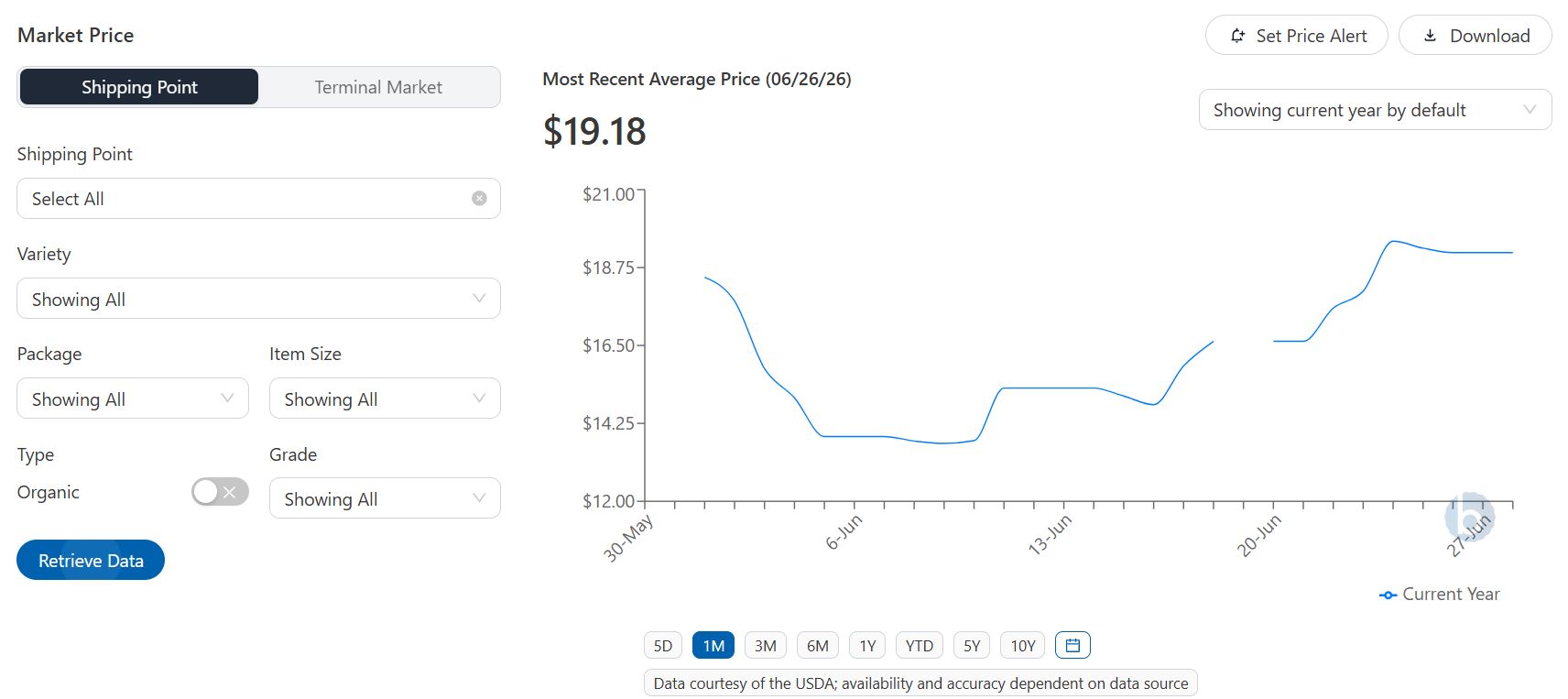
Meanwhile, lemon prices are swinging upwards. After weeks of unusually low prices, lemons are beginning a predictable climb. Offshore supplies are less than half of what they were at this point last year, tightening just as summer heat and holiday demand peak. California’s District Two has just begun production and could help ease the supply gap caused by offshore delays.
ProduceIQ saves you time and provides valuable information to increase your profits.
ProduceIQ Index
The ProduceIQ Index is the fresh produce industry’s only shipping point price index. It represents the industry-wide price per pound at the location of packing for domestic produce and at the port of U.S. entry for imported produce.
ProduceIQ uses 40 top commodities to represent the industry. The Index weights each commodity dynamically, by season, as a function of the weekly 5-year rolling average Sales. Sales are calculated using the USDA’s Agricultural Marketing Service for movement and price data. The Index serves as a fair benchmark for industry price performance.

News you need.
Join Blue Book today!
Get access to all the news and analysis you need to make the right decision --- delivered to your inbox.





Subscribe to our newsletter
© 2026 Blue Book Services. All Rights Reserved

