

















ProduceIQ: Florida freeze threatens winter produce supply
Florida growing areas as far south as Homestead saw mercury drop to freezing, with areas in Central and North Florida well below freezing.

Images courtesy ProduceIQ
We weren’t aware we had any celebrity readers, but we are certain Mariah Carey must have been inspired by last week’s artwork when picking her 2026 Winter Olympics opening ceremony dress.
We doubt this week’s image will do much to stir up outfit ideas, but then again, perhaps iguana skin boots could be a thing?
Iguanas, unfortunately, weren’t the only victims of last weekend’s historic freeze in Florida. Growing areas as far south as Homestead saw mercury drop to freezing, with areas in Central and North Florida seeing temperatures well below freezing for hours overnight. Growers were forced to cover crops, run overhead sprinklers and test all of their tricks to protect plants from cold and freeze damage.
The damage wasn’t limited to a single crop. And, even if not directly damaged, it’s been cold for an extended period which slows the plant growth, yield and harvesting.
As a result, the Made In Florida sticker may be few and far between for the next few weeks as growers work to recover from the winter storm. Reports are still rolling in, but strawberries, bell peppers, tomatoes, squash, beans, and celery are just a few of the commodities in the bull’s-eye of cold-weather impacts.
While growers assess the fallout from the freeze, the calendar has delivered another winter milestone. It’s Super Bowl Monday, the unofficial national holiday in which Super Bowl revelers miraculously develop an illness in time to take off work. Who can blame them? Consuming half of one’s body weight in chips and guac will make even the heartiest digestive system a bit queasy.
ProduceIQ Index: $1.18/pound, up +3.5 percent over prior week
Week #6, ending Feb 6th
Blue Book has teamed with ProduceIQ BB #:368175 to bring the ProduceIQ Index to its readers. The index provides a produce industry price benchmark using 40 top commodities to provide data for decision making.
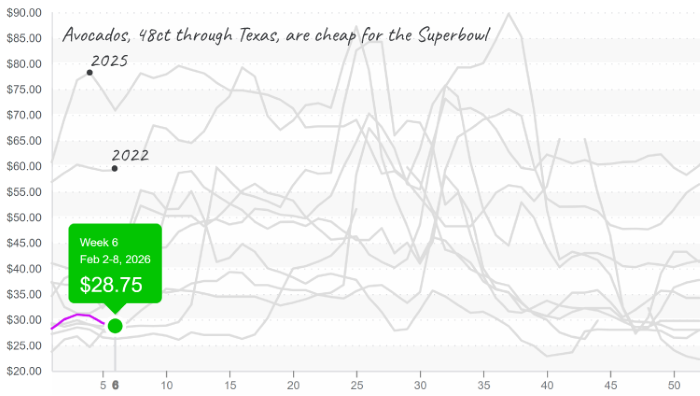
The Super Bowl may be over, but Hass avocado prices are still ripe for promotion. Week #6 saw the highest reported volume out of Mexico in the last five years. According to Avocados from Mexico, in the two weeks leading up to the Super Bowl, a truckload of avocados crosses the U.S.-Mexico border every six minutes. Even with the increased demand caused by Super Bowl festivities, prices remain well below average for week #6. It’s been 4 years since the infamous Super Bowl import ban, and prices are now less than half on the abundant supply.
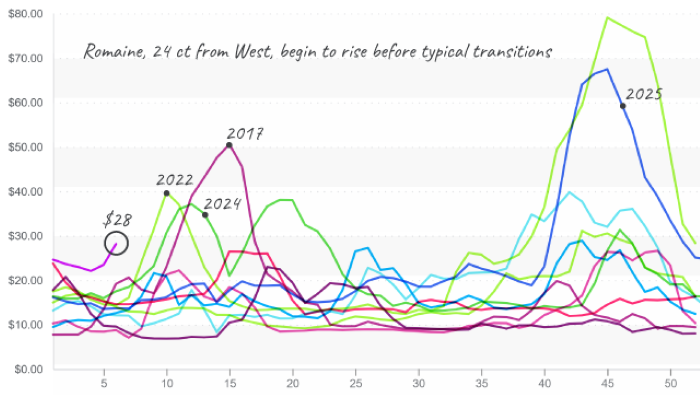
Beyond avocados, leafy greens are telling a very different pricing story. Lettuce and leaf commodities are in short supply. Average prices for everything from romaine and iceberg to spinach and cilantro are at record highs for week #6. Abnormally warm and wet conditions for growers in Yuma, AZ, are forcing prices for a wide variety of commodities to rise. Elevated prices are forecasted to persist through February.
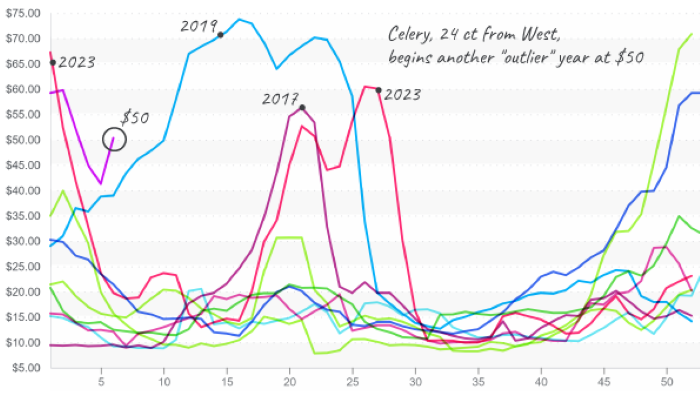
Celery markets are also feeling the pressure. Up +32 percent over the previous week, celery markets have reversed their downward trend. The Florida freeze and inclement weather in Western growing regions are challenging supply and inflating prices. Shortened shelf life and elevated prices are likely to persist through mid-February.
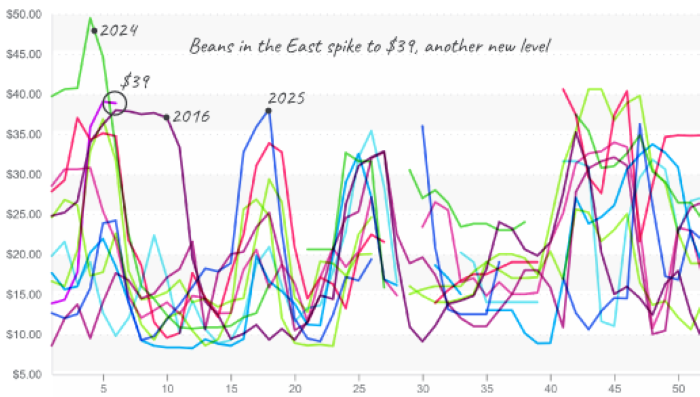
Bean markets appear to be next in line. Bean markets seem poised to follow 2016’s historic February record. Cooler weather in Mexico and Florida’s freeze have left markets hungry for supply. Prices will likely maintain their upward momentum over the next two weeks as Florida growers work to assess damaged plants and chart a new path forward.
ProduceIQ saves you time and provides valuable information to increase your profits.
The ProduceIQ Index is the fresh produce industry’s only shipping point price index. It represents the industry-wide price per pound at the location of packing for domestic produce and at the port of U.S. entry for imported produce.
ProduceIQ uses 40 top commodities to represent the industry. The Index weights each commodity dynamically, by season, as a function of the weekly 5-year rolling average Sales. Sales are calculated using USDA Agricultural Marketing Service data on movement and prices. The Index serves as a fair benchmark for industry price performance.
News you need.
Join Blue Book today!
Get access to all the news and analysis you need to make the right decision --- delivered to your inbox.






Subscribe to our newsletter
© 2026 Blue Book Services. All Rights Reserved

