

















Week in Review: Food price blame game
Consumer dissatisfaction with high food prices has been a theme for a while. Consumers are conflicted on who can fix it.
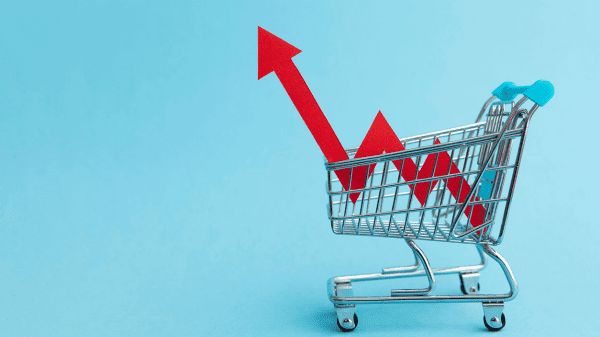

Consumer dissatisfaction with high food prices has been a theme for a while.
Retailers are under pressure to lower prices, and Walmart did just that this week, saying they reduced prices on thousands of items, including groceries.
This will put pressure on retail competitors to match Walmart’s value messaging. Part of the justification for Kroger’s acquisition of Giant Eagle last week is to improve efficiency in order to lower prices for customers.
This is the free market at work, as it should be.
But there was an interesting survey that came out this week, showing consumers want the government to bring down food prices.
It said consumers mostly blame tariffs and trade restrictions for higher prices, but also large corporations for raising prices to increase profits.
In our industry, we know grocery companies work on tight margins, so this isn’t really a fair criticism. Of course they need to run profitably to stay in business, but there is no evidence of price gouging.
The overall economy is a complicated thing, but to point to the simplest cause of food, and overall inflation, it’s government policy around the pandemic, when lockdowns disrupted the economy and then stimulus efforts fed inflation.
This isn’t a partisan problem as the pandemic policies started under President Trump and then continued under President Biden.
Trump promised to improve the economy when he ran in 2024 and was elected again, but tariffs and then the Iran war further strained the food supply chain.
I would point to the government for being the cause of this inflation, and I remain skeptical further government intervention will fix it.
There are things the government can do to improve things, such as winding down the war and getting the oil market back to pre-war operations.
For fresh produce, USMCA has been a good trade agreement, allowing for free trade among the U.S., Canada, and Mexico, although the Trump administration has said it intends to renegotiate it.
Produce groups this week urged support for continuing the agreement.
If freeing up the supply chain is what consumers in the survey meant when they say politicians need to lower food prices, then I agree.
If they think stronger intervention will help the problem, as we’ve seen in many other industries such as higher education or health care, government influence makes costs higher, not lower.
News you need.
Join Blue Book today!
Get access to all the news and analysis you need to make the right decision --- delivered to your inbox.




Subscribe to our newsletter
© 2026 Blue Book Services. All Rights Reserved

