

















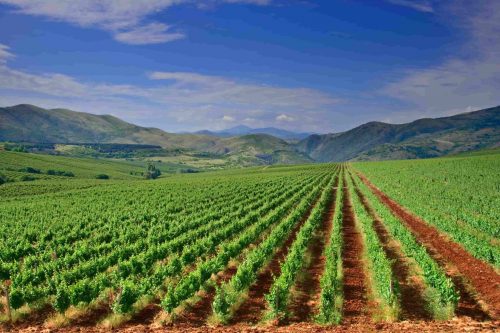
Peru asparagus exports recover the first half of 2025
By 2025, Peruvian asparagus is showing a significant recovery in export volumes thanks to improved weather conditions.

So far in 2025, Peruvian asparagus is showing a significant recovery in export volumes thanks to improved weather conditions that optimized plant productivity and the implementation of corrective agronomic management, such as recovery fertilization and harvest rescheduling, according to Agraria.
As of May of this year, the recovery of Peruvian asparagus has led to exports of 39,436 tons, a 42 percent increase over the previous year. This large Peruvian production has allowed it to cover destinations primarily in Europe and the United States.
However, the product’s abundance has led to a 17 percent drop in average price, placing the average value at $3.19 per kilogram, enabling sales of $126 million, an 18 percent increase in value compared to the same period last year.
While the year is looking favorable, 2025 could be even better for asparagus producers because the Spanish campaign, for example, has been shortened by persistent rains, practically ending in May. This opens a window for Peru to obtain stronger prices starting in June.
Projections indicate that the Peruvian campaign could exceed previous year’s volumes by more than 30 percent and that, if accompanied by an appropriate marketing strategy, prices could partially recover.
On the production side, the current context of increased production with lower prices still provides confusing information for producers. Some producers are even choosing to reduce their planted areas rather than expand them due to the tightening of margins due to lower prices and the lack of a clear strategy to expand global demand.
This year could contribute to a recovery for Peruvian asparagus in the coming seasons. This would allow this vegetable, a product with a long history in the Peruvian agricultural export market, to regain competitiveness and strengthen its position in key markets.
Asparagus production in Peru depends largely on small farmers who supply large exporters, who then collect their production. This model often results in narrow profit margins, especially in difficult times, thus limiting the ability to reinvest in the sector.
From a commercial perspective, the top destination for Peruvian asparagus is the U.S. and its high demand for this vegetable. In that country, annual consumption exceeds 300,000 tons, and local production barely covers between 10-15 percent of demand.
The United States’ main supplier is Mexico, which has managed to position itself in the conventional section and is developing the premium variety segment. In fact, the U.S. market shows a growing trend toward preference for the latter, which represents a challenge for Peru, whose supply remains concentrated in conventional varieties.
In Europe, the competition is different: major producing countries such as Spain, Italy, and Greece supply their domestic markets. However, consumer preference for asparagus year-round allows Peru to take advantage of being able to supply the market during the months when those countries are off production.
Even so, the margin for growth is more limited in this market, as the gap between production and demand is not as wide as in the United States, with only 15-20 percent of what they have to import from outside Europe. Peru’s strategy on this continent is to take advantage of periods of shortage in the European calendar.

News you need.
Join Blue Book today!
Get access to all the news and analysis you need to make the right decision --- delivered to your inbox.







Subscribe to our newsletter
© 2026 Blue Book Services. All Rights Reserved

