

















ProduceIQ: Dog days, cooler markets
With all that's working against produce markets, you'd expect prices to be climbing. Instead, the ProduceIQ Index tells a different story.

Images courtesy ProduceIQ
The last thing anyone wants to think about during the Dog Days of Summer is even more extreme weather, but here we are.
Meteorologists are beginning to throw around the term “Super El Niño” again. Whether it lives up to the hype remains to be seen, but produce buyers know weather buzzwords have a funny way of turning into market headlines.
If “Super El Niño” delivers on its name, growers could be facing another year of weather extremes capable of reshaping production across key growing regions.
Even amid the ongoing conflict in Iran, oil continues to flow through the Strait of Hormuz, albeit more slowly than usual. Even so, tensions in the Middle East continue to keep transportation costs elevated, squeezing already tight margins throughout the fresh produce supply chain.
With all of that working against produce markets, you’d expect prices to be climbing across the board. Instead, the ProduceIQ Index tells a very different story. The index sits surprisingly well below average in week #31, with many commodities trending firmly into promotable territory despite the steady stream of headlines trying to push markets the other direction.
ProduceIQ Index: $1.04/pound, down -3.0 percent over prior week
Week #31, ending July 31st
Blue Book has teamed with ProduceIQ BB #:368175 to bring the ProduceIQ Index to its readers. The index provides a produce industry price benchmark using 40 top commodities to provide data for decision making.
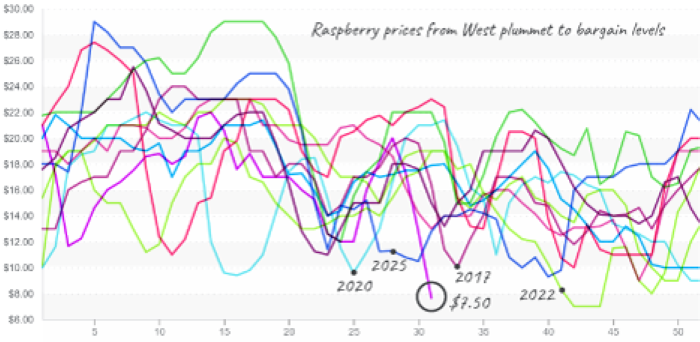
Down another -40 percent over the previous week, red raspberry prices continue to shock and awe. Average prices are now sitting at a ten-year low by a significant margin. Production out of Watsonville, CA, and Baja California, Mexico is plentiful, to say the least, and is forecast to persist through August. Perhaps retailers could offer a special cross-commodity promotion: buy two clamshells of raspberries, get two bell peppers free.
Raspberries are ripe for promotion
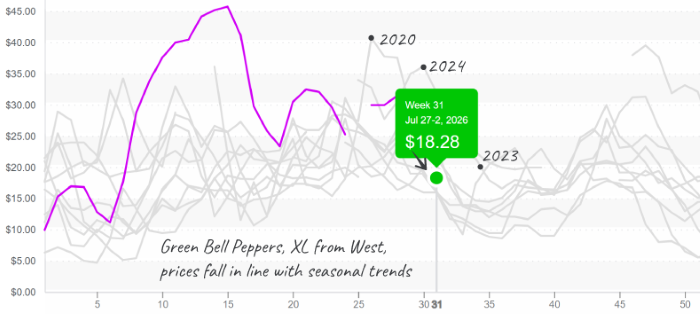
Raspberries aren’t the only commodity making buyers smile this week. Above-average production in California is keeping bell pepper markets soft. While below-average pricing isn’t unusual for week #31, current markets are considerably softer than buyers would typically expect.
Bell peppers join the bargain bin
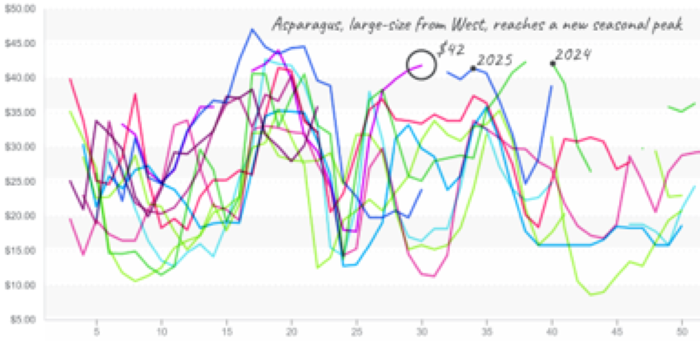
Grass prices maintain a ten-year high in week #31. Poor growing conditions in Mexico are forcing suppliers to lean more heavily on Peru, but meaningful relief is unlikely until growers in Southern Peru ramp up production in another three to four weeks. Average reported volume in week #31 remains notably below average, and below-average supply conditions are expected to persist well into the fall.
No relief for asparagus buyers
For all the headlines surrounding weather, fuel and geopolitics, this week’s ProduceIQ Index remains surprisingly buyer-friendly. Oranges are one of the few commodities bucking the softer market trend. Average orange prices remain above average, but they are far from historically unprecedented territory. A seasonal gap in domestic supply is increasing demand, particularly for smaller-sized fruit. In the meantime, import supplies should help buyers bridge the seasonal gap.
A squeeze in citrus supply
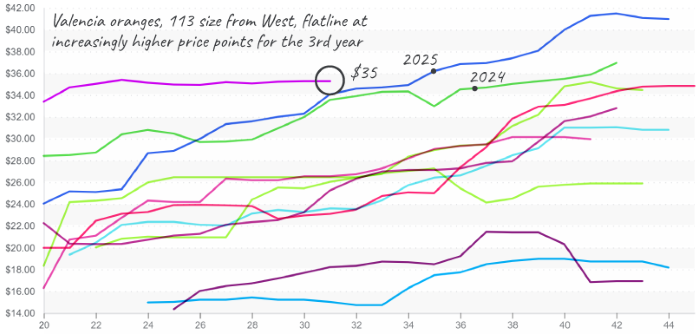
ProduceIQ saves you time and provides valuable information to increase your profits.
The ProduceIQ Index is the fresh produce industry’s only shipping point price index. It represents the industry-wide price per pound at the location of packing for domestic produce and at the port of U.S. entry for imported produce.
ProduceIQ uses 40 top commodities to represent the industry. The Index weights each commodity dynamically, by season, as a function of the weekly 5-year rolling average Sales. Sales are calculated using USDA Agricultural Marketing Service data on movement and prices. The Index serves as a fair benchmark for industry price performance.
News you need.
Join Blue Book today!
Get access to all the news and analysis you need to make the right decision --- delivered to your inbox.






Subscribe to our newsletter
© 2026 Blue Book Services. All Rights Reserved

