

















Viraj Puri, Gotham Greens
It wouldn't be a stretch to say Viraj Puri, cofounder, longtime CEO, and now executive chairman of Gotham Greens, has a green thumb.

Katie Moth/Adobe Stock
In this article
In 2008, Viraj Puri cofounded Gotham Greens, which has grown from a single rooftop greenhouse in Brooklyn, NY to one of the largest producers of hydroponic leafy greens in North America with more than 40 acres (1.8 million square feet) of greenhouse production.
What began with fresh herbs and leafy greens and has since branched out into salad kits, dressings, dips, and cooking sauces.
We asked Viraj, who has transitioned away from his duties as CEO to executive chairman, about the company’s expansion inside and out, the latest growing techniques, and where he sees Gotham Greens in the next decade.
Q: Tell us about your background, education, and early career aspirations.
Before Gotham Greens, I led several startup enterprises in the United States, India, and Malawi focused on sustainable agriculture, green building, renewable energy, and environmental design.
Q: What prompted the founding of Gotham Greens?
For most parts of the United States, it’s difficult to get fresh, locally grown produce year-round.
Since more than 90 percent of domestically grown leafy greens come from California and Arizona, by the time they reach other cities like New York, Chicago, Dallas, and Atlanta, the produce has lost quality, taste, nutritional value, and shelf life. This makes many consumers feel disconnected from the food we eat and contributes to food waste.
My cofounder and I were inspired by innovation and technology, and we were driven by a sense of duty to address issues facing our agricultural system.
It was winter in New York City, and we realized that most of the produce we were finding in the supermarkets was coming from places like Mexico, California, and other countries around the world.
By the time the produce made its way here, it was at least a week old and had changed hands multiple times. We also noticed that consumer preferences were shifting toward more local and sustainably produced food.
So we wanted to create a sustainable farming company that could revolutionize the notion of how and where fresh produce can be grown and distributed, while making a positive impact on the environment and in our communities.
Q: How did you determine what technology was needed and go about getting it?
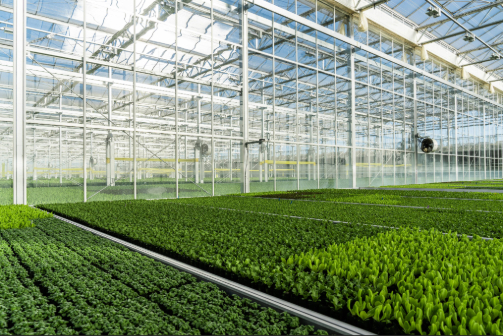
Before Gotham Greens, I had some previous exposure to hydroponic greenhouses. It seemed like a great technology to bring into cities.
Q: Were your intended customers grocery retailers? Do you sell to foodservice operators or other businesses?
Since day one, we’ve grown and delivered premium quality, non-GMO and pesticide-free product in high-tech, climate-controlled greenhouses to retailers, restaurants, and foodservice operators all year—which means even during the middle of winter, a heat wave, or drought, we provide our customers with fresh, high-quality and reliable produce within a couple days of harvest.
Q: How many company greenhouses are there now, and where?
We started as a single rooftop greenhouse and have grown to be one of the largest packaged salad producers in North America.
We operate 12 greenhouses that span more than 40 acres (1.8 million square feet) across nine states: New York, California, Texas, Georgia, Illinois, Colorado, Virginia, Maryland, and Rhode Island.
Q: Do they all grow the same things? What’s the full range of products offered?
Yes, we grow about 10 varieties of leafy greens and herbs across all our greenhouses. We grow and deliver leafy greens, herbs, and salad kits along with a line of fresh dressings, dips, and cooking sauces year-round.
We’re always looking for new ways to incorporate our fresh herbs and greens into more recipes and products. This has led us to expand our product line beyond fresh lettuce and transcend the produce aisle as we build our brand.
Building greenhouses next to large populations and distributing our produce regionally allows us to reduce transportation time, fuel consumption, and associated carbon emissions.
Q: How do you handle distribution? Do you have your own fleet of trucks or do customers come to your facilities?
We deliver our products to customer distribution centers across the country, and some customers pick up directly from our greenhouse farms.
Building greenhouses next to large populations and distributing our produce regionally allows us to reduce transportation time, fuel consumption, and associated carbon emissions. Our greens get where they’re going faster, stay fresh longer, and retain more of their nutrients, which helps to reduce food waste.
Q: Gotham Greens falls under the umbrella of controlled environment agriculture (CEA), with myriad terms: greenhouses, indoor growing, and vertical growing – do all three terms apply?
We operate high-tech, climate-controlled greenhouse farms and conduct our entire operation under one roof, planting new crops, harvesting, and packing daily.
Indoor farms like Gotham Greens create the ideal conditions for leafy greens and herbs to thrive, resulting in fresh produce that’s always in season, regardless of the weather outside. However, we do not use vertical farming growing techniques.
Q: For the mode of growing, are all your operations hydroponic?
Yes, all Gotham Greens greenhouses use a hydroponic growing method known as nutrient film technique with crops growing in trays. Plants receive a constant stream of irrigation water enriched with a mineral nutrient solution, which the plants soak up through their root systems.
Q: How does today’s tech compare to when you began, has it changed significantly?
As we have opened new greenhouses over the past 15 years, we’ve added more automation and new technology to ensure our operations run efficiently.
But people remain at the heart of what we do: it’s our growers’ expertise, intuition, and care that ultimately improves crop quality and drives stronger yields, which is essential to the future of controlled environment agriculture.
Not all CEA methods and models are equal. For example, vertical farming companies have faced significant challenges given the underlying technology and elusive unit economics.
Q: Other CEA startups and various growers have struggled; what’s the key to your success?
Not all CEA methods and models are equal. For example, vertical farming companies have faced significant challenges given the underlying technology and elusive unit economics. In contrast, companies like Gotham Greens use high-tech greenhouses, which have been around for decades, are technologically proven, and operate profitably on a commercial scale around the world.
In our early years, every time we opened a new greenhouse, we quickly saw demand for our produce grow. In 2015, we expanded outside of New York City and opened our first greenhouse in Chicago, where we saw a repeatable pattern in consumer demand for greenhouse-grown lettuce.
That’s when we knew we had a viable business model that could be replicated in cities across the country and we’ve moved quickly to stay ahead of growing demand for our products.
Q: You’re celebrating 15 years, is this how you envisioned the company by this point?
We launched 15 years ago with a bold idea: to grow fresher, better-tasting salad greens closer to where people live. Today, we’re proud to be an industry leader in indoor farming with a strong, recognizable brand.
With increasing climate and supply chain-related issues facing our food system, it’s more important than ever to bring innovative farming solutions that grow high-quality produce while using fewer precious natural resources.
We’re also focused on our expansion into adjacent fresh categories with a growing lineup of refrigerated dressings, dips, and pesto sauces that bring the same commitment to quality and flavor beyond the salad bowl.
Q: Where do see Gotham Greens at 20 years?
We believe there will be continued interest and investment in larger, more commercial-scale greenhouses like ours. We’ll continue to purposefully expand our greenhouse network to provide fresh, plant-based foods to consumers across the country.
We’re committed to delivering long-lasting, nutrient-dense produce, and we’re also focused on building a consumer brand that’s synonymous with quality, consistency, reliability, and sustainability.
With your transition to executive chairman, how will this change your role on a daily basis?
I’ll still be involved in the business as an employee and owner. My new role is focused on guiding and advising our Board and partnering with the executive leadership team on Gotham Greens’ strategic priorities and commercial growth.
On the commercial side, I’ll stay very involved with our key retail and foodservice customers. I’ll be less involved in daily management and greenhouse operations.
I’m incredibly passionate about our brand and industry and will continue to serve as a spokesman and ambassador for Gotham Greens and the broader CEA industry.
News you need.
Join Blue Book today!
Get access to all the news and analysis you need to make the right decision --- delivered to your inbox.






Subscribe to our newsletter
© 2026 Blue Book Services. All Rights Reserved

