

















Steve Roosdahl, BCfresh
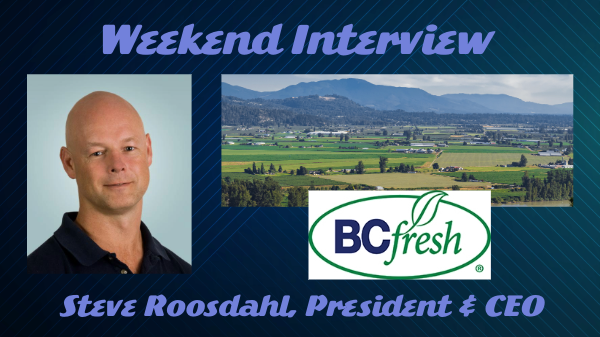
Steve Roosdahl became the new president and CEO of BCfresh this year, a grower-shipper and packer of vegetables in Delta, British Columbia.
natrot/Elena_Alex/Adobe Stock
In this article
Steve Roosdahl became the new president and CEO of BCfresh BB #:153208 this year, a grower-shipper and packer of vegetables in Delta, British Columbia. The company has been in business since 1992 and grows a variety of field- and greenhouse-grown conventional and organic vegetables including beets, broccoli, carrots, onions, potatoes, radishes, and more.
We asked Steve about the transition from his longtime former employer, the Oppenheimer Group (Oppy) BB #:113404, and what’s ahead as BCfresh’s leader.
Q: Tell us about your background, how you landed at Oppy, and the positions you held over the years.
My background was in technology. I started with Oppy in 1995 to design and implement their new in-house ERP computer systems. I was part of the small team tasked with creating the system based around Oppy’s business.
I worked with the supply chain departments including inventory, manufacturing, packaging, warehouse, quality control, and transportation to design systems and implement processes.
After 14 years I had gained in-depth knowledge of all these departments and transitioned to managing them as director of operations, then progressed over the next 15 years to vice president of operations.
While at Oppy I completed my executive MBA and wrote my paper on the feasibility of adding third-party transportation to Oppy’s produce business. I then led the implementation of adding third-party shipping, which grew to 30 percent of Oppy’s overall transportation department—filling LTL trucks, identifying backhauls to reduce overall costs, and increasing diversified revenue.
Additionally, throughout my career I’ve led a number of industry committees to assist in advancing technology and product traceability. These groups created amazing think tanks including competitors, customers, and produce industry vendors working together to solve ongoing challenges.
Examples include RFID, blockchain, and traceability, as well as managing disruptors like the global supply chain challenges during Covid.
Q: How did your experience and responsibilities prepare you for a C-suite role?
I believe the combination of experiences over my career has developed my leadership skills, working in an environment that always requires innovation and collaboration.
These include applying my MBA to expand Oppy’s transportation network, developing systems to understand the produce supply chain from the ground up, and leading six different departments encompassing the supply chain while working with industry experts from retail, supply, and produce vendors to develop industry best practices.
BCfresh represents everything I value in the produce industry—it’s a well-run, respected operation with a strong team and exceptional culture.
Q: What brought you to BCfresh?
BCfresh represents everything I value in the produce industry—it’s a well-run, respected operation with a strong team and exceptional culture. While I was very happy at Oppy, this opportunity at BCfresh was unique.
It’s 100-percent grower-owned, deeply rooted in BC agriculture, and positioned to leverage my supply chain expertise to drive both efficiency and grower profitability. It felt like the natural evolution of a career focused on collaborative innovation.
Q: What does it mean to be a grower-owned and operated company? How many growers are part of the company?
BCfresh is 100-percent owned by 32 family farms with a total grower supply of over 70 farms across BC, farming 7,500 acres of 63 different crops. It’s rewarding to support local growers, connecting them with customers and consumers.
The growers come from their farms to our office for meetings and we’re able to bring customers and staff to the farms to see the progress of planting, growing, and harvesting. You get a true understanding of what it means from field to fork.
Q: How many nongrower associates work at BCfresh?
We currently have about 30 full-time staff at our facility, representing all the essential functions needed to support our grower-owners and serve our customers.
This includes our sales, marketing, finance, quality assurance, and logistics teams, as well as our lift operators who handle the critical work of unloading produce packed on our family farms and picking customer orders.
Our decentralized model is key to our efficiency—our growers are responsible for packing product on order to meet customer specifications.
This approach keeps our inventory turns high and ensures we can offer products that meet customer needs while allowing each family farm to be best utilized for its specific pack styles and crop profiles.
It’s a lean but highly effective team structure that maximizes both operational efficiency and the unique strengths of each grower-owner.
Given my background in technology and systems implementation, I’m particularly excited about leading innovations that benefit both our growers and customers.
Q: Are BCfresh’s growers using any new or high-tech tools in the field, packhouse, or greenhouse?
Absolutely. We’re implementing many new technologies across our grower network to improve yields, reduce crop management materials like herbicides and insecticides, reduce our reliance on labor, and increase shelf life.
Given my background in technology and systems implementation, I’m particularly excited about leading innovations that benefit both our growers and customers.
Some specific examples include testing soil moisture monitors to improve irrigation efficiency, and adopting advanced packaging materials that allow produce to naturally modify the atmosphere inside the package to extend shelf life.
We’re also implementing camera-guided weeding equipment that can reduce or eliminate herbicide use while actually improving yields through precision cultivation.
On the processing side, we’re modernizing our pack sheds with the latest optical sorting technology. Our new potato sorting system utilizes dual-lens cameras to accurately assess each potato’s physical characteristics, enabling efficient sorting of washed potatoes in a single pass.
This eliminates the need for pre-grading, reduces manual labor, and ensures consistent product quality with high throughput. These technological advances align perfectly with our strategic goals of efficiency and cost reduction while supporting sustainable farming practices.
BCfresh is taking a different approach than the modern greenhouse growers that surround us here in Delta and in other parts of Canada.
Q: How much acreage is devoted to greenhouse crops? Has this increased over the last few years?
BCfresh is taking a different approach than the modern greenhouse growers that surround us here in Delta and in other parts of Canada. Our current greenhouse acreage is under 10 acres, but we’re focused on developing year-round production of items here in BC that aren’t traditionally grown in greenhouses.
While the technology we’re developing is currently being patented, we’re excited about expanding beyond our current year-round radish production. We’re testing green onions and evaluating other crops that meet the specific needs of our retail and foodservice partners.
As CEO, I’m focused on expanding our product line and profit centers in new ways. This approach of having local production for items typically imported from other growing regions will increase Canadian food security and help stabilize the supply of produce for our customers.
It’s about strategic innovation rather than just scale—finding ways to extend our growing season and reduce dependence on imports while serving market demands that not being met by conventional greenhouse operations.
Q: Do growers in Western Canada face the same water or labor challenges as U.S. West Coast growers?
Labor and water challenges are absolutely a part of modern agriculture, and our growers face many of the same pressures as their U.S. counterparts.
In BC’s fertile Fraser Valley, land availability has become an ongoing issue as prime real estate is prized by berry, greenhouse, vegetable, and other agriculture ventures. This is pushing our growers to expand into new growing regions to ensure we have access to good land for production.
Many of these new areas are more arid, so we’re testing direct watering techniques—which aligns perfectly with our soil moisture monitor testing to ensure these new methods meet the needs of each crop. We’re also continuously testing new varieties that can better handle more frequent drought conditions and the heat dome events we’ve been experiencing.
On the labor front, it’s definitely an issue, so our farms are investing in optical sorters and more efficient pack lines, while also finding ways to reduce labor requirements in the field.
The technology implementations mentioned earlier—like camera-guided weeding equipment—are partly driven by the need to address these labor challenges while maintaining or improving our production quality.
Sustainability is integral to everything we do at BCfresh.
Q: Tell us about BCfresh’s sustainability efforts.
Sustainability is integral to everything we do at BCfresh. We’re actively working to reduce our use of plastics by being more strategic about choosing plastics that serve specific purposes.
For example, we use packaging materials that naturally extend shelf life and reduce food waste, and light-blocking film to prevent greening on potatoes. We’re also testing thinner films to reduce our overall plastic usage while maintaining product protection.
To reduce pesticide use, we’re rolling out detailed IPM [integrated pest management] manuals and strategies alongside training to ensure our family farms have the tools to spot, measure, and choose the right treatment—which is sometimes no treatment at all. We’re also implementing row covers to reduce pesticide needs while increasing early-season yields.
Water conservation is another key focus. The soil moisture monitors help growers conserve water by ensuring irrigation is applied precisely when and where it’s needed.
These efforts reflect our commitment to sustainable farming practices that benefit both the environment and our growers’ long-term profitability.
Q: What are BCfresh’s overarching goals for the next five years?
BCfresh has a defined purpose statement: “To provide integrated marketing and distribution for BCfresh growers to maximize profitability through efficiency and strong customer relationships.” This ensures all decisions are aligned.
We’ve defined three strategic initiatives with action items to support the purpose covering our main areas of focus: 1) Team & Culture, 2) Increased Market Share & Year-Round Supply, and 3) Efficiency & Cost Reduction.
My leadership style is rooted in teamwork—something I learned through playing team sports my whole life.
Q: How would you describe your leadership style? How do you make difficult decisions or rally the troops if things get rough?
My leadership style is rooted in teamwork—something I learned through playing team sports my whole life. Success comes from everyone understanding their role and how they support each other. I see myself as a coach, developing strategy and guiding the team toward our goals.
Most importantly, every game has a score, so we establish clear key performance indicators or KPIs to measure progress. This allows us to identify potential challenges early and make necessary adjustments.
In the produce industry, where conditions change rapidly, this data-driven approach combined with collaborative decision-making has proven essential.
Q: How much impact are market conditions like inflation and economic uncertainty having?
Fortunately BCfresh hasn’t been as directly impacted by tariffs as a majority of our products are grown and shipped within BC.
Costs of fertilizers, equipment, and fuel for farming have continuously increased through Covid, the war in Ukraine, and tariffs. This is on top of the high cost of land and labor in BC, in comparison to the rest of Canada and other countries.
Q: Is there a personal goal or elusive accomplishment you’ve always wanted but have yet to achieve?
It is an honor to be selected as president and CEO leading BCfresh. My personal goal is to make continuous improvement to an already successful organization, setting it up for long-term success.
News you need.
Join Blue Book today!
Get access to all the news and analysis you need to make the right decision --- delivered to your inbox.




Subscribe to our newsletter
© 2026 Blue Book Services. All Rights Reserved

