



















Industry Insights: Lessons Learned from the Government Shutdown
The recent shutdown put a spotlight on food insecurity for millions of Americans, and the produce industry can do more to help.

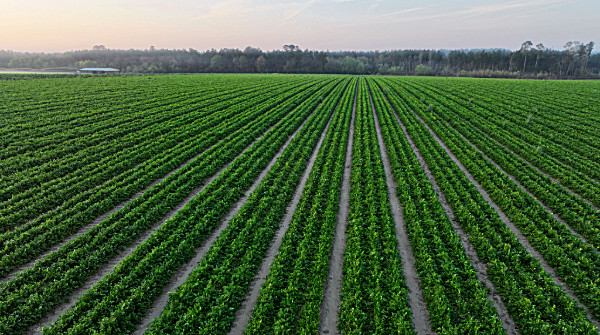
eliyashevskiy/Adobe Stock
In this article
This past fall, the federal government experienced its longest shutdown to date. It jeopardized critical programs such as SNAP, which provides monthly benefits to over 41 million Americans to buy food.
It also shed a new light on food inequality in the United States. As recently as 2023, it was estimated 13.5 percent of U.S. households were food insecure.
The truth is that nutritious food options such as fresh produce can be more expensive than processed foods. When money is tight, it’s even more important to make every dollar stretch, but those decisions can come at the cost of a healthy diet.
No American should go hungry, and everyone should have access to natural foods that support a well-balanced diet. Here are a few ways the fresh produce industry can support widespread access to fruits and vegetables across the country.
To guarantee more long-term freshness, distributors and carriers can look into better cold chain management solutions.
Improve Supply Chain Efficiency
As a first step, we can look at optimizing transportation to reduce food waste. According to recent statistics, 80 percent of surplus food in the United States is perishable—meaning it’s at risk of spoiling before it can be enjoyed.
This includes fresh produce, one of the most sensitive items to transport because its shelf life begins the minute it’s plucked from a field, long before being packed onto a truck. To guarantee more long-term freshness, distributors and carriers can look into better cold chain management solutions, such as temperature sensors and packaging options, that will help keep produce fresh while in transit.
Additionally, distributors can optimize their routes and use regional aggregation hubs to limit spoilage and cost. Of course, smart ordering can also reduce waste and prevent price hikes, so distributors, foodservice groups, and retailers can use their internal data to make better and more precise purchasing decisions.
Offer Price Transparency & Allocation
Price can also influence access. To create fairness and avoid extreme markups, stakeholders across the chain from growers to retailers can work together and share their pricing models to make fresh produce more affordable.
Partnership and transparency guarantee that each business is working toward a shared goal, without creating competitive friction.
Aside from pricing, distributors and sellers can find unique ways to use their entire inventory. For example, they can offer discounts on “ugly” produce or fruits and vegetables that are perfectly edible but have physical flaws. In turn, this reduces food waste, saves money, and makes produce available at lower price points.
By repurposing produce at every stage, we can increase its lifecycle and find more downstream uses.
Support Local Food Programs
Local groups, such as foodbanks and pantries, gardening clubs, or programs sponsored by churches and schools are great options to donate fruits and vegetables so they get into the hands of people who struggle to afford them. These efforts can be supported across the supply chain, starting with growers.
Some farmers don’t have the labor to fully harvest fields or can’t support the costs of packaging and shipping their complete supply. In one recent study, about one-third of edible produce gets left behind in the field, but this creates opportunity to work with volunteer and charitable groups to harvest these commodities and get them directly into the community.
For distributors, this could mean evaluating supply once they’ve satisfied orders, repurposing any leftover inventory that’s beyond its sell date but is still safe for consumption.
However, it’s not just about reallocating produce for consumption, but using it in various ways to reduce food waste completely. Produce no longer safe to eat can be used for composting in community gardens, animal feed, and high-pressure processing or juicing for use in purees, sauces, soups, and more.
By repurposing produce at every stage, we can increase its lifecycle and find more downstream uses.
In addition to existing programs, there’s also an opportunity to host or partner with organizations to sponsor produce pop-ups and mobile markets at community sites such as senior housing facilities and public libraries, or micro-delivery programs to corner stores.
Knowledge is power and providing people with insight on how to get the most out of their food is key to making sure they do.
Advocate for Policy Changes
Finally, peers across the fresh produce industry can start at the top and champion for change at the government level.
This could mean lobbying for local or state grants to support community programs that amplify or replace SNAP purchases or creating partnerships between distributors and organizations to broaden nutritional access, such as healthcare companies with food-as-medicine initiatives.
Organizations can also help educate consumers on how to best store, prep, and use fresh produce. Taking it a step further, companies can sponsor or host gardening and cooking classes, supporting programs that give people the tools to do both.
Knowledge is power and providing people with insight on how to get the most out of their food is key to making sure they do. Despite whatever happens politically, we can all do our part to make sure no one goes hungry. The fresh produce industry is one we all depend on, and going the extra mile will only strengthen it.
News you need.
Join Blue Book today!
Get access to all the news and analysis you need to make the right decision --- delivered to your inbox.







Subscribe to our newsletter
© 2026 Blue Book Services. All Rights Reserved

