

















Exclusive! Know Your Commodity: Grapes
This Know Your Commodity excerpt is sponsored by Murguia Fruit Company, Inc.
Nataliia/Adobe Stock
In this article
The heritage of Murguia Fruit Company, Inc. BB #:341161 dates back to 1956 in California’s Central Valley, when grower Don Rodgers planted his first tree fruit. Years later, his grandson, Noah Murguia, began working alongside him, learning everything required to carry on the family business for generations to come. Today, as a well-established grower, packer, and shipper of table grapes and citrus, delivering quality produce runs in our blood.
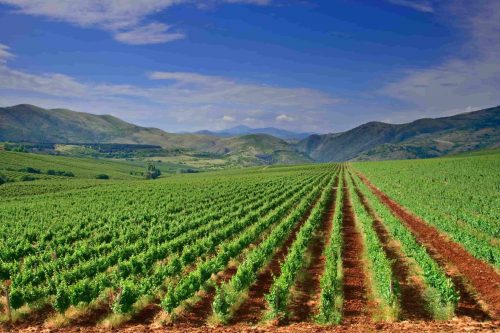
Murguia Fruit Company specializes in premium table grapes grown in the heart of the Central Valley in Kingsburg, CA. Built on a strong heritage of farming expertise, our priority is to consistently deliver quality from our vineyards to your table. Our long-standing operation is centered around carefully managed vineyards, where our grapes are cultivated with attention to size, flavor, and appearance, ensuring each bunch meets the same standards we would expect for our own family.
Murguia Fruit Company is committed to offering the highest quality table grapes. Our involvement in every step of the process, from vineyard to shipment, ensures peak freshness, flavor, and overall quality. Our approach focuses on moving fruit quickly from field to market with care, guaranteeing customers receive the consistent quality they rely on. To meet diverse market needs, Murguia Fruit Company offers a variety of packaging options, including 21-pound Smart Pack, 20-pound RPC, 6×3-pound clamshells, 8×2-pound clamshells, and 10×2-pound clamshells.
Our reputation and family values have made us a trusted name in the grape supply chain across the United States, built on reliability, experience, and a commitment to quality produce. We prioritize efficiency without compromising care, ensuring every box reflects the high standards our company is known for. Contact Murguia Fruit Company today for premium, farm fresh table grapes.
Types & Varieties
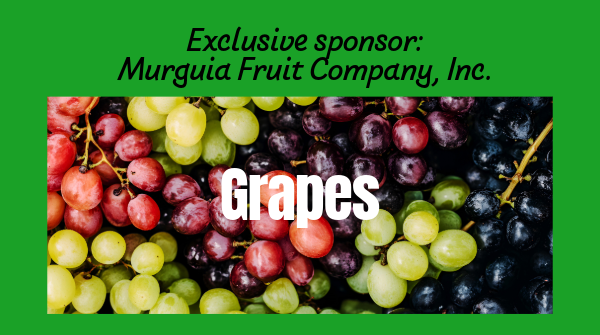
Grapes are classified by type as American, European, juice, and muscadine.
American grapes can tolerate varied climates. Cultivars able to tolerate cooler climates include Buffalo, Concord, Catawba, Edelweiss, Emerald, Golden Muscat, Niagara, and Steuben.
European and European-hybrids lack cold hardiness, are thin skinned, and better suited to a warmer climate. Well known varieties include Champagne, Cotton Candy, Flame Seedless, Scarlet Royal, Sugraone, and Autumn King.
Any variety of sweet grapes can be made into grape juice although the most common is Concord. Muscadine grapes, which grow wild in North Carolina and much of the Southeast, are considered native to the Americas.
Some varieties are not recommended for certain regions. For instance, grape varieties such as Jupiter, Saturn, and Sunbelt can be susceptible to Pierce’s disease and should not be grown in areas where the disease has been a significant threat.
Cultivation
Grapes require fertile, well-drained soil, and ample sun. Vines can last 15 to 30 years depending on location and care. When planting, supported (trellised) vine rows should be 6 to 8 feet apart to allow for sufficient canopy growth and air flow.
Vines require pruning to produce large clusters but climate, variety, irrigation, and weed control also factor into the equation. Planting into black plastic mulch can help with weeds and better maintain soil temperature.
Netting and noise makers will help keep wildlife, especially birds, away from fruit near harvest. Birds will feed as acid falls and sugar content rises, so control measures should be in place before brix levels accelerate.
Harvesting is labor intensive and requires careful planning by variety and, of course, intended use. Bunches are ready when grapes at the tip of clusters (the last to mature) are sweet. Grapes will not ripen after harvest.
Inspector’s Insights
- One of three commodities (kiwifruit and cantaloupes are the others) that require a minimum percent of soluble solids to meet U.S. No. 1 grade, the standard requires grapes be mature as defined by individual state regulations (e.g., Flame Seedless produced in California must meet a minimum soluble solids reading of 16.5% while Perlettes must meet a minimum 15.5%)
- Grapes affected by the juice of adjoining decayed or leaking grapes are scored as a defect (called “wet and sticky berries” they are a free-from defect, which will be scored against the tolerance for serious damage)
- Grapes wet from condensation are not scored as a defect
- Shattered berries are not attached to their capstem and are considered a defect; reasonable care should be taken when inspecting grapes as all shattered berries (including those that fell off during inspection) are scored as a defect; shattered berries affected by decay will be scored against the decay tolerance.
Source: Tom Yawman, International Produce Training, www.ipt.us.com.

News you need.
Join Blue Book today!
Get access to all the news and analysis you need to make the right decision --- delivered to your inbox.





Subscribe to our newsletter
© 2026 Blue Book Services. All Rights Reserved

