

















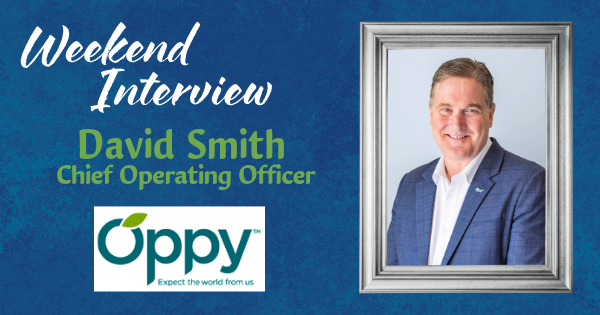
David Smith, chief operating officer, Oppy
From Cal Poly to Washington, DC to the Oppenheimer Group of companies, David Smith's career journey is a fascinating trek.
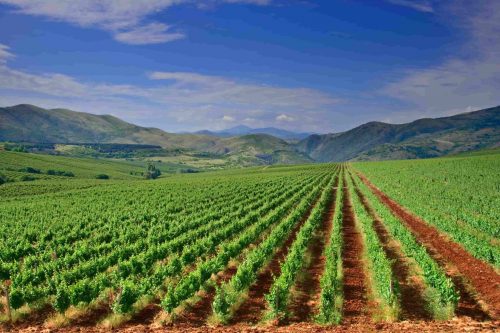
Prime, AlenKadr/Adobe Stock
In this article
David Smith knows Oppy inside and out. He joined the company in 1989 and steadily worked his way upward. He was named president in 2017, then added chief operating officer in 2021. With roots dating back to 1858, today’s Oppy spans the world with headquarters in Coquitlam, BC BB #:116424 and branch offices scattered across Canada and the United States, along with an extensive network of suppliers and trade partners.
So what’s it like to work for such a highly recognized company, let alone help lead it? We asked David, who is based at Oppy’s Los Angeles location BB #:132586, his thoughts on this and more.
Tell us about your background and your initial career goals fresh out of Cal Poly.
I was raised in the Arcadia area of Southern California and subsequently attended California Polytechnic State University in San Luis Obispo. Before graduating, I completed a nine-month internship in Washington, DC with a California senator, which afforded me direct exposure to governmental operations and a deeper understanding of public service. Upon returning, I earned a bachelor’s degree in agribusiness from Cal Poly. Several years later, I obtained my MBA.
How did you find your way to Oppy?
There was a job fair and at the same time, some friends of mine knew of Oppy and I was referred. At the time, Oppy was an import company mostly representing growers from Chile and New Zealand.
When you started at the company in sales, did you envision yourself in the C-suite one day?
Not right away. I began my career in sales, which, in retrospect, was an excellent foundation for anyone pursuing a career in the produce industry. This experience provided me with valuable insights into the operations of the produce supply chain and allowed me to work with numerous esteemed buyers whose expertise I greatly admired and sought to learn from.
I was so blessed to have many mentors inside and outside of the company who taught me “the ropes.” After two or three years, I developed the confidence to believe I could perform effectively at the executive level at Oppy and that the produce industry was where I wanted to stay.
Describe what a typical day or week entails in your role as president and COO. Do you travel much?
I regularly review our dashboard of KPIs and collaborate with our teams to plan effectively and prioritize problem-solving. My travel schedule is determined by recurring industry events, specific grower gatherings, and any unforeseen issues that may require my attention.
Oppy and all produce companies need to be agile. I believe it’s strategically imperative for us as a company to keep problems in front of us and tackle them head on.
Despite its size, Oppy projects surprising agility – are you the chief architect of this maneuverability?
Oppy and all produce companies need to be agile. I believe it’s strategically imperative for us as a company to keep problems in front of us and tackle them head on. Bad things happen when we let issues get behind us, thus causing us to back pedal to solve them.
I’d like to think I have some influence on this responsive architecture; however, it’s more about creating a problem-solving environment that allows for complex critical thinking skills to flourish within your team.
How would you describe your leadership style? Were you influenced by a business tome or particular school of thought?
I’d describe my leadership style as team-based engagement with accurate and continuous KPIs for evaluation and problem identification. The working groups need to have clear and real information.
The culture of the company must have transparency, open communication, and respect as its cornerstones. You need to trust that your team is telling you what you NEED to hear, and not what you WANT to hear.
Your boss, John Anderson, is well known and lauded throughout the industry and business world, was it difficult to follow in his footsteps?
Great question. I’ve worked with John for 35 years. It would be impossible to follow in this iconic leader’s footsteps. I see myself as one of his wing men—supporting him so he can focus on leading in industry events, managing our board, and addressing the strategic challenges we have at Oppy.
Instead of feeling pressure to live up to his legacy directly, I’ve concentrated on complementing his leadership style and strengths with my own.
Our professional journey has been defined by mutual respect and collaboration. John has always set high standards, not just for himself but for everyone around him. Instead of feeling pressure to live up to his legacy directly, I’ve concentrated on complementing his leadership style and strengths with my own.
My goal has always been to handle operational matters efficiently and provide honest feedback when needed, so John could dedicate his energy to steering the organization through periods of change and growth. I believe our partnership and trust has been crucial to the company’s long-term success.
Do you work together well because you’re similar or the opposite?
Both situations can occur simultaneously. Our backgrounds are similar enough to understand the company’s direction and experienced enough to anticipate the potential outcomes of company decisions, but also different enough to provide varied perspectives.
It should be noted that Oppy is primarily a sales-focused organization, and both John and I have sales experience. John’s background includes extensive experience in sales and operations from entry-level roles upwards, contributing to his understanding of addressing customer requirements and increasing returns for growers.
This approach guides us in maintaining a selection of diverse produce items for our retail, foodservice, and wholesale partners. John has always kept sales front and center.
How is Oppy navigating the complexity of tariffs?
We immediately recognized the necessity of thoroughly understanding tariffs, their implementation, and the proper accounting for all associated costs. It was clear we needed to become subject matter experts, as our grower and retail partners depend on this expertise.
This is particularly challenging because the produce industry does not have sufficient margins at any point in the value chain to easily absorb these costs.
Although markets are cyclical and I’m optimistic things will change for the better, I have never witnessed such substantial pressure placed on the cornerstone of our industry.
What’s the toughest part of your job? How do you handle stress?
There are two key points here. The role of COO demands a tactical and agile approach to effectively address challenges as they arise. Given the industry’s substantial sensitivity to market dynamics, issues may occur within our network of growers or among our varied customer groups.
Despite having a carefully structured weekly schedule, I frequently need to reprioritize to respond promptly to urgent matters.
The second and most significant point concerns the immense pressure currently facing our growers. I firmly believe that growers worldwide are exceptional problem solvers. They navigate their businesses through extreme weather events, labor shortages, water management challenges, capital constraints, and rising costs, all while managing unpredictable market returns.
Although markets are cyclical and I’m optimistic things will change for the better, I have never witnessed such substantial pressure placed on the cornerstone of our industry. All growers are now dealing with significant internal and external cost pressures that aren’t easily offset.
Unfortunately, we don’t operate in a cost-plus sector that guarantees compensation for these factors. Yes, this is by far my central point of stress.
Would you say any aspect of your job is fun? Or, what do you enjoy most?
I love my job. My satisfaction comes from having a close working relationship with the Oppy team. I cannot stress how intelligent and professional our team is. It’s the people I talk with every day—and they know who they are—that makes my job so fulfilling.
The company’s competitive culture is the foundation of our success.
How much pressure goes along with being named one of Canada’s Best Managed Companies for so many years in a row?
The company’s competitive culture is the foundation of our success. Oppy has consistently been recognized as one of Canada’s Best Managed Companies 24 years running.
This achievement is not the result of short-term objectives but rather stems from a deeply rooted culture of competitiveness and problem-solving. This culture has become an integral part of our company’s identity, driving our continued success and enabling us to earn this recognition year after year.
Is there a personal goal or elusive accomplishment you’ve always sought but have yet to achieve?
My goals are always evolving, so I’m not sure I’ll ever fully achieve them. While I’m content with my progress, I still want to help my teammates reach their own aspirations—that’s what matters most to me.
I believe that striving for something greater is an ongoing journey—each milestone opens new doors and reveals fresh ambitions. There are times when I reflect on how much I’ve grown, yet I know there’s always room to push further, learn more, and support those around me. The achievements of my teammates motivate me just as much as my own, reminding me that success is even more meaningful when it’s shared.
Anything else you would like share with our readers?
Sell more produce!
News you need.
Join Blue Book today!
Get access to all the news and analysis you need to make the right decision --- delivered to your inbox.





Subscribe to our newsletter
© 2026 Blue Book Services. All Rights Reserved

