


















Broccoli in the Spotlight: Green Power
Nutritious, delicious, and less available? Find out why supply levels have been more volatile this year compared to others.
AZP Worldwide/Adobe Stock
In this article

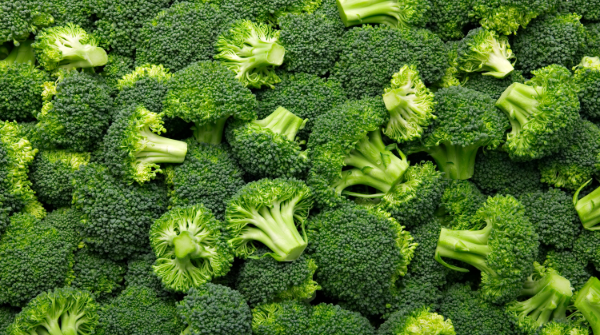
Broccoli remains a one-stop shop for dietary needs. This nutrient-dense vegetable is believed to fight cancer, improve eye health, and benefits the heart, bones, and skin.
Yet this almost perfect vegetable is experiencing a few challenges of late, especially in supply levels. According to an International Fresh Produce Association report from May, broccoli saw a sharp decline in seasonal volume this year.
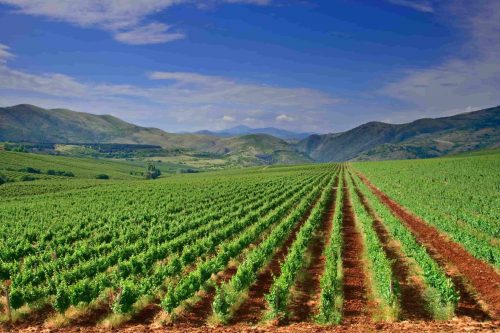
California produces the lion’s share of domestic production, long dominated by Monterey County where broccoli ranks fourth among the top crops (after strawberries, leaf lettuce, and head lettuce). In 2025, broccoli brought in an impressive $516 million for the region, though this figure was down 11 percent from 2024.
Central California’s broccoli acreage continues to contract from a high of 61,997 acres in 2015 to 45,100 last year. The good news is Imperial Valley is picking up some of the slack.
Another issue affecting production is pests. Golden State growers have been battling diamondback moths which are highly attracted to brassicas, including broccoli. They gnaw on leaves, buds, and stalks. Infestations can spread quickly and cost growers an entire crop.
“Broccoli has real staying power even if it ebbs and flows in seasonal conversations.”

There are preventative measures, but the moths have become resistant to several. The newest, isocycloseram, was approved by the EPA in 2025 and is sold as Plinazolin by Syngenta. Although it’s widely available in the United States, it has yet to be approved for use in California.
Arizona grows broccoli though has experienced volume declines like California. More promising are several states along the East Coast which can provide the moderate climate and cool temperatures needed for production. From Florida to Maine, growers are cultivating broccoli crops with positive results.
Nevertheless, Hyunsil Choung, who handles domestic sourcing at Dekalb Farmers Market, Inc. BB #:114322 in Decatur, GA, has seen a dramatic slide in supply and demand in her region. “The demand for broccoli, compared to 2025, is down 25 to 30 percent,” she says.
Melinda Goodman, founder and president of FullTilt Marketing BB #:354985 of Minot, ND, however, isn’t worried. “Broccoli has real staying power even if it ebbs and flows in seasonal conversations. It’s a steady performer year-round.”
Varieties and More
Although some might consider broccoli an old school vegetable, there’s plenty of action in the category.
“It isn’t a flash-in-the-pan trend,” notes Goodman. “It’s an everyday staple that continues to earn its place on consumers’ plates.
“For the produce industry, the opportunity isn’t necessarily convincing consumers to eat broccoli—it’s giving them more reasons and more ways to keep buying it in every season and in unexpected ways.”
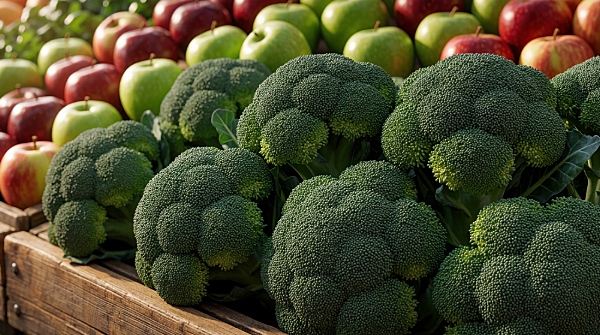
From fresh-cut and processing options to new varieties, this is certainly doable. Choung carries Asian Cut Broccoli Crowns for Dekalb Farmers Market’s customers. Eliminating the stems saves time and prep for buyers, and the crowns have a consistent look.
For uncut broccoli, top varieties include Green Magic, Destiny, Bellstar, and Imperial. The newer kid on the block is broccolini. A cross between broccoli and Chinese kale, every part of the vegetable is edible. The flavor runs a little sweeter than traditional broccoli, and preparation is simpler.
Broccolini reached a market size of $450 million in 2025, globally. According to Growth Market Reports, “By 2034, the broccolini market is forecasted to reach a value of approximately $851 million.” The interest in broccolini also extends to other brassicas and specialty vegetables like rapini and broccoflower.
“Sometimes the biggest opportunity isn’t chasing the next food trend—it’s understanding how consumers are using the products they already love,” points out Goodman.
“By paying attention to real-time conversations about convenience, preparation methods, and meal occasions, the produce industry can develop more relevant merchandising, recipes, and promotions that connect with how people actually eat.”
“Broccoli is a familiar vegetable that continues to fit changing lifestyles, eating habits, and meal occasions.”
Takeaways
Domestic supply from the West Coast may be fluctuating but the East Coast is doing its part to keep broccoli on store shelves, in restaurants, and on home plates.
Consumers continue to embrace the versatile vegetable and its healthy attributes, even if it’s mostly in the evening hours.
“Consumers are telling us that broccoli is a dinner vegetable,” Goodman says, citing data from market intelligence platform Tastewise. “About 23 percent of the motivations we’re tracking connect broccoli to dinner, with convenience close behind at 20 percent.
“That’s a powerful insight for growers, retailers, and marketers. Consumers want vegetables that make dinner easier, taste good, and work with meals they’re already preparing—broccoli checks those boxes.”
The bottom line according to Goodman: “Broccoli is a familiar vegetable that continues to fit changing lifestyles, eating habits, and meal occasions.” Enough said.

News you need.
Join Blue Book today!
Get access to all the news and analysis you need to make the right decision --- delivered to your inbox.






Subscribe to our newsletter
© 2026 Blue Book Services. All Rights Reserved

