
















All About Drones: Improving food safety
Drones can be used in detecting pathogens for food safety. Nanoreagents, LLC, based in Tampa, FL, is flying drones with multispectral cameras to spot anomalies in crops that...
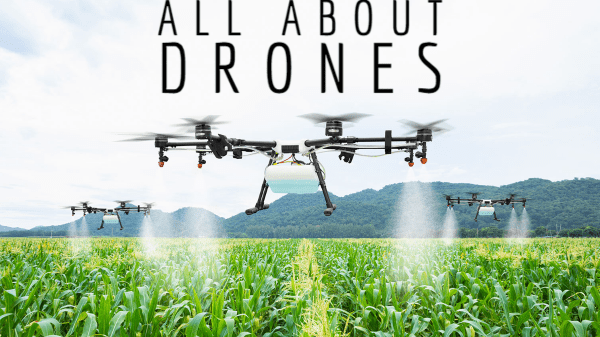
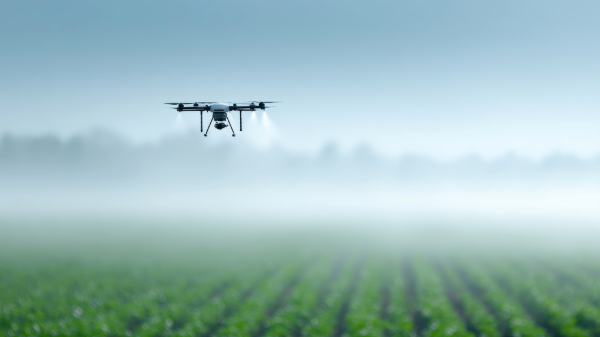
Drones can be used in detecting pathogens for food safety.
Nanoreagents, LLC, based in Tampa, FL, is flying drones with multispectral cameras to spot anomalies in crops that can then be tested for harmful bacteria or other pathogens.
“We see drones as an important tool and technology in identifying food pathogens and eliminating them from the food chain,” says Jim Byron, CEO.
The company uses commercial software to interpret collected images and also developed testing to determine if a pathogen is present.
A case in point is leafy greens, after several outbreaks last year.
Nanoreagents received a $75,000 grant from the Center for Produce Safety to help growers identify and evaluate food safety risks posed by proximity to domesticated animal agriculture.
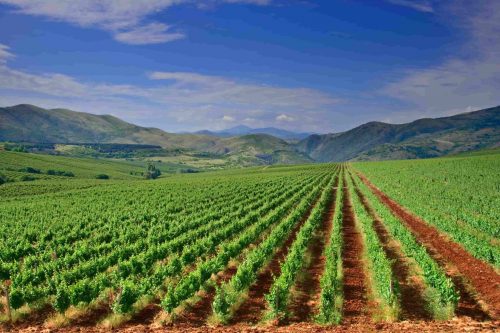
Circling back to Mac’s Creek Winery & Brewery in Nebraska, which suffered a devastating loss in 2013 when nearly all of its 4,000 grapevines were destroyed by herbicidal drift, its next project involves equipping a drone with a noisemaker or “squawker” to scare birds away from ripening grapes.
The vineyard had used netting to cover vines, but found it cost-prohibitive and not ecofriendly.
“It’s really unwieldy,” says Max McFarland, one of the owners of Mac’s Creek, “and harmful to the birds, they get caught in the net.”
Using a squawker in one location isn’t effective, McFarland says, because birds get used to it and he’s even seen them perched next to a squawker.
“After they get acclimated, they aren’t scared at all,” he says. “So, you have to keep moving it around every couple of days.”
He hopes putting a squawker on a drone programmed to fly various paths will better keep birds away from the grapes and save him the time of physically moving the squawker. “It will be less predictable to the birds—it may even appear like the drone is chasing them.”
McFarland hopes drones will not only save time and money for growers, but also protect wildlife at the same time.
This is an excerpt from the Applied Technology feature from the May/June 2021 issue of Produce Blueprints Magazine. Click here to read the whole issue.
Image sources are either licensed or customer-provided.

News you need.
Join Blue Book today!
Get access to all the news and analysis you need to make the right decision --- delivered to your inbox.


Subscribe to our newsletter
© 2026 Blue Book Services. All Rights Reserved

