

















Canadian government approves drone technology to apply pesticides
Health Canada introduces a new policy allowing drones to be used to apply pesticides that are approved for conventional aerial application.
June 30, 2026 | Ottawa, Ontario | Health Canada — Aerial application of pest-management products by aircraft presents several challenges. Weather, particularly wind, can cause spray drift and uneven coverage.
They also consume large quantities of aviation fuel, increasing operating costs and emissions. Additionally, typical aircraft payloads and spray systems can make precise, low-altitude targeted applications difficult.
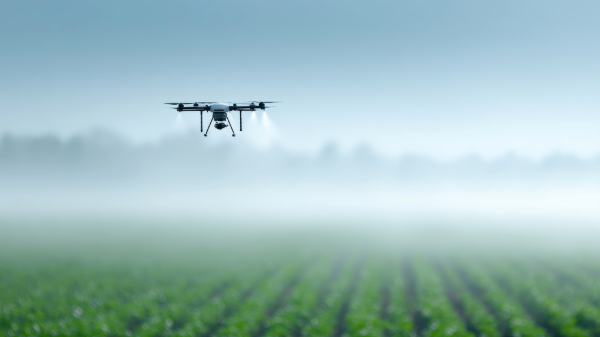
By contrast, Remotely Piloted Aircraft Systems or RPAS, commonly known as drones can operate from confined sites, fly lower and slower for greater application precision and reduce fuel use and emissions, making them an easier and more sustainable alternative for many pest-management tasks.
On June 30, 2026, Health Canada introduced a new policy allowing drone technology to be used to apply pesticides that are already approved for conventional aerial application. Agriculture and Agri-Food Canada, Health Canada and industry worked collaboratively to gather evidence to inform the development of this policy decision. This policy removes barriers and gives Canadian farmers another way to protect and grow their crops more efficiently.
Drone technology offers farmers an innovative, precise and more cost-effective tool for pest management. By helping growers reach fields and areas that may be difficult to access using conventional equipment, it can support timely crop protection, reduce operational challenges and help safeguard crop yields.
By adopting this new science policy, Health Canada is addressing the needs of farmers and growers and bringing Canada into alignment competitively with other countries such as Australia and Japan, where drones are already being used for pesticide application.
As this technology advances, Health Canada will continue to adapt, using science-based decision-making to support innovation while maintaining strong protections for human health and the environment.
“By enabling the use of drone technology, we are supporting Canadian farmers, strengthening our food system and maintaining our rigorous standards for protecting the health and safety of Canadians when it comes to pesticide regulation in our country,” said The Honourable Marjorie Michel, Minister of Health.
“Innovative practices are being adopted by farmers across the country to improve crop production and support the long-term health of their farmland. By supporting our hard working farmers with the use of drone technology, we are strengthening the resiliency and competitiveness of Canada’s agricultural industry and food system,” said The Honourable Heath MacDonald, Minister of Agriculture and Agri-Food.
Quick facts
- Drone use for pesticides does not present any additional health or environmental risks compared to traditional aerial spraying methods.
- Health Canada launched the 30-day consultation on pesticide application by drones on February 23, 2026, and received more than 150 comments from interested parties, with substantial support and interest in expedited timelines ahead of the 2026 growing season beginning in June.
- As of June 30, in order to operate drones for this use, users must comply with all federal and provincial/territorial laws, including obtaining a valid drone pilot certificate from Transport Canada and completing the necessary certification and training.
Contacts
Alexandre Bergeron
Press Secretary
Office of the Minister of Health
alexandre.bergeron@hc-sc.gc.ca
Media Relations
Health Canada
613-957-2983
media@hc-sc.gc.ca
Public inquiries:
613-957-2991
1-866-225-0709

News you need.
Join Blue Book today!
Get access to all the news and analysis you need to make the right decision --- delivered to your inbox.





Subscribe to our newsletter
© 2026 Blue Book Services. All Rights Reserved

