














All About Drones: Data collection
As with several strawberry growers, Olga Walsh, research associate professor at the College of Agricultural and Life Sciences at the University of Idaho, sees many benefits from drones....
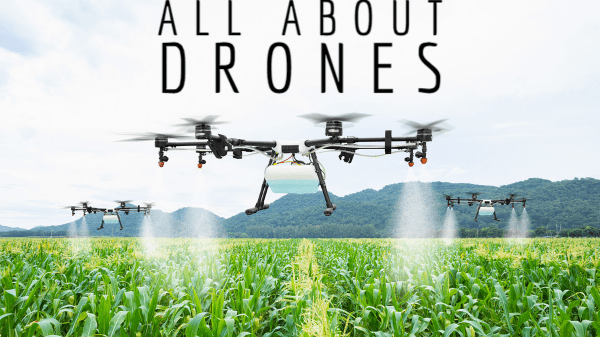
As with several strawberry growers, Olga Walsh, research associate professor at the College of Agricultural and Life Sciences at the University of Idaho, sees many benefits from drones.
Her research revolves around using sensors to monitor fruit tree health throughout the growing season, particularly for apples, peaches, and nectarines. The sensors estimate tree height, crown volume, and trunk diameter—all of which can predict fruit yield and quality.
“There are many advantages in using drones,” Walsh says. “One is in quick data collection: there’s no need to walk the field or nursery to physically scout the trees for such issues as pests, disease, or nutrient or water deficits.
“One properly trained employee can collect the data, analyze it, and make recommendations, which can save labor, time, and money normally spent on scouting and inventory.”
Precision and objectives
Of course, a drone is only as good as the technology it carries.
Walsh says the sensors mounted on drones can be “much more precise in detecting issues, even compared to a very highly skilled scout. In addition, crop-specific algorithms can be developed for accurate fruit yield and quality prediction in season.”
While drones can be used in all crops, Walsh says, what types of data end up being most useful will vary according to what is grown.
“There aren’t any grower recommendations as of yet in how the data needs to be collected or what kind of data is most useful, depending on the grower objective,” she says.
Walsh expects that the adoption of drones will depend on the technical expertise of individual growers, their interest in new technologies, and a willingness to change their orchard management methods.
“There are many drones available on the market and it’s relatively easy to register the drone, obtain the necessary training, and get the remote pilot license,” she says.
“The most challenging part is knowing what data needs to be collected and how to collect it—the speed, elevation, overlap, time within the season, and frequency, among other factors.”
This is an excerpt from the Applied Technology feature from the May/June 2021 issue of Produce Blueprints Magazine. Click here to read the whole issue.
Image sources are either licensed or customer-provided.
News you need.
Join Blue Book today!
Get access to all the news and analysis you need to make the right decision --- delivered to your inbox.




Subscribe to our newsletter
© 2026 Blue Book Services. All Rights Reserved

