















All About Drones: Data analysis
Analyzing data from drones is very time-consuming and requires specific, high-level knowledge of software, even statistics. “Data analysis is followed by data interpretation—which is, perhaps, the most vital...
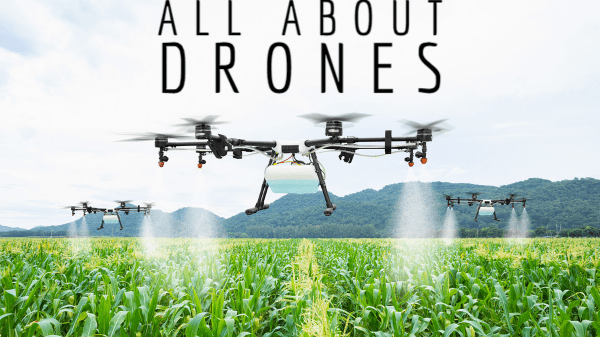
Analyzing data from drones is very time-consuming and requires specific, high-level knowledge of software, even statistics.
“Data analysis is followed by data interpretation—which is, perhaps, the most vital part in the whole process,” says Olga Walsh, research associate professor at the College of Agricultural and Life Sciences at the University of Idaho.
“Once you get the data, you need to have the expertise to understand what the data means and how it can be utilized to improve management in nutrient or water applications, for example.”
The problem of how to analyze and interpret data also is seen as a challenge by Julie Kikkert, team leader and extension vegetable specialist at the Cornell Cooperative Extension, Cornell Vegetable Program at the Cornell University in Canandaigua, NY.
Research at Cornell, in partnership with the Rochester Institute of Technology Imaging Center in Rochester, NY, is looking at management of white mold disease in snap beans.
The project focuses on risk modeling and detection of crop flowering.
White mold is caused by a fungus, and snap beans are most vulnerable about the time they blossom. The traditional treatment has been to apply a fungicide at the onset of flowering and at full bloom. Researchers are looking to see if imagery collected by drones can detect the onset and progression of flowering.
“This would allow for more well-timed applications of fungicide, which is critical for disease management,” Kikkert says. “If you can detect when a crop has been affected, you could also do better damage estimates.”
Like Walsh and others, she says growers will need to be able to interpret images and other data to effectively apply the information collected.
“It’s one of the challenges,” Kikkert says. “What do you do with all the images and data, and how do you combine it with data you already have?”
Kikkert foresees the technologies being tested at Cornell being first used by large companies.
“A large grower might contract with a consultant to analyze the data,” Kikkert says. “Anyone can fly a drone and get nice pictures. You must be able to calibrate the instrument to the lighting and other conditions, and then be able to understand what the images mean.”
This is an excerpt from the Applied Technology feature from the May/June 2021 issue of Produce Blueprints Magazine. Click here to read the whole issue.
Image sources are either licensed or customer-provided.
News you need.
Join Blue Book today!
Get access to all the news and analysis you need to make the right decision --- delivered to your inbox.





Subscribe to our newsletter
© 2026 Blue Book Services. All Rights Reserved

