

















ProduceIQ: Grapes and beans go high and tomatoes go low
Another rollercoaster ride for the index, with grapes and beans hitting highs and tomatoes going low.

Images courtesy of ProduceIQ.
ProduceIQ Index: $0.97/pound, -4.9 percent over prior week
For the first time since 2023, the ProduceIQ BB #:368175 index has slipped below $1 per pound, proof that Mother Nature’s bounty can still surprise us faster than you can say “all-you-can-eat cherry bar.” Retailers have an excuse to slap BOGO stickers on everything from berries to cucumbers.
But don’t let that bargain-basement index lull you into a false sense of security. Over in grape land, prices have hopped up by -10 percent week‑over‑week, because nothing says “summer fun” like pocketing a handful of half-dollar grapes at your next picnic. And beans? Well, they decided to audition for a rollercoaster ride, soaring a staggering +85 percent thanks to a light Eastern supply and farms still playing catch-up on the harvest front.
Meanwhile, tomatoes bask in the glory of peak domestic production—until autumn’s chill reminds us that the long-gone tomato suspension agreement might yet return to rain on our garden party. For now, with round, grape-type, and plum-type tomato prices drifting downward thanks to Tennessee and Virginia growers coming online, it’s safe to say that your BLT dreams are as ripe and affordable as they’ve been in months. So grab your shopping list, because this summer’s produce market is serving up plenty of sweet deals…with just enough spice to keep things interesting.
For the first time since 2023, the ProduceIQ index has dropped below $1 per pound. An ample supply of summer produce, particularly for high-value commodities such as cherries, and across various produce categories, is creating numerous opportunities for promotion.
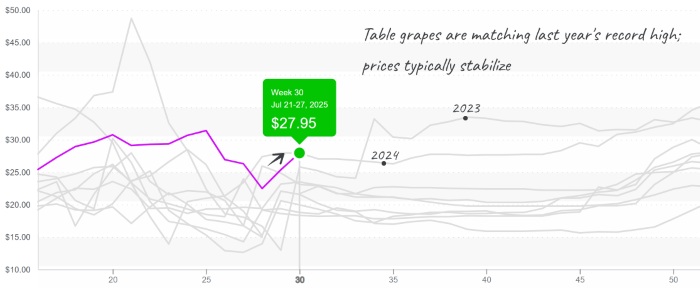
Up +10 percent over the previous week, table grape prices tie 2024’s ten-year high for week #30. Sizing is trending smaller. Growers in Kern, CA, and the San Joaquin Valley are in full swing, but volume is still too low to turn the tide on the upward trajectory of prices. Volume should improve and prices stabilize over the next few weeks.
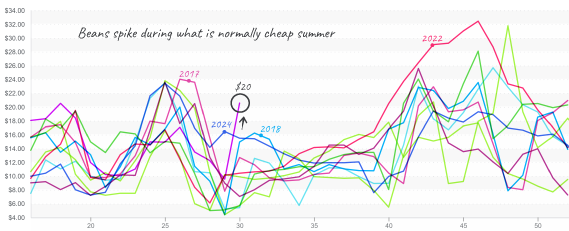
Uncharacteristically volatile prices define week #30 bean prices. Up a shocking +85 percent over the previous week, bean prices reach a historic ten-year high. Western supply is moderate, but Eastern supply is incredibly light. Growers in New York and North Carolina have yet to report their volume, and it appears that Eastern producers will be delayed by at least one more week.
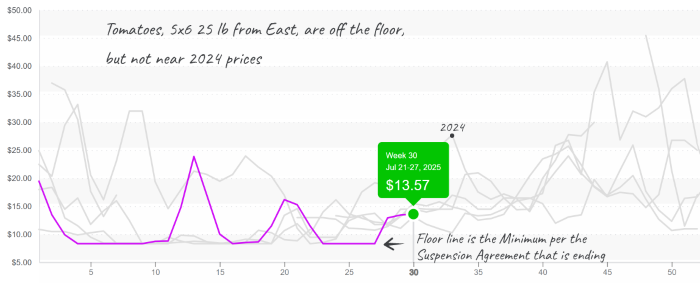
In the throes of peak domestic tomato production, the implications of the termination of the infamous tomato suspension agreement seem far off. But come fall, as the glow of locally sourced tomatoes fades into a warm distant memory, the question remains as to what the unintended consequences will be for the fresh produce industry and the American consumer.
As of now, round tomato, grape-type tomato, and plum-type tomato prices are down over the previous week. Increasing supply from growers in Tennessee and Virginia is easing price tension caused by short supply, particularly in the East. Prices are likely to continue declining over the next few weeks as domestic production reaches its peak.
ProduceIQ Index
The ProduceIQ Index is the fresh produce industry’s only shipping point price index. It represents the industry-wide price per pound at the location of packing for domestic produce and at the port of U.S. entry for imported produce.
ProduceIQ uses 40 top commodities to represent the industry. The Index weights each commodity dynamically, by season, as a function of the weekly 5-year rolling average Sales. Sales are calculated using the USDA’s Agricultural Marketing Service for movement and price data. The Index serves as a fair benchmark for industry price performance.

News you need.
Join Blue Book today!
Get access to all the news and analysis you need to make the right decision --- delivered to your inbox.





Subscribe to our newsletter
© 2026 Blue Book Services. All Rights Reserved

