



















USDA Food Box Lessons: The Numbers
The Farmers to Families Food Box Program began in April 2020 with the USDA announcing the plan to exercise its authority under the Families First Coronavirus Response Act...
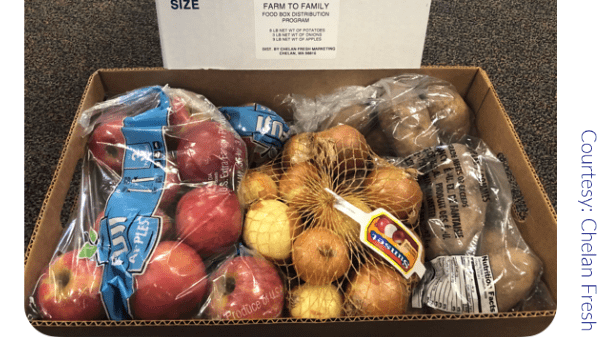
The Farmers to Families Food Box Program began in April 2020 with the USDA announcing the plan to exercise its authority under the Families First Coronavirus Response Act to purchase and distribute agricultural products.
The goal was to redirect fresh food that normally flowed through institutional supply chains to nonprofits with direct links to Americans in need. The program would also provide much needed assistance to suppliers whose livelihoods had come to a near or total halt.
Within weeks of the April announcement, Food Box Program details were developed, guidelines were shared with potential participants, proposals were submitted and evaluated, and contracts were approved.
The USDA’s Agricultural Marketing Service (AMS) began to purchase fresh produce, dairy, and meat products from American producers of all sizes. Distributors packaged these products into family-sized boxes, then transported them to food banks, community and faith-based organizations, and other nonprofits serving those in need.
By early June of last year, 5 million boxes had been delivered. The pace picked up with 50 million boxes distributed by the end of July.
Through the five rounds of the Food Box Program, AMS awarded contracts totaling more than $5 billion, and 173 million boxes of fresh food had been distributed through this responsive supply chain.
Noting that the Food Box Program was designed and implemented as a temporary, emergency relief effort to respond to severe market disruption caused by the pandemic, USDA Secretary Tom Vilsack announced it would end on May 31, 2021.
A subsequent USDA program will attempt to replace it, through The Emergency Food Assistance Program (TEFAP), part of the Build Back Better initiative. As of June, funding was increased to $500 million with additional investments reportedly on the way.
The USDA released the contract recipients for the TEFAP produce box program May 18.
USDA funded 1,288,353 boxes totaling $9,708,057. It previously said it had a $20 million budget for the program.
On July 22, USDA issued another solicitation for 436,229 produce boxes through the end of the year. USDA didn’t release the budget, but if it’s budgeted for the same rate as the earlier program, which was $7.53 per box, the budget would be $3.3 million.
This is an excerpt from the Supply Chain Solutions department feature in the July/August 2021 issue of Produce Blueprints Magazine. Click here to read the whole issue.
Image sources are either licensed or customer-provided.
News you need.
Join Blue Book today!
Get access to all the news and analysis you need to make the right decision --- delivered to your inbox.




Subscribe to our newsletter
© 2026 Blue Book Services. All Rights Reserved

