

















ProduceIQ: Tariffs are back on the menu
While renaming a Great Lake won't directly change the price of a raspberry, the escalating trade war certainly can.

Images courtesy ProduceIQ
Lake Ontario, or Lake America, depending on which side of the border you’re standing on, is the latest casualty of the increasingly contentious Canada-U.S. relationship.
While renaming a Great Lake won’t directly change the price of a raspberry, the escalating trade war certainly can. New U.S. tariffs on Canadian goods and Canada’s retaliatory tariffs are adding another layer of uncertainty and expense to fresh produce trade.
ProduceIQ Index: $1.20/pound, up +6 percent over prior week
Week #34, ending Aug 21st
Blue Book has teamed with ProduceIQ BB #:368175 to bring the ProduceIQ Index to its readers. The index provides a produce industry price benchmark using 40 top commodities to provide data for decision making.
Meanwhile, produce markets are giving us all plenty to think about. Raspberry prices have gone from a record low to above average in the span of a week, while heavy rain in the Southeast is pushing plum-type tomato prices to a ten-year high.
Strawberries are also hitting a ten-year high after a summer of heat and humidity took a toll on supply. Even lettuce and leaf markets are starting to gain momentum.
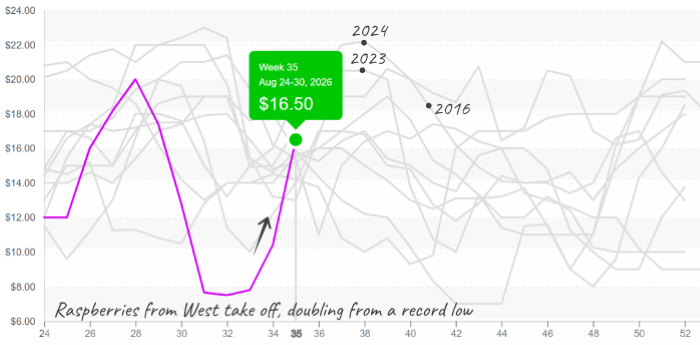
After Mexican volume declined by almost -50 percent, reported raspberry prices went from a record low to above average in just one week. Mexican production is forecast to decline further this week. However, additional growing regions in Mexico will begin producing in limited quantities before ramping up through September, offsetting the seasonal decline.
Raspberries finally rally
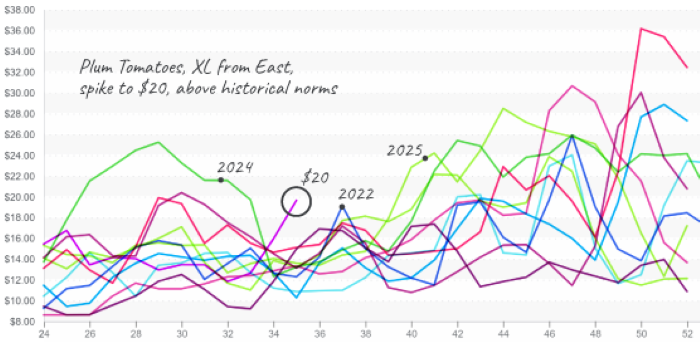
Dogged by heavy rain in the Southeast, plum-type tomato markets are experiencing volatility. Average prices are up +33 percent over the previous week to a ten-year high. Abundant tropical moisture from the Gulf is fueling unseasonably wet conditions throughout the South and Southeast, creating continued challenges for production. As a result, supply issues are expected to persist through mid-September.
Rain puts tomatoes in a bind
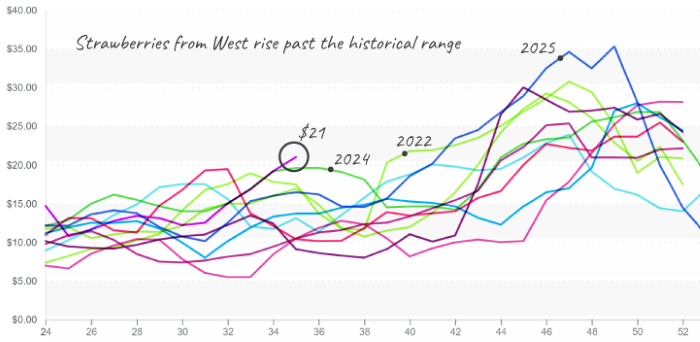
Week #34 strawberry markets hit a ten-year high. Persistent above-average temperatures and high humidity in the Salinas/Watsonville area in July have set buyers up for an expensive late-summer season. Suppliers are using whatever product is available to fulfill contract orders, while fruit with heat-related quality issues is being pushed toward processors. Santa Maria is expected to increase production over the next few weeks and provide some relief, but prices will likely remain above average through September.
Heat sends berries higher
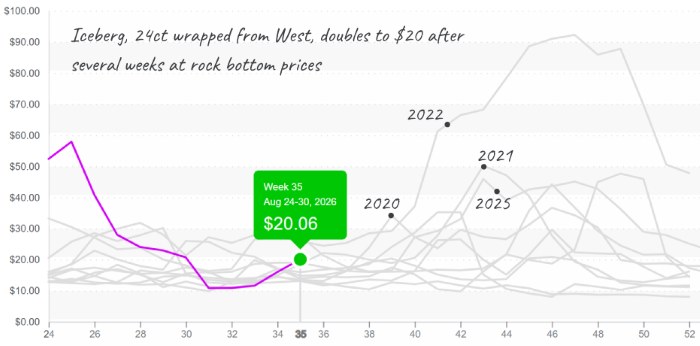
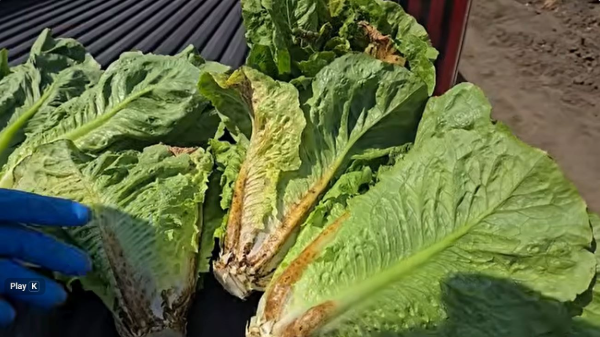
Lettuce and leaf prices are gaining momentum as back-to-school demand and increasing disease pressure in the Salinas Valley are challenging supply. While prices are well within historical precedent for iceberg, romaine, and spinach, markets are showing signs that lettuce and leaf could become commodities to watch over the next few weeks.
Lettuce gains momentum
ProduceIQ saves you time and provides valuable information to increase your profits.
The ProduceIQ Index is the fresh produce industry’s only shipping point price index. It represents the industry-wide price per pound at the location of packing for domestic produce and at the port of U.S. entry for imported produce.
ProduceIQ uses 40 top commodities to represent the industry. The Index weights each commodity dynamically, by season, as a function of the weekly 5-year rolling average Sales. Sales are calculated using USDA Agricultural Marketing Service data on movement and prices. The Index serves as a fair benchmark for industry price performance.

News you need.
Join Blue Book today!
Get access to all the news and analysis you need to make the right decision --- delivered to your inbox.





Subscribe to our newsletter
© 2026 Blue Book Services. All Rights Reserved

