

















In this article
Image: Giovanni/Adobe Stock
Overview
A sweet fruit of the flowering Byrsonima crossifolia plant, nanche is a popular, fragrant fruit referenced in song throughout the Caribbean and even figures into Mayan myth and culture.
Native to Mexico and both Central and South America, it grows throughout the tropical regions of Latin America. Mexico is the largest grower, consumer, and exporter of nanche, with Guatemala and Costa Rica contributing to supply as well.
Nanche fruit is known by many names, from the very similar nance or nauche, to golden spoon; golden, wild, or yellow cherry; craboo; yaca; changunga; or hogberry depending on locale.
Nanche has been used in Mesoamerican cuisine since antiquity and is a popular additive to beverages, including smoothies, juices, fermented drinks, and cocktails.
Its crushed pulp has a wide range of culinary applications, usually in desserts, such as frozen ices, candies, jams, jellies, syrups, and as a flavoring in baked goods. It can also be pickled or canned.
Often called a superfruit, nanche is rich in vitamins C and E, antioxidants, calcium, potassium, iron, and fiber. Other uses include medicinal remedies (both the fruit and tree bark), as a dye, or as an oil for cooking or cosmetics.
Its longstanding position in the tropics has made nanche a cultural staple with trees planted outside of homes and the fruit given as gifts. As a pollinator, it’s very attractive to bees and birds alike.
Types & Varieties
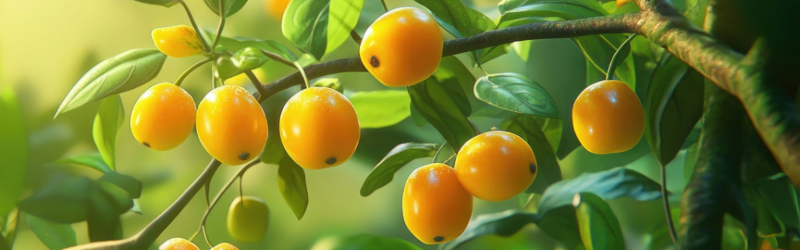
Nanche fruit is generally bright yellow, sometimes orange or red, with thin edible or easily peeled skin. It’s about the size of a cherry or grape, round or slightly oblong, with a noticeable indentation. Inside, there’s an inedible seed and whitish or light yellow flesh.
It is both sweet and slightly tart, depending on ripeness, with hints of varied flavors ranging from banana and apple or pear to coconut and lychee. The fruit also has a distinctive aroma, oddly comparable to cheese, and a somewhat strong or off-putting aftertaste.
Varieties differ by location, though yellow nance is the most common and available from spring through the summer months, mainly from April to June.
Cultivation
Nanche trees can grow up to 30 feet in height and will begin bearing fruit within three to four years. Trees can produce for decades.
The fruit itself grows in large clusters, which are usually harvested by hand, with a single tree able to produce a few thousand of the small orbs each season.
Trees thrive in tropical and subtropical areas and can tolerate some harsh weather conditions, including drought. They can grow at various altitudes, with varieties sometimes referred to as mountain, marsh, or field nanche.
Pests & Diseases
Despite their hardiness, nanche trees and their fruit are vulnerable to the pests most often found attracted to fruit trees including aphids, beetles, borers, fruit flies, whiteflies, and spider mites.
Common diseases affecting foliage and fruit include anthracnose, powdery mildew, rust, and black and fruit rot.
Storage & Packaging
Nanche has a relatively short shelf life of several days when headed to the fresh market, though this timeline can be lengthened with proper chilling and refrigeration.
To protect fruit and prevent contamination, nanche fruit is often sold in sealed plastic tubs or cartons or other airtight containers.
References: Brazilian Ministry of Health, Instituto Politécnico Nacional, Slow Food Foundation for Biodiversity, University of São Paulo.

News you need.
Join Blue Book today!
Get access to all the news and analysis you need to make the right decision --- delivered to your inbox.


Subscribe to our newsletter
© 2026 Blue Book Services. All Rights Reserved

