

















Boston merchants think local
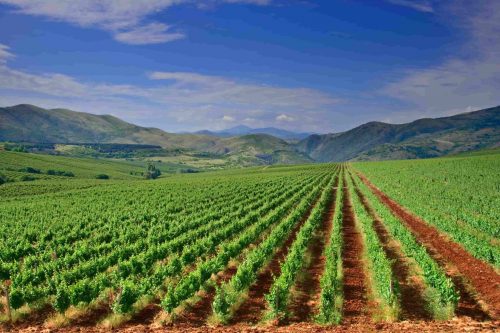
Merchants on the New England Produce Center (NEPC) and the Boston Market Terminal (BMT), like most other wholesale markets, continue to see surging demand for seasonal produce. “Locally...

Merchants on the New England Produce Center (NEPC) and the Boston Market Terminal (BMT), like most other wholesale markets, continue to see surging demand for seasonal produce.
“Locally grown product has always been a part of our lineup,” said Tommy Piazza, in sales for Community-Suffolk, Inc., BB #:101225 a wholesaler operating out of both the BMT and NEPC.
“The ‘Support Local Farmers’ movement has enabled the supply to increase the availability, which actualizes in more local product being sold by our company.”
Dominic Cavallaro, president of John Cerasuolo Company, Inc. BB #:101208 on the NEPC, echoes this sentiment, noting that locally grown continues to be extremely popular with Cerasuolo customers. “You really don’t start hearing about locally grown product until July; then everybody is going crazy for it.”
Local product is also a hot commodity for Baldor Boston, LLC, BB #:194594 a receiver, distributor, and wholesale grocer. “We continually try to find and support our local farmers,” confirms Baldor Boston’s general manager Glenn Messinger.
During the summer season, Garden Fresh Salad Company, Inc. BB #:101286 also offers a wide range of locally grown items.
“We do a lot of business with a couple of local farmers,” said Patrick Burke, sales manager with Garden Fresh. “It usually starts in July and continues through the first frost.”
Although local continues to gain steam, organic is not nearly as popular at the NEPC and BMT. “We very rarely sell organic produce,” Burke observes. “We’ve had people ask for organic, but it’s nothing crazy. They generally get turned off by the price and availability. It’s definitely a growing industry, but I think it’s still working to get a foothold.”
While of Travers Fruit Company, Inc., BB #:278519 located on the NEPC, has been selling organic produce for years, Paul Travers, president, says it is not a growing part of their business, because “high pricing of organic products slows volume.”
This is a multi-part spotlight feature on Boston produce adapted from the October 2019 issue of Produce Blueprints.
Image sources are either licensed or customer-provided.
News you need.
Join Blue Book today!
Get access to all the news and analysis you need to make the right decision --- delivered to your inbox.




Subscribe to our newsletter
© 2026 Blue Book Services. All Rights Reserved

