















Boston market improvements and efficiencies
While the product lineup at the two privately-owned Boston terminal markets hasn’t changed too much over the past few years, and size-wise, stall counts and number of licenses...
While the product lineup at the two privately-owned Boston terminal markets hasn’t changed too much over the past few years, and size-wise, stall counts and number of licenses hold steady, there is still plenty of change afoot.

In keeping with the times, the markets have worked to improve efforts for more environmentally-sensitive operations, such as implementing more energy efficient measures.
For instance, the Boston Market Terminal (BMT) has LED lighting at its premises, and recently conducted an electrical audit. The result: opting for new motors for most of its coolers, to reduce energy use and cost.
For its part, the New England Produce Center (NEPC) augments energy use through solar panels on its roofs, which also help to cut down on pollution from diesel fumes, by doing away with direct electricity to the market’s trailers. Merchants can also reduce waste with a recycling program for wooden pallets, to chip and sell them to paper mills.
Technology itself has also led to inevitable changes and modernization, with business now being more computer-oriented than not.
Anthony Sharrino, president of Eaton & Eustis Company, says he does half of his business through email, phone, and fax communications, rather than the face-to-face meetings of yesteryear.
And Peter John Condakes, president of Peter Condakes Company, Inc., a tenant at both the NEPC and BMT, tells how he can monitor anything that goes wrong from home, instead of having to drive to the market at an inconvenient time.
“With tomatoes, if I decide on a Saturday afternoon that I want to warm up a room to accelerate ripening, we can make that change over the internet,” he says.
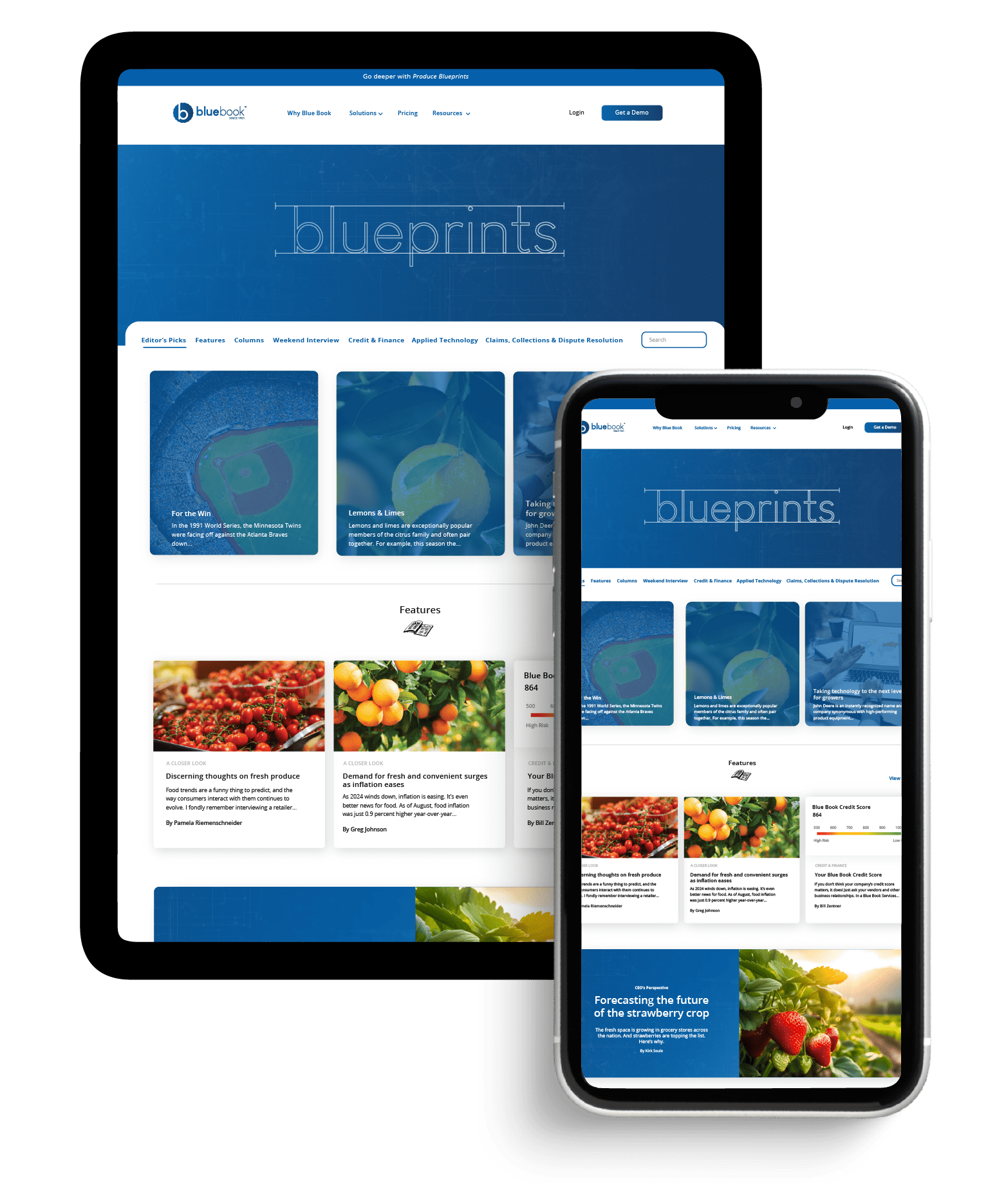
This is an excerpt from the most recent Produce Blueprints quarterly journal. Click here to read the full article.
Image sources are either licensed or customer-provided.
News you need.
Join Blue Book today!
Get access to all the news and analysis you need to make the right decision --- delivered to your inbox.







Subscribe to our newsletter
© 2026 Blue Book Services. All Rights Reserved

