

















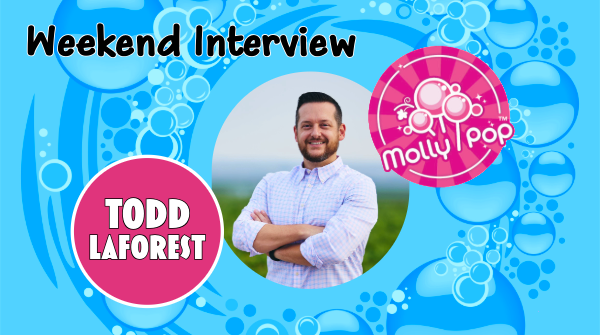
Todd LaForest, Molly Pop
Todd LaForest planned to be a lawyer involved in the sports world, but when the legal path narrowed, the produce path widened.
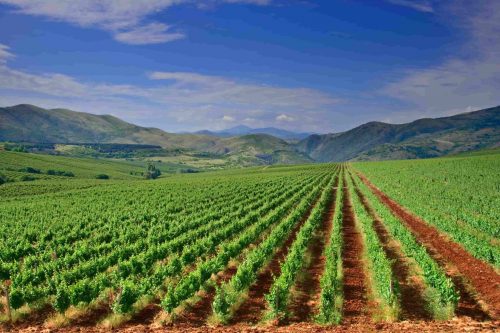
Semiletava Hanna/Adobe Stock
In this article
Todd LaForest didn’t set out to sell juice. He didn’t set out to sell grapes, either. He set out to be a lawyer—the kind that represented athletes, argued contracts, and maybe someday worked for a team.
That plan came apart somewhere between Marquette University Law School and a Milwaukee Brewers internship, when it became clear that sports law was a dream job, it just wasn’t his dream job.
So he pivoted. His brother Brian had spent years building a produce business, and Todd had grown up on the edges of it. When the legal path narrowed, the produce path widened. Todd went to work with his brother, learned the commodity business from the inside, and started asking the question that would eventually change the company: what if a grape could be a brand?
Today, Molly Pop—formally Molly’s Grape & Citrus Company, LLC BB #:371532, though Todd says almost no one calls it that anymore—is that answer in motion. Originally founded by Brian, the firm was built around the notion of always providing premium grapes and citrus.
They’ve since also expanded into cold pressed juices, but Molly Pop is trying to do for grapes what Cuties did for mandarins: make a commodity feel like something worth choosing.
It’s a long road. But Todd has a lawyer’s patience for detail and a founder’s tolerance for uncertainty. We sat down to talk about what it actually takes to build a consumer brand from scratch—and how David figures out where to aim his sling.
Law school teaches you to become an expert in anything quickly. That’s probably the most useful thing it gave me. This industry isn’t easy to learn from the outside.
Q: You trained as a lawyer, not a brand marketer. What happened?
I always wanted to try not to be a lawyer—I just couldn’t help myself. I tracked that way from early on.
I went to law school, a good school, Marquette, because it specialized in sports law and I was an athlete. Got a great internship with the Milwaukee Brewers my third year.
But I could see the writing on the wall. This was 2011, and there was a three-year stretch where a big chunk of the graduating class didn’t have legal jobs.
And in sports law specifically, those positions were dream jobs—nobody left them. I would have had to be Lloyd from Entourage for a very long time. I didn’t want to be Lloyd from Entourage.
My brother Brian had been in the produce industry since he was a stock boy at a little grocery store. He’s twenty years older than me, and I’d spent enough time around his world growing up—terminal markets, trade shows, the whole thing—to know it was interesting and you could “do well” working in the produce industry.
So I went out to visit him in Nogales right before my final year of law school, and I could see myself doing it. He always wanted me to work with him. Eventually, I said yes.
What I’ll say is this: law school teaches you to become an expert in anything quickly. That’s probably the most useful thing it gave me. This industry isn’t easy to learn from the outside. The legal background helped me ask the right questions faster.
In a commodity business, everything is based on price. You either win on price or you lose. I wanted to win on something else—the right product, the right packaging, the right consumer experience.
Q: When you decided to launch a consumer brand in fresh produce – a category dominated by established names – what made you believe there was a real opening?
We started in the commodity business, like most people in this space do. But I always said we were attempting to merchandise the commodity, which was the distinction in my mind.
In a commodity business, everything is based on price. You either win on price or you lose. I wanted to win on something else—the right product, the right packaging, the right consumer experience.
This is where Molly Pop came from. The pink bag promise. The idea was simple: when you buy our grapes, you know what you’re getting. Good flavor, good quality, good condition—whether it’s January or September. Consistency across the whole year is genuinely hard to deliver, but that was the goal.
The opening we saw was that nobody had really done this with grapes. The major clementine companies figured out how to make a commodity feel like a brand, and now you don’t even think about what variety is in the bag—you just call it by the brand name.
Grapes hadn’t gotten there. There’s varietal branding—Cotton Candy, Autumn Crisp—but that’s different. I wanted to do the opposite: a brand that transcended the variety.
I realized: if we’re going to have a reason to get people to our booth, it should be something we can actually market commercially.
Q: Shelf space is controlled by giants. How do you even get a meeting when you’re the brand just getting started?
The juice opened the doors. When we started going to trade shows, we knew we needed a reason for people to come to our booth. We had bright pink pants, which helped—but we needed something people could actually experience.
We tried grape ice cream one year. It was amazing, honestly. Small batch, from a creamery up in Minnesota. But it was wildly expensive and you couldn’t scale it. We tried a mandarin fresh squeeze at a show out east. We tried gelato.
The cold pressed juice was the one that worked, and not just as a booth gimmick. I realized: if we’re going to have a reason to get people to our booth, it should be something we can actually market commercially.
The juice could live next to the grapes in a refrigerated case. It stayed in our lane—fresh, produce-adjacent, cross-merchandisable. And crucially, it got us into rooms we couldn’t have gotten into otherwise.
Buyers would come in to talk about juice and walk out having had a conversation about grapes too. The commodity business funds the marketing for the juice. The juice opens the doors for the commodity business. That flywheel took a while to figure out, but it works.
Q: You’ve described Molly Pop as “agile and scrappy.” What does that actually mean when you’re competing against brands with $50 million marketing budgets?
Honestly? The counter-balance of agile and scrappy is that agile is easy when you have money. We have to be scrappy because we don’t have a $50 million marketing budget—not yet.
But what we do have is a core team where everyone has an equity stake. Nobody’s punching a clock. Our marketing guy came from automotive, alcohol, spirits, canning—he knows how brands are actually built.
What a small team does is move fast. We can make a decision on Tuesday and execute on Thursday.
Our engineer came from Fortune 500 project management. I bring the legal background and the non-ag perspective. And we have produce veterans who’ve been in the industry for decades.
What a small team does is move fast. We can make a decision on Tuesday and execute on Thursday. Large organizations have talented people too, but they move slowly. A brand like Bolthouse or Evolution has layers of approval. We don’t. When something needs to change, we change it.
Q: What’s the hardest thing about building a consumer brand that nobody warns you about before you start?
The business model is completely different from commodities, and I don’t think I fully appreciated how different until I was in it.
In commodity sales, you have zero shrink. You sell a load of grapes, they move, you’re done.
In CPG, you have upfront ingredient spend, longer payment cycles, slotting fees, promotional requirements, and you have shrink. Product expires. You have to manage that. Those things I knew about in theory; I just didn’t know how much they would add up.
Another hurdle has been buyers’ reticence to change things. We’ve literally been told by buyers: “We love this. We just don’t want to make any changes right now.”
You can have a great product, a great story, great samples—and still hit a wall because the buyer just isn’t ready to take a chance on something new. And to add something to a shelf, you have to take something else off. Juice resets are six-month deals. That’s not a small ask.
I also didn’t know what I didn’t know about category metrics. Our first line of juices got great feedback—people genuinely loved them.
But buyers had requirements we weren’t aware of: calorie count, sugar content, carbs, price point. We hadn’t hit those targets. Nobody told us what the targets were. We had to learn, reformulate, and come back, which costs time and money.
The juice itself got traction fast, in the sense that people were genuinely excited about it. Product-market fit was there from the start.
Q: Where did you get traction faster than expected, and where did you hit a wall you were sure wouldn’t be there?
The juice itself got traction fast, in the sense that people were genuinely excited about it. When you put cold pressed grape juice in front of someone and they say, “I can’t believe I’m drinking something that tastes exactly like eating a fresh grape”—that reaction was consistent. Product-market fit was there from the start.
The wall was the commercial viability piece. Taste isn’t enough. You have to meet the numbers, and we didn’t know what the numbers were until we were already in it. So we had to go back, rebuild the product line, and come back out.
We now have four juices. I think they’re great. But getting here cost more than I expected—in time, in energy, in money.
And then there’s the stuff you just can’t plan for. We had a customer sign on and we were weeks away from putting product on the shelf—and then they got acquired by another company.
Our whole launch plan was gone. That’s the produce business, in some ways, but it hits differently when you’re building a CPG brand.
What we haven’t figured out yet is getting a broader group of consumers to know who we are and reach for our pink bag.
Q: What does ‘good’ look like for Molly Pop five years from now, and what’s the one thing standing between here and there?
The biggest hurdle is the marketing budget. When you don’t have to be scrappy, you can move a lot faster. We’re actively working on that—whether through investment or continuing to grow organically through the commodity portfolio.
But what I want in five years is for Molly Pop to have consumer mindshare, not just industry recognition. The industry knows us. You wear bright pink pants to enough trade shows, people remember you. That part, we’ve figured out.
What we haven’t figured out yet is getting a broader group of consumers to know who we are and reach for our pink bag. The mandarin brands figured it out. Nobody knows what variety is in a bag of Cuties, they just know they want Cuties. That’s the goal for grapes, that’s what we’re building toward.
We’re not there yet, we’re grinding every day. But we believe in what we’re building—and that’s what keeps us excited.
News you need.
Join Blue Book today!
Get access to all the news and analysis you need to make the right decision --- delivered to your inbox.







Subscribe to our newsletter
© 2026 Blue Book Services. All Rights Reserved

