


















ProduceIQ: Too hot to handle
While tomatoes may be in Mother Nature's crosshairs this week, they aren't the only commodity feeling the heat.

Images courtesy ProduceIQ
The South is getting a not-so-gentle reminder that although schools may be back in session, summer is far from over.
A record-breaking heat dome is bringing triple-digit temperatures and heat indexes pushing 110 to 115 degrees across parts of the region, with dozens of daily temperature records expected to be challenged. And while tomatoes may be in Mother Nature’s crosshairs this week, they aren’t the only commodity feeling the heat.
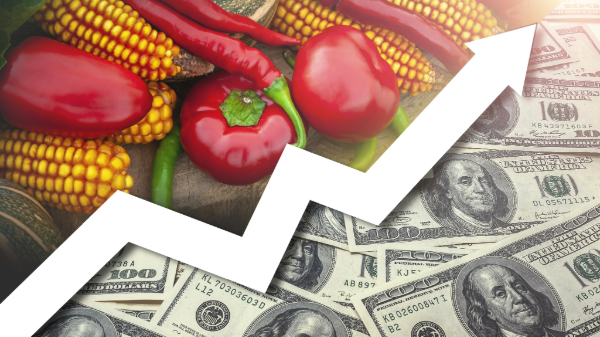
ProduceIQ Index: $1.11/pound, up +4.0 percent over prior week
Week #33, ending Aug 14th
Blue Book has teamed with ProduceIQ BB #:368175 to bring the ProduceIQ Index to its readers. The index provides a produce industry price benchmark using 40 top commodities to provide data for decision making.
The effects of prolonged high temperatures are beginning to show up across the produce markets. Tomato buyers are bracing for tighter supplies as heavy rain and extreme heat threaten yields in the East, while strawberry growers are dealing with the aftermath of a summer that initially accelerated production before turning into a supply headache.
Even lettuce markets, currently enjoying some of the lowest prices in years, could get a little more interesting if the heat begins to take a toll on quality.
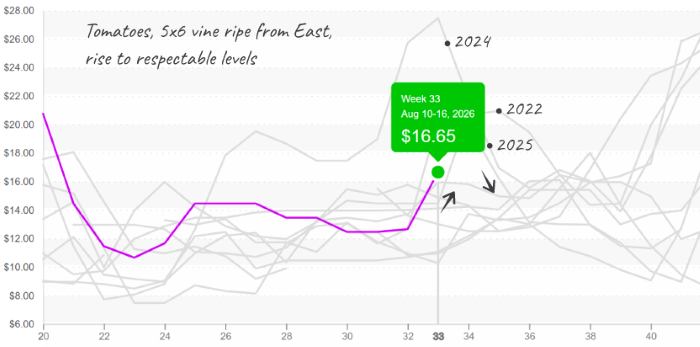
Tomatoes are in Mother Nature’s crosshairs this week. Heavy rain and a record-breaking heat dome over the South are giving tomato buyers some anticipatory anxiety. Round-type tomatoes are up +18 percent over the previous week and will likely climb further as heavy rain and extreme heat suppress yields in the East.
Heat puts tomatoes on edge
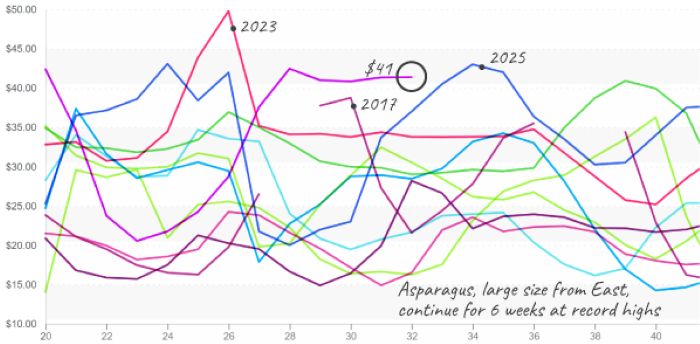
Up another +13 percent week over week, asparagus prices continue to set new highs. Markets are now sourcing almost entirely from growers in Northern Peru. Unfortunately for buyers, the supply situation is expected to tighten further until growers in Southern Peru can provide relief in mid-September.
Grass keeps climbing
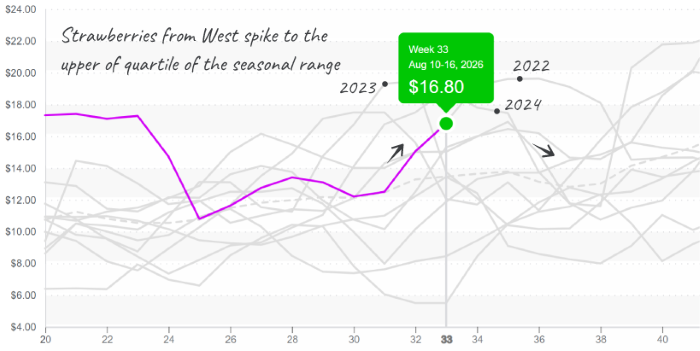
Strawberries are no longer a sweet summer deal. Up another +23 percent over the previous week, strawberry prices rise as the effects of prolonged heat wear down supply. Earlier this summer, elevated temperatures accelerated production. Now, prolonged heat is wearing down supply.
Many growers began diverting product to processors as high heat in the Salinas/Watsonville area shortened shelf life and compromised quality. Now, that early production boost has left a sizeable gap in supply. Growers in Santa Maria, CA, will ramp up production over the next two weeks, but supply will likely remain tight and prices elevated until Central Mexico begins production in September.
Heat takes a bite out of supply
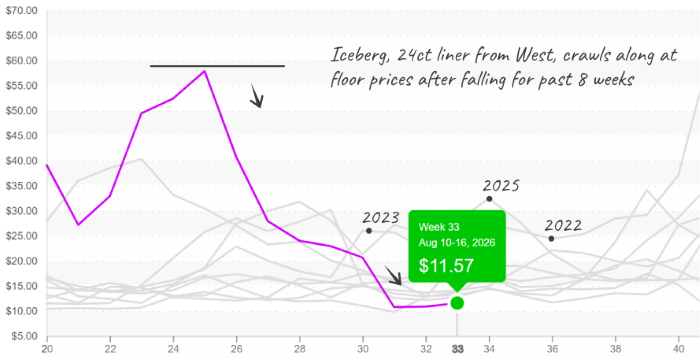
It seems the collective American memory runs short on nearly every topic except parasitic infection. For now, anemic demand for lettuce and steady supplies are keeping romaine and iceberg prices near record lows.
Average prices for romaine and iceberg are up slightly from the previous week but show little sign of gaining momentum. Heat could begin to affect quality over the next few weeks, potentially spurring lettuce markets into action. Until then, lettuce suppliers are wishing on every star for a good PR agent.
Lettuce could use some good press
ProduceIQ saves you time and provides valuable information to increase your profits.
The ProduceIQ Index is the fresh produce industry’s only shipping point price index. It represents the industry-wide price per pound at the location of packing for domestic produce and at the port of U.S. entry for imported produce.
ProduceIQ uses 40 top commodities to represent the industry. The Index weights each commodity dynamically, by season, as a function of the weekly 5-year rolling average Sales. Sales are calculated using USDA Agricultural Marketing Service data on movement and prices. The Index serves as a fair benchmark for industry price performance.

News you need.
Join Blue Book today!
Get access to all the news and analysis you need to make the right decision --- delivered to your inbox.







Subscribe to our newsletter
© 2026 Blue Book Services. All Rights Reserved

