



















The Dirty Dozen: Defining safety levels
The Environmental Working Group and similar groups base their arguments on the premise that EPA standards aren’t adequate to ensure safe levels of public pesticide consumption. They point...
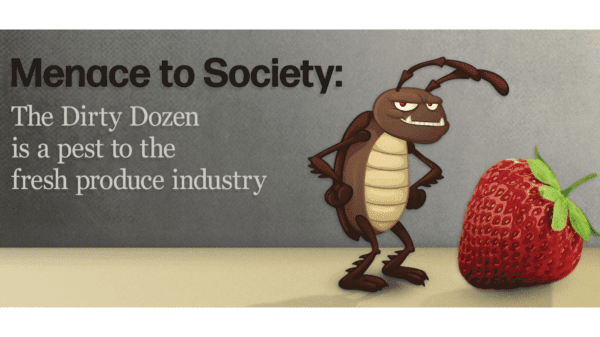
The Environmental Working Group and similar groups base their arguments on the premise that EPA standards aren’t adequate to ensure safe levels of public pesticide consumption.
They point out that many pesticides once touted as safe have now been banned—almost always to vehement protests from the agricultural sector (whose current claims therefore cannot be trusted).
By contrast, industry spokespeople like Teresa Thorne, executive director of the Alliance for Food and Farming (AFF), contend that EPA guidelines do ensure an adequate degree of safety.
Bill Marler, probably the foremost food safety litigator in the United States, has some insights along these lines. He says he takes on few pesticide cases, as opposed to, say, those involving bacterial contamination.
“The difference between my space and the pesticide issue space is that when there’s E. coli, people know it pretty quickly. From the produce bacterial point of view, those are always relatively clear causation issues.
“Pesticide residues are a much more complex scientific issue when it comes to the law. In lots of cases, without good evidence that a certain pesticide or chemical caused an illness, there’s no compensation.
“You do have to pay attention to science,” he adds. “It can’t be complete speculation. It doesn’t mean that the anti-pesticide group is wrong or right, or that the farmers are wrong or right,” Marler continues.
“It’s very difficult for a happy medium to be found between consumers’ groups concerned about pesticides and industry needing those pesticides to grow crops to eat.”
In short, EWG and similar organizations contend that consumption of residual pesticides in fresh fruits and vegetables can cause health problems.
But as Marler observes, these concerns are “speculative”—certainly to the extent that very few would hold up in court.
This an excerpt from the cover story in the May/June 2022 issue of Produce Blueprints Magazine. Click here to read the whole issue.
Image sources are either licensed or customer-provided.
News you need.
Join Blue Book today!
Get access to all the news and analysis you need to make the right decision --- delivered to your inbox.







Subscribe to our newsletter
© 2026 Blue Book Services. All Rights Reserved

